
Big Bang vs. Big Bounce: The Science of Galactus' Origin
What modern cosmology says about Marvel's most ambitious origin story.
Artifact Recovered: original publication date: 8/16/22
This piece was originally published on a previous version of The Science Of and has been recovered from the digital strata. Its lightly edited version is represented here because it’s useful, weird, fascinating, updated, or some combination of the four.
Galactus.
The fact that you read that name and don’t get a knot in your stomach is one reason you know you’re living in “our” universe rather than the Marvel Universe.
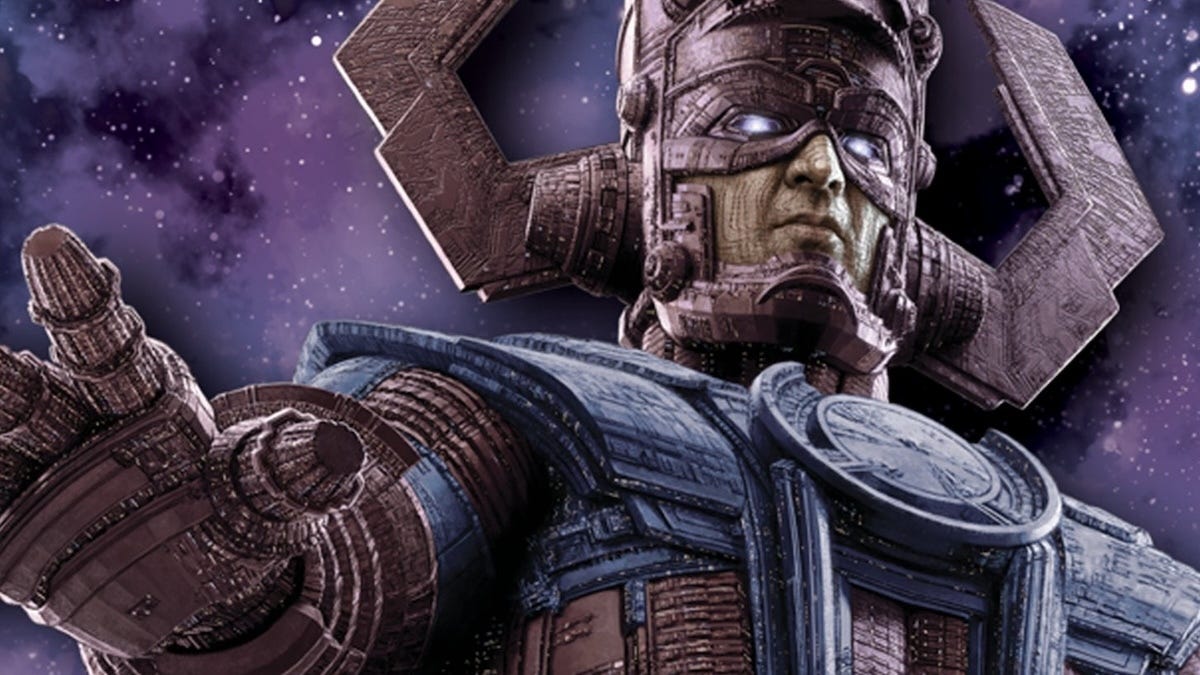
The other way you know you’re not living in the Marvel Universe?
Our universe. Literally. It doesn’t fit the big guy’s origin story.
Let’s make sure we’re all up to speed here.
GALACTUS 101
First appearing in Fantastic Four #48 (1966, by Stan Lee and Jack Kirby), Galactus has been a constant in the Marvel Universe for nearly 60 years. But Galactus wasn’t born in the “current” Marvel Universe. Instead, as his origin explains, Galen of Taa comes from the universe that preceded ours.
Side Note: A little bit of Marvel Universe 101: the current Marvel Universe is the “Eighth Cosmos,” or the eighth iteration of reality. The present cosmos is a nearly identical copy of the Seventh Cosmos, which was destroyed at the start of Secret Wars (2015). In 2021’s Defenders limited series, creators Al Ewing and Javier Rodriguez took a disparate group of heroes backward through the previous Cosmoses to stop at the Third before ending their adventure. Each previous Cosmos was more primal and more…trippy. Nevertheless, it was a great story, and its sequel, Defenders Beyond, explains the Second Cosmos and beyond.
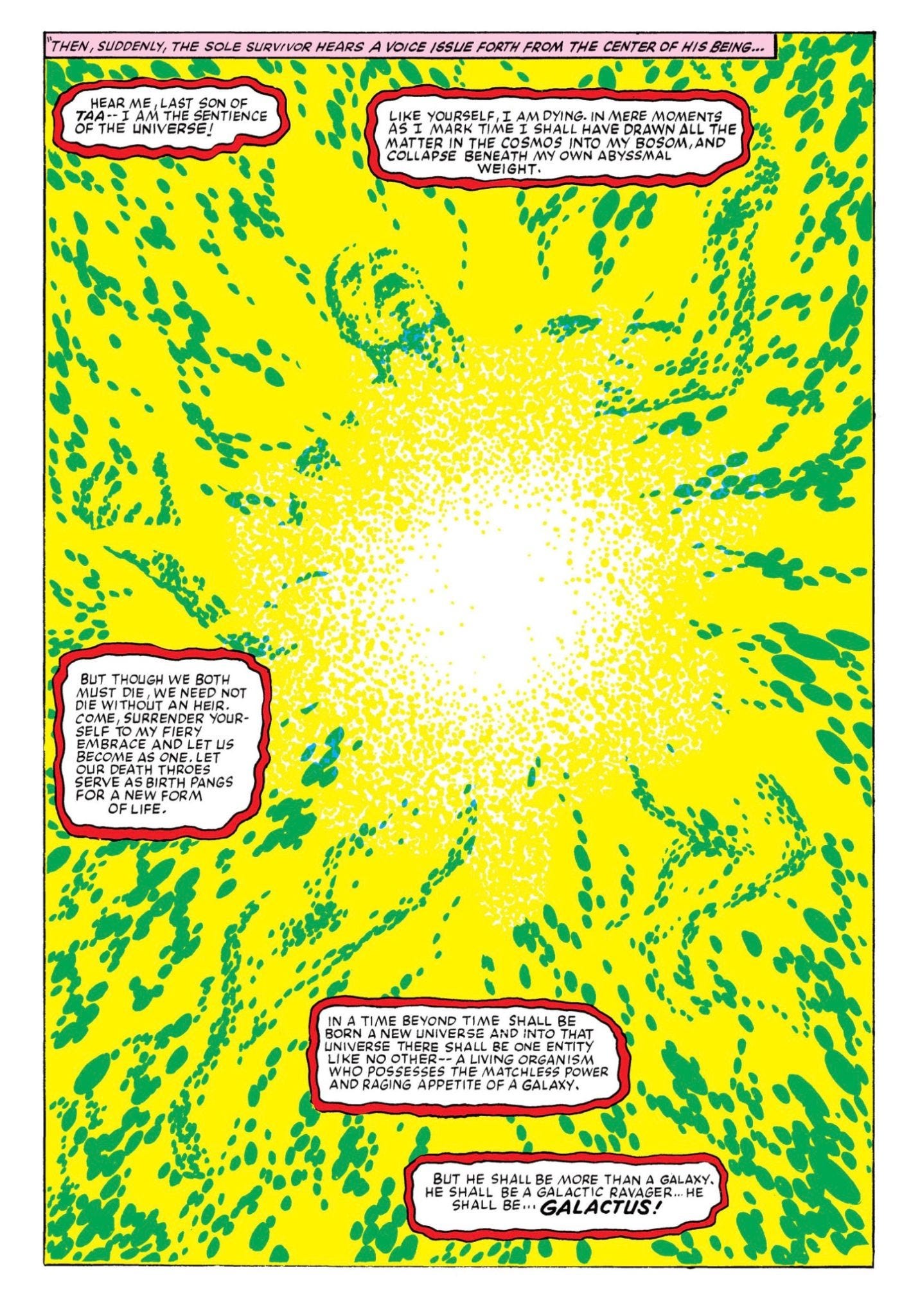
Back to Galen - he was a scientist and explorer, obsessed with finding a solution for the wave of death that was killing off all the life in the universe. While seeking answers in space, Galen and his ship are pulled into what seems to be a Big Crunch, the theoretical opposite of the Big Bang. “Inside” the Crunch, Galen bonds with the Sentience of the Universe and survives. As a result, Galan has VIP seating for the Big Bang that starts the Marvel Universe (the Eighth Cosmos). With some aiding and abetting by the Watcher, Galen gestated inside an “egg” made from the remains of his ship for a few billion years, finally debuting as Galactus. From there, he started eating planets.
And running afoul of Earth’s superheroes.
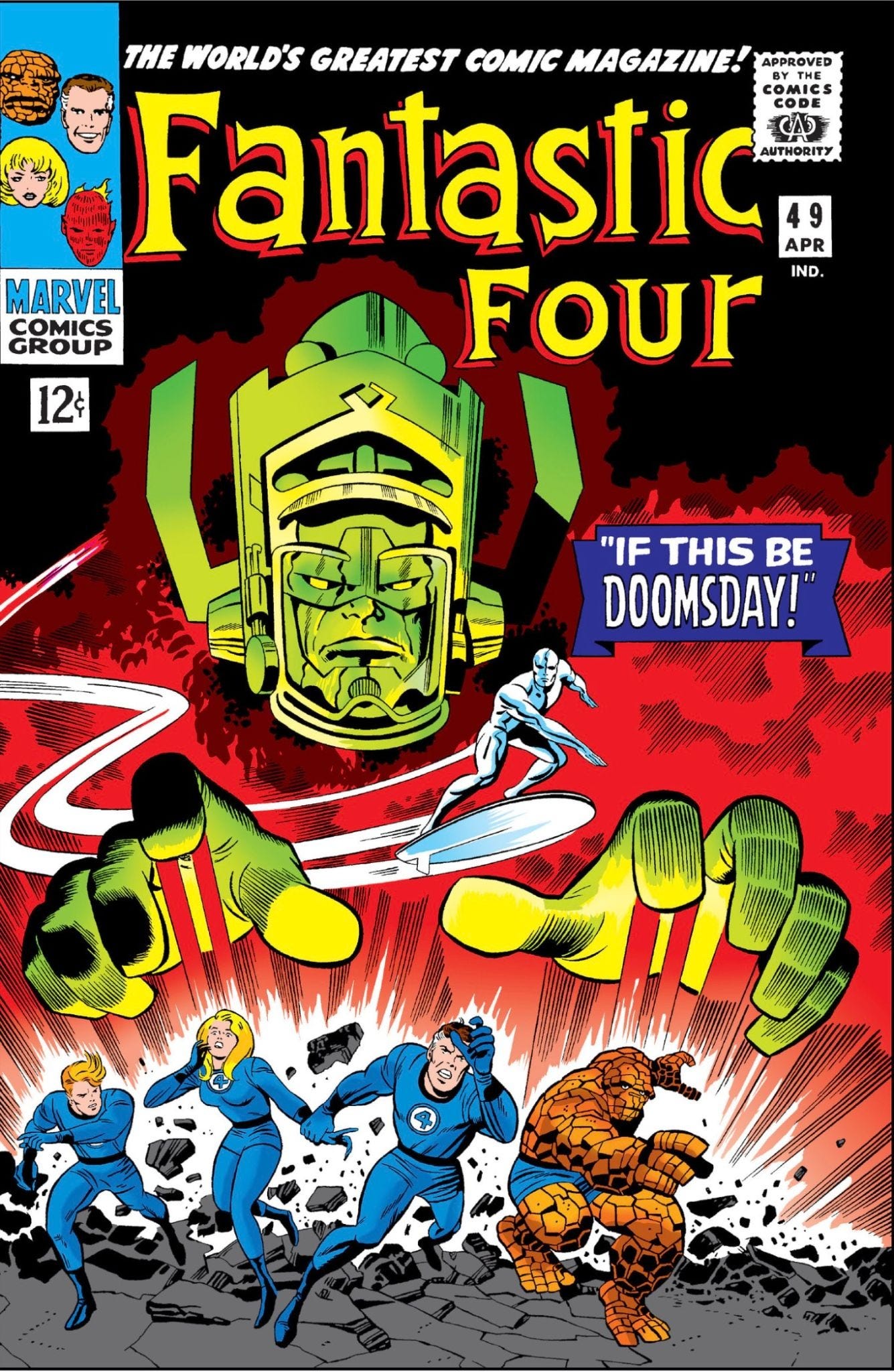
There’s more to Galactus’ story, but that’s for another day. Let’s put on our cosmologist hats.
Galactus’ story involves a specific cosmology model we don’t see in our universe. For over 50 years, data have suggested that our universe started with a “hot” Big Bang. The Big Bang was followed by Cosmic Inflation. Since then, the universe has expanded and cooled.
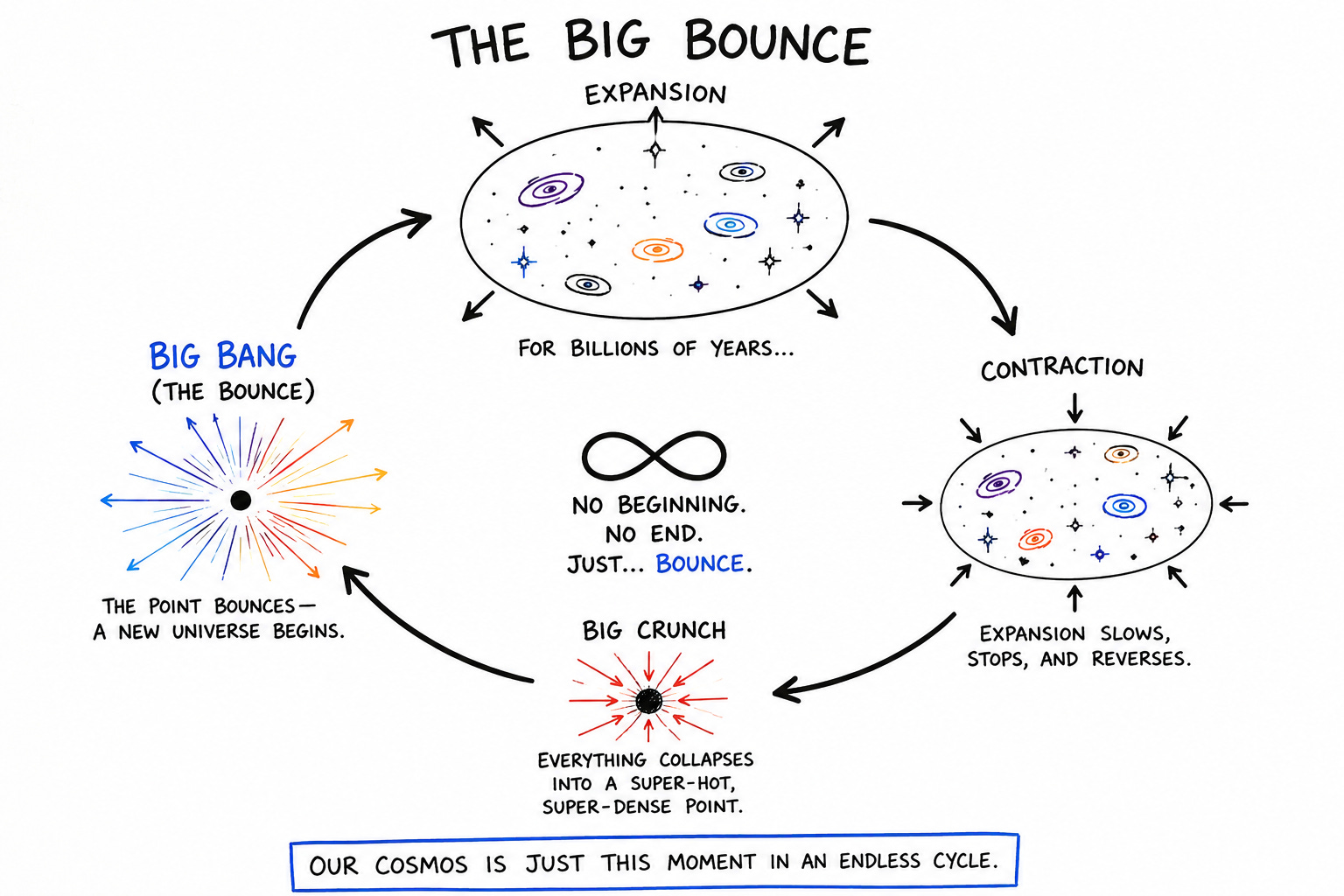
In Galactus’ cosmos, reality is cyclic. A Big Bang. Billions of years of expansion. Then expansion slows, stops, and reverses. Eventually, all matter and energy fall back together faster and faster, resulting in a singularity. That singularity is the point from which the “Big Bang” kickstarts the next universe. And the cycle repeats.
A cyclic cosmos has all kinds of implications—enough for its own article—but our observations point somewhere else. But as our understanding of such things stands, ours is not a cyclic universe. And it all comes down to the evidence.
We have overwhelming evidence for the hot Big Bang and strong evidence supporting Cosmic Inflation.
THE BIG BANG.
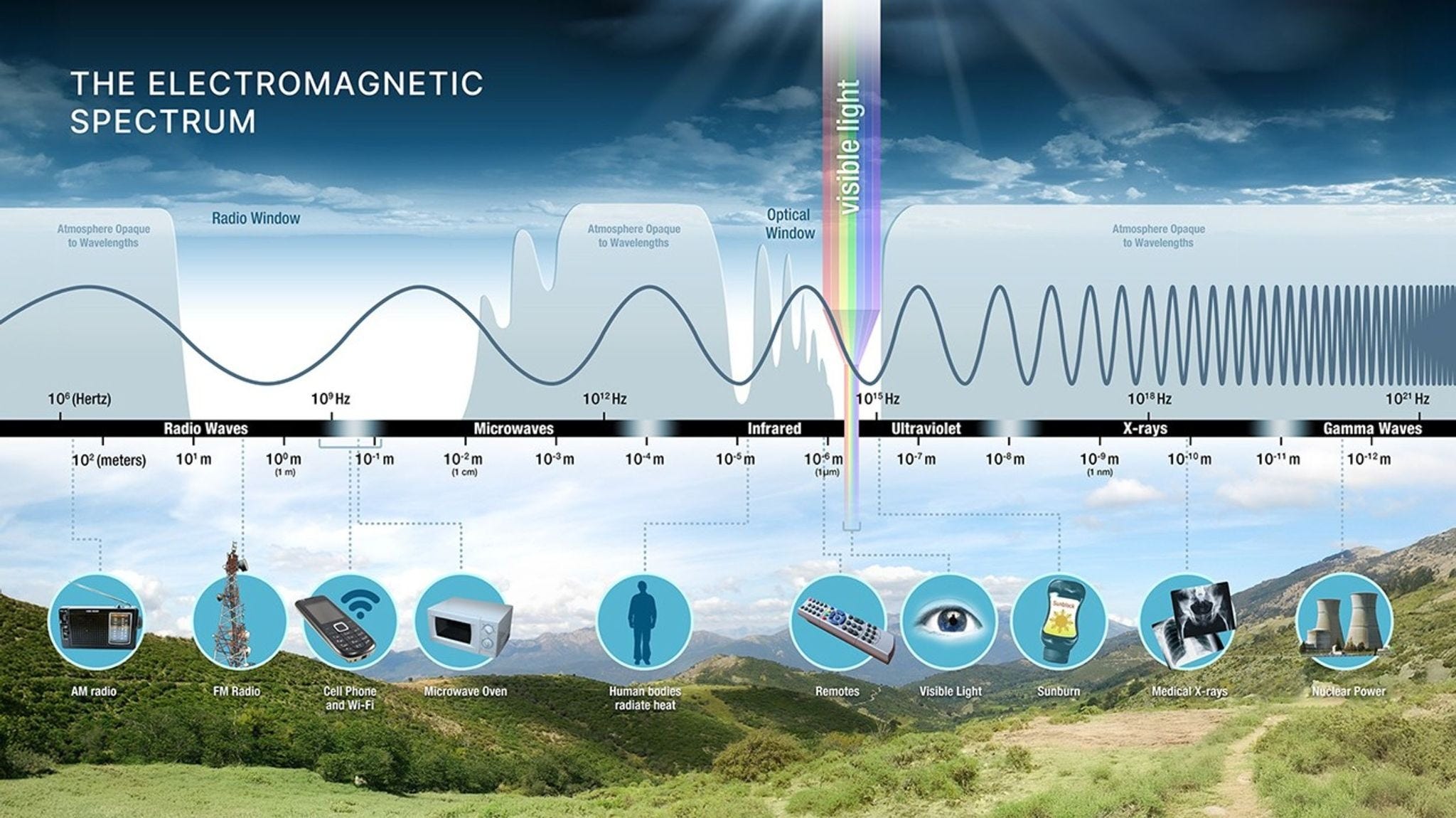
Since Edwin Hubble’s work in 1929, we’ve known space is expanding. His observations showed that distant galaxies are redshifted. That is, they’re moving away from us. The light from galaxies moving away from us is “stretched” slightly, which pushes it towards the red end of the visible spectrum.
This stretching and changing what we experience is the same Doppler Effect you hear when an ambulance goes by - as it comes toward you, the siren is higher pitched, but as it moves away from you, it’s lower pitched. The waves stretch as the ambulance moves away, and your ear experiences fewer of them per time (frequency). Lower frequency means lower pitch.
Light behaves the same way.

In the late 1990s, astronomers studying distant Type Ia supernovae discovered something unexpected: the universe wasn’t just expanding. Its expansion was speeding up. Later observations with the Hubble Space Telescope and other observatories confirmed the picture.
The universe was expanding, and the rate of acceleration was increasing. By the time you’re done reading this article, galaxies moving away from us will be moving faster than when you started reading it.
Side note: stars and galaxies aren’t moving away from “us,” specifically. Everything is moving away from everything. Space itself is expanding. The light traveling through space has to travel through more space - same light, larger volume, the wavelength stretches.
Another side note: the galaxies near ours aren’t moving away from us. While gravity holds the stars of the Milky Way, Andromeda (home of the Skrulls in the Marvel Universe), and a bunch of smaller nearby galaxies together, it also holds our local group together. So we all move together more or less as a unit.
While you can run the expansion information forward in time to a far future of cold, dark skies and the death of the universe, we want to run it backward.
Wind back the clock on an expanding universe, and you end up with a smaller and smaller universe, “ending” (er, beginning) with the universe in an unimaginably hot, dense state roughly 13.8 billion years ago.
Earlier than that, our current physics starts to break down. We don’t yet know what, if anything, came “before.” But the energy of that early universe wasn’t an even, flat, calm pool. There were fluctuations - quantum ripples. Imperfections. For some reason, one of the fluctuations expanded. Fast. Everything, even the fluctuations, spread quickly. Space itself expanded faster than light. Cosmic Inflation.
In a super-simple version: the universe cooled, and energy produced matter and antimatter that would eventually make up today’s universe. Then, over a period of time, matter, pulled together by gravity, begins to clump along the former fluctuations — which also stretched. Give it more time, and enough matter collects, falls in on itself, and ignites, birthing the universe’s first stars. In areas with a lot of matter, galaxies form. Let that clock run forward about nine billion years, and a collection of gas and dust in a rather ordinary galaxy gets busy making a sun and a solar system. We call that spot home.
This all sounds like a cool story — conveniently cool to some — but with the 2009 launch of the Planck Telescope, the story got a lot more real.
Planck looked at the universe over and over, examining the temperature and its variations. The idea was simple — if the universe were once a small, hot clump of matter that expanded quickly to form what we see today, that heat would still be around. Not as what we think of as “heat,” but energy. Ancient energy that’s cooled and cooled. Think of it as being able to tell that your stove was on by looking at the burners with a thermal camera. The burners are no longer red (visible light), but you can still see some energy (infrared - “heat”).
Planck’s image complemented and refined the “WMAP” image from NASA’s Wilkinson Microwave Anisotropy Probe, which had been collecting similar data since 2001.
In glorious detail, the image from Planck shows the cosmic microwave background radiation (CMBR). The heat of the early universe has cooled to the point that it’s not “heat” as we think of it but a form of energy with longer wavelengths and a lower frequency - microwaves.
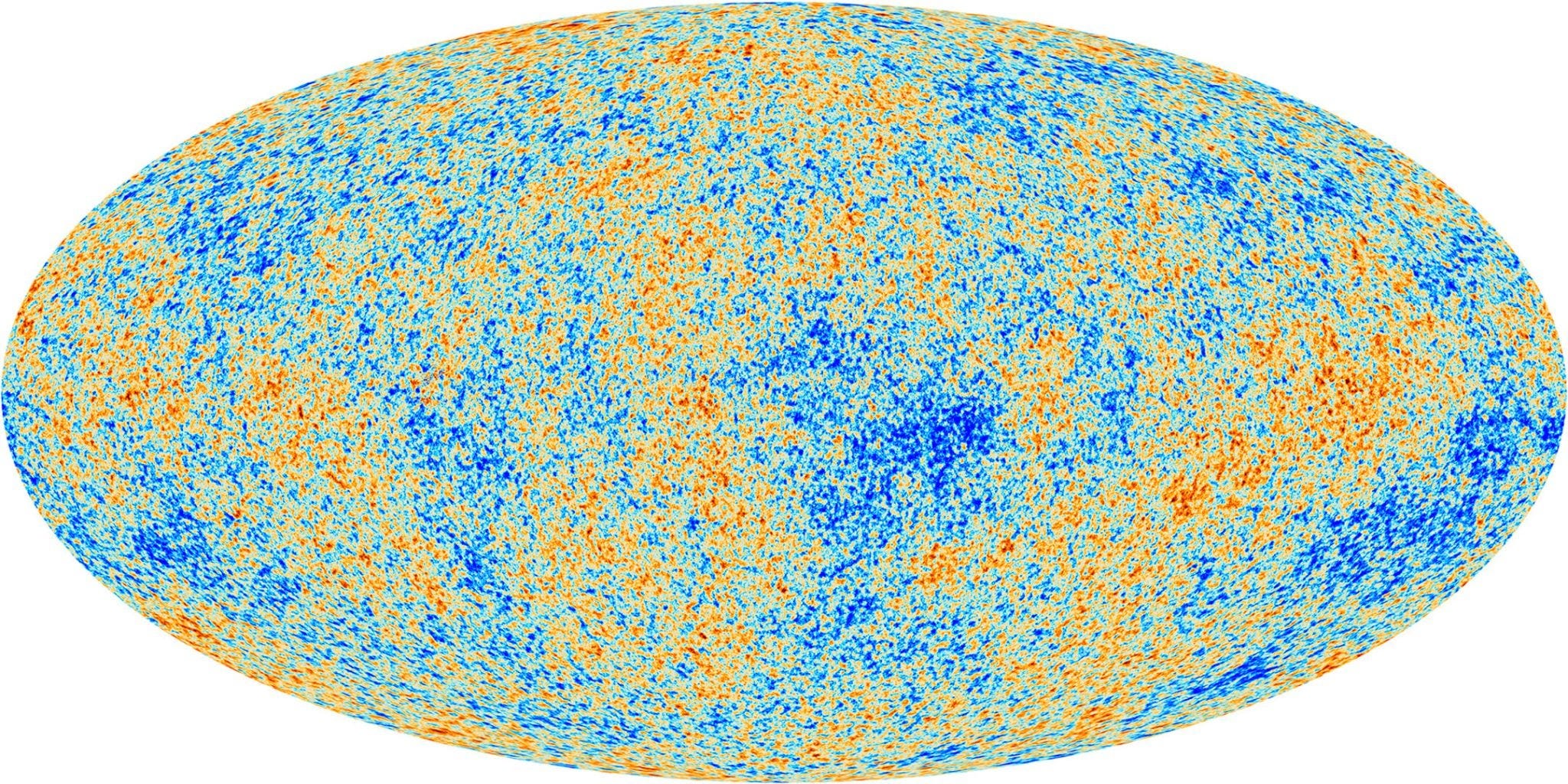
The image often throws viewers because of its oval shape. In reality, the CMBR image is a 360-degree view of the entire universe from Planck’s point of view. And to fully grasp the idea, think of it in 3D. You’re viewing it, but also, you’re in it.
Take a minute if you need to.
The image’s color variations show tiny temperature differences - places where the universe is just a little “warmer” or “cooler.” Those tiny temperature variations are essentially snapshots of quantum fluctuations that were stretched to cosmic scales during Inflation. Moreover, the fluctuations in the CMBR coincide with regions where we see the largest collections of matter in the universe.
Cosmic Inflation is a model to predict what the universe should be like. Observations have matched the model.
Long story short, that’s how we know the hot Big Bang happened and why Inflation fits the evidence so well. And given that the universe’s expansion is speeding up, the evidence points to the theory that everything will keep expanding, ultimately cooling and dying. That’s the heat death of the universe.
Some versions of Inflation naturally allow for a multiverse (more on that in another article).
OTHER CONTENDERS
Given the evidence that has accumulated over the years, our universe doesn’t appear to support Galactus’s origin. For that, you’d need an alternate theory. There are three main contenders, two of which could theoretically support Galactus: Big Bounce and Conformal Cyclic Cosmology.
Both theories are born of their proponents’ dissatisfaction with Cosmic Inflation and claim to offer a more straightforward explanation of the Big Bang and the universe’s history. Your mileage may vary, of course.
Of the two, the Big Bounce is the simplest to understand. After an indeterminate period of expansion, the universe begins to contract - the Big Crunch mentioned earlier. Everything collects into a super-hot, super-dense point. From there, the universe would “bounce” in a Big Bang.
The Big Bounce theory suggests that time has no beginning and no end. Our perception of all reality is just this period, in this particular cosmos. Ultimately, it will collapse, starting another, and this cycle will happen forever. Literally forever.
Putting Galactus into this model is easy — the “Seventh Cosmos” of the Marvel Universe was just the universe before ours that collapsed. The Eighth is just the new universe after the bounce.
The other idea that supports Galactus, Conformal Cyclic Cosmology (CCC), follows a similar theme but differs slightly.
First suggested and promoted by Nobel Laureate Roger Penrose in his 2010 book, Cycles of Time: An Extraordinary New View of the Universe, the idea is a deep dive into cosmology and quantum mechanics, but it does have some relatively easy-to-grasp (but still weird) main points.
The history of the cosmos breaks into what Penrose calls “eons” - marked by a Big Bang and then expansion. At some point, the universe will expand to its maximum size, cooling as it does. Along the way, most remaining matter ultimately ends up in black holes. The black holes will continue to cool and slowly evaporate via Hawking Radiation.
Except for photons. This makes a cold, dead universe look like the Big Bang model. A new Big Bang will kick up from this state, starting another of Penrose’s eons.
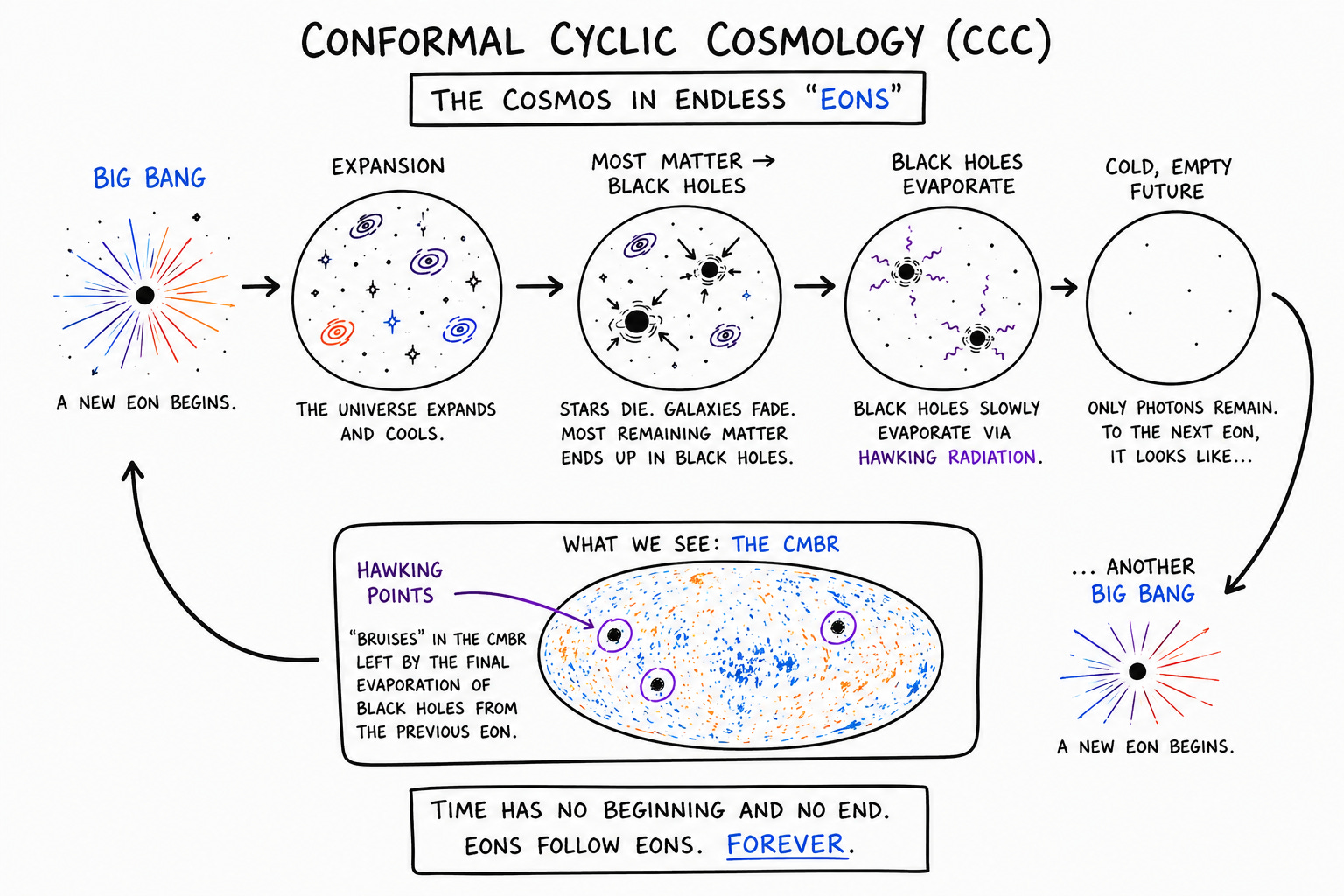
In CCC, Penrose explains, there would be “leftovers” of the universe previous to ours, observable in the CMBR, “bruises” in the CMBR left by the final evaporation of black holes during the last eon. Penrose calls these “Hawking Points.”
These signals - the Hawking Points - are where things get ugly. Working with researchers around the globe, Penrose insists they can be observed. However, many astrophysicists claim that Hawking Points can’t be seen in a standard interpretation of CMBR data. You can see Penrose’s “Hawking Points” if you look at the data while — metaphorically — squinting, cocking your head at a specific angle, and humming a middle C note while exhaling.
The more technical term is that Penrose’s results are based on an analysis of the data “in a scientifically unsound and illegitimate fashion,” according to astrophysicist Ethan Siegel.
The third contender for the universe’s origin involves the creation of a “Mirror Universe,” and that’s something for another day.

BUT WHY GALACTUS AND THE BOUNCE?
Before we wrap up, let’s take a quick look at how Galactus came to be. According to Marvel lore, Jack Kirby wanted to create a villain above mortals—a godlike force of nature that couldn’t simply be punched into submission or reasoned with. Kirby drew the pages for the legendary Galactus Trilogy (Fantastic Four #48–50), and Lee put words to the images. Galactus didn’t receive a true origin until three years later, when the pair reunited for The Mighty Thor #168–169 (1969). There, they revealed Galen of Taa, the last survivor of a previous cosmos, reborn into the (current) Marvel Universe after surviving that reality’s Big Crunch.
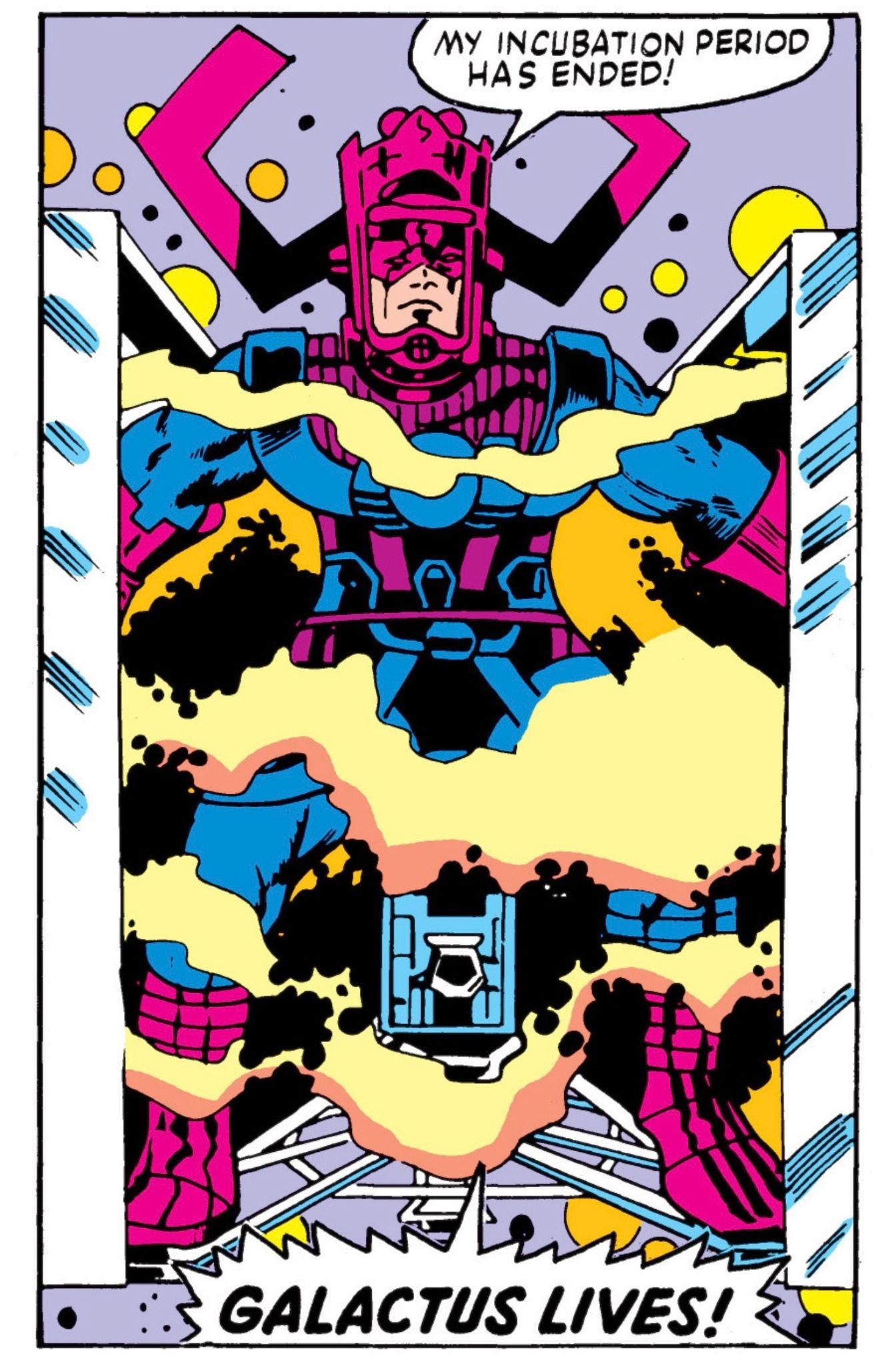
In telling Galactus’ origin, Lee and Kirby were doing what they had done for years with characters like the Hulk and the X-Men: building superheroes from contemporary science. They weren’t trying to predict the future of cosmology. They were using one of the legitimate scientific ideas of their day to tell a bigger story.
For much of the twentieth century, an oscillating universe was a legitimate cosmological model. Scientists debated it alongside other competing ideas about the origin and fate of the cosmos. Given Kirby’s curiosity and Lee’s appetite for current ideas, it’s not hard to imagine the concept finding its way into Marvel’s biggest cosmic character.
Today, the evidence points somewhere else. But Galactus’ origin isn’t bad science—it’s a time capsule. It’s Lee and Kirby taking one of the biggest scientific questions anyone could ask and building a god out of it. That’s pretty wonderful.
NO GALACTUS NEED APPLY
The idea of a hot Big Bang followed by Cosmic Inflation has withstood challenges for years. Beyond that, research provides additional data supporting the theory. As evidence has piled up in favor of the idea, the hot Big Bang followed by Cosmic Inflation has moved from one of a field of contenders to explain our universe to the top of the stack, the spot from where future science will start. It’s the best model we have, the one that the data supports.
Changing an accepted theory is simple: just bring the evidence. That’s all. Just show evidence that other researchers can view, independently reproduce, and reach the same conclusion.
There are still unanswered questions about the Big Bang. We’ll never be able to directly observe the Big Bang itself, no matter how good our tools are. The superheated plasma just after the Big Bang is opaque. The best we can do is examine the universe’s evidence and develop theories that align with observations.
That’s how science works. Theories either solidify or change as new data comes to light. The data supports a hot Big Bang followed by Cosmic Inflation, without requiring earlier universes. We’re bound to learn more as we go, but in the end, all we can do is follow the universe’s lead.
And for our universe, that means no Galactus.
Sorry, big guy.
Curiosity is what brought me here.
Teaching is what I do with it.
If you’d like to read more about education, classrooms, students, and the craft of teaching, you’ll find those stories in Teacher, Teacher.