
Artifact Recovered: original publication date: 8/27/23
This piece was originally published on a previous version of The Science Of and has been recovered from the digital strata. Its lightly edited version is represented here because it’s useful, weird, fascinating, updated, or some combination of the four.
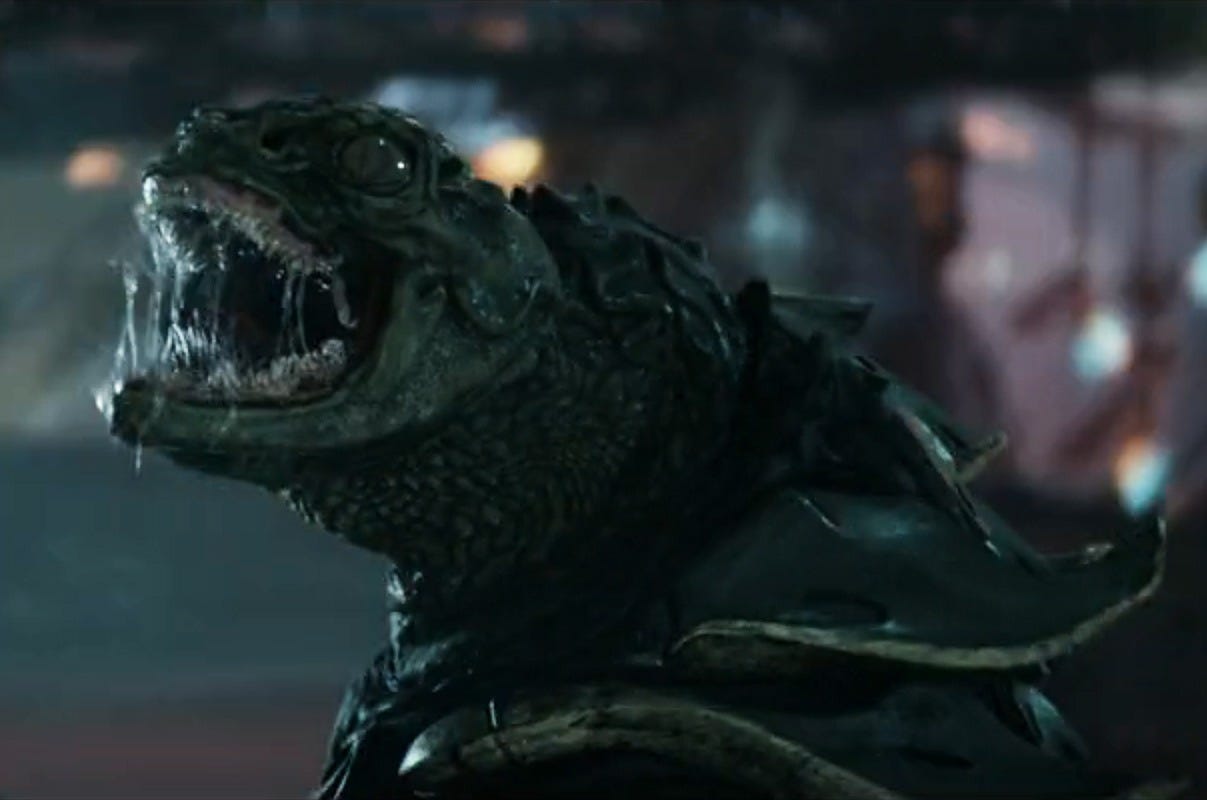
Let’s talk about the Gorn.
First introduced in the 1967 Star Trek (TOS) episode “Arena,” the Gorn morphed from a guy in an off-the-rack monster suit into a Xenomorph/Predator-esque threat with their own spin.
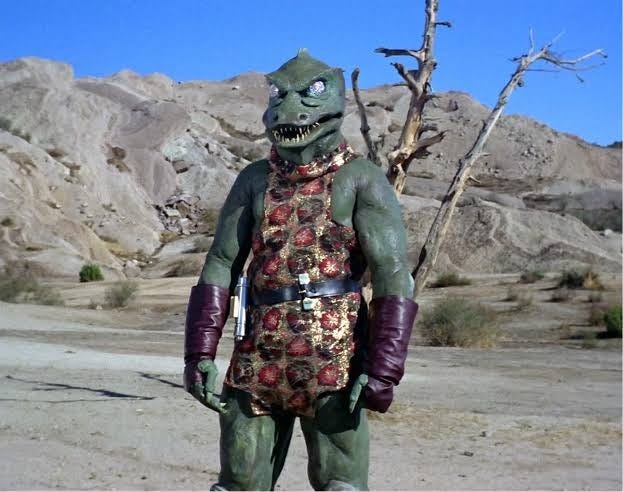
Now, 56 years later, they’re a chilling threat to the Federation in Star Trek: Strange New Worlds. They first made themselves known in season 1, and … yeah, that season 2 cliffhanger.
And holy crap, they’re tough. And scary.
To help dig into the science of the Gorn, I sought some help from Dr. Mohammed Noor, a biology professor at Duke University and author of Live Long and Evolve: What Star Trek Can Teach Us About Evolution, Genetics, and Life on Other Worlds, and, as he calls it, an “occasional Star Trek science consultant.”
Noor’s YouTube channel, BioTrekkie Explains, features Noor as well as his semi-regular guest, actor (and Duke almuna) Jayne Brook, who played Admiral Katrina Cornwell on Star Trek: Discovery. Together, they dig into the life science of all the Treks. An aside to biology students and STEM teachers: it’s a great review of major concepts in the life sciences.
Before we get into the possibilities and plausibilities, from the start, this is chiefly about the modern Strange New Worlds Gorn. They’ve shown up in many places throughout Star Trek canon, with each iteration a little bit off from what was seen before.
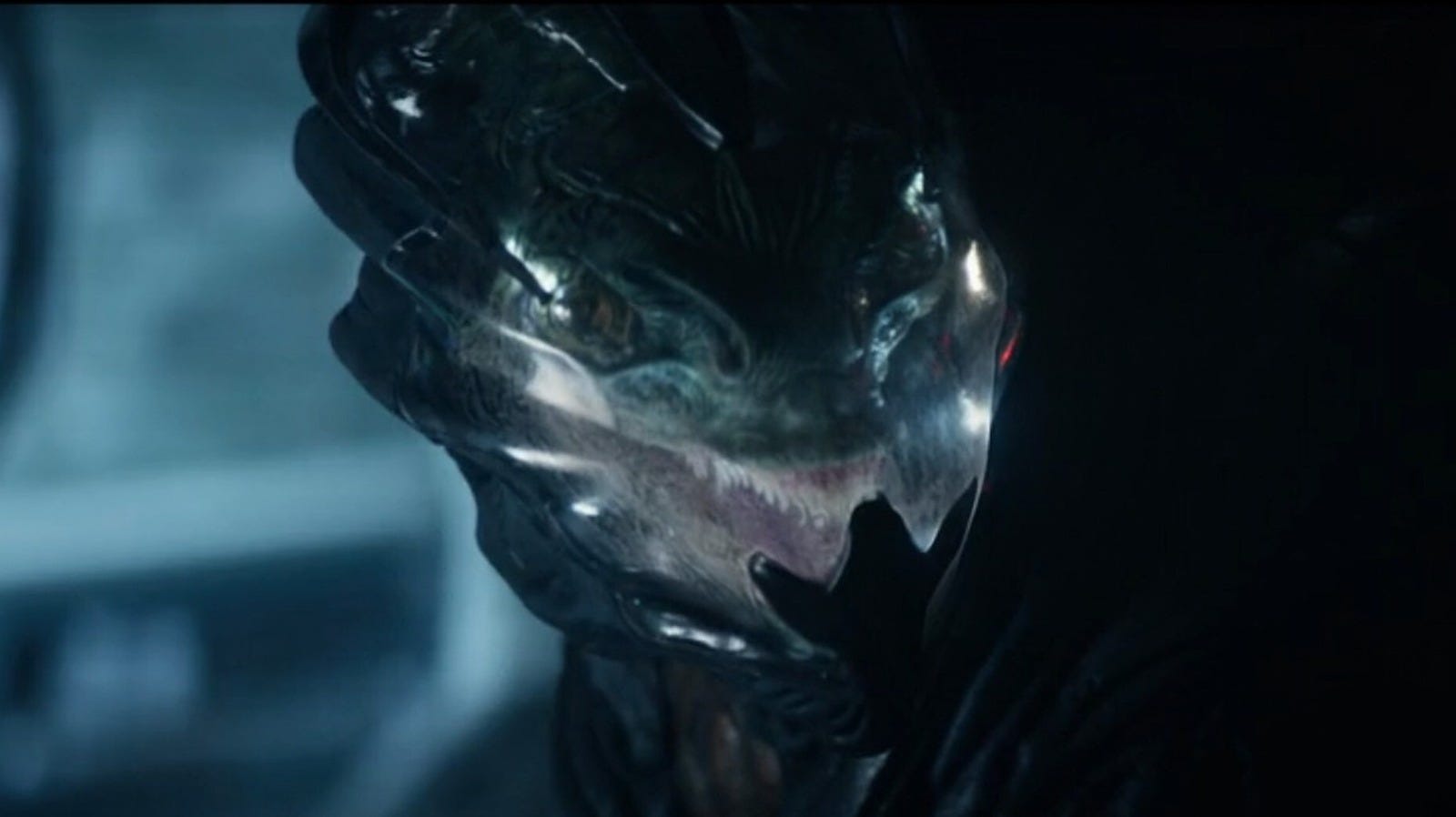
That said, a quick rundown of modern-day Gorn would be useful. What we know about the Gorn so far:
They are quadrupedal reptiles early in life and apparently become bipedal as adults.
They are reportedly cold-blooded, slowed, and/or killed by extremely low temperatures.
They have at least two distinct life stages - hatchling/juvenile and adult. Both have tails.
They are social, interacting in social groups towards a common goal or outcome. Their larger governmental organization is the Gorn Hegemony, located in the Beta Quadrant of the galaxy.
They implant parasitic eggs in other warm-blooded life forms.
They are cunning hunters, often using bait to lure other prey.
They hunt humanoids, deposit eggs in them, and relocate them to “breeder worlds,” where the eggs hatch from the humanoids. Some humanoids are hunted for “sport.”
Hatchlings can implant eggs in hosts, apparently without first mating.
The eggs — or whatever reproductive stage eventually becomes an egg — are transmitted in the Gorn’s saliva or venom. Get sprayed, and you’re a baby factory.
The hatched offspring compete, killing one another until only the strongest Gorn survives.
Mature Gorn return to the breeder worlds to “harvest” the strongest, surviving Gorn. The sole survivor is taken to the homeworld or placed in a “liferaft” and sent into space to get even tougher.
Their civilization has developed warp capabilities and protective gear for being in space.
Through some unknown adaptation or technology, Gorn can survive being in the vacuum of space.
That’s a long, scary list.
If we hold it against earth-based science, how do some major Gorn characteristics check out? That’s what Dr. Noor is here for.
The “Cold-Blooded” Reptile Thing…
“I was absolutely thrilled to see the Gorn come back, and it’s nice seeing more biology around it, as opposed to just sort of the stereotype of like, oh, it’s a reptile, it’s slow and kind of dumb,” Noor says. “They’re not necessarily slow. Especially that original reptile on a hot planet — there’s no reason for it to be slow. Or even cold-blooded, really.”
Matching Gorn biology with what we know about large reptiles that once dominated our planet, there is an argument to be made that, given their activity level, Gorn are warm-blooded. Since the late 1960s, the old picture of dinosaurs as uniformly sluggish, cold-blooded reptiles has largely collapsed. But dinosaur metabolism was probably more complicated than simply warm-blooded or cold-blooded. Some evidence suggests that several dinosaur lineages had high, bird-like metabolic rates, while others, including Stegosaurus and some other ornithischians, evolved lower metabolic rates.
Theropods — the saurischian lineage that includes Velociraptor, Tyrannosaurus, and living birds — show some of the strongest evidence for high metabolic rates. Other dinosaur groups appear to have followed different physiological paths.
Gorn. Warm-blooded space dinosaurs.
The Social Reptile Thing…
Don’t let your mammal-centric feelings about solitary snakes color your judgment.
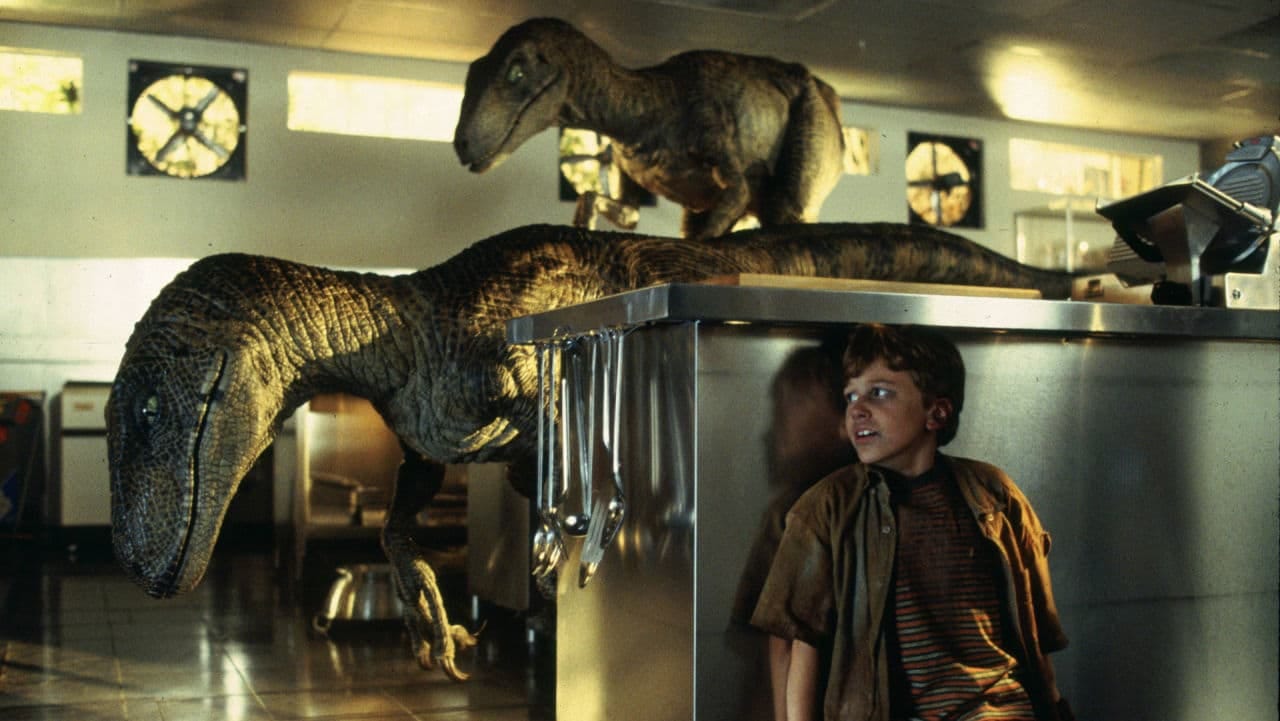
“Reptiles are an incredibly broad group,” Noor says. “We see birds working together, sometimes with what seems like a surprising level of intelligence. “And there’s a large body of evidence to suggest that, along with some modern reptiles, many types of dinosaurs lived in social groups, with some possibly hunting cooperatively.”
Remember Jurassic Park?
“It was long and erroneously thought that reptiles were non-social, but that’s just not true,” Noor says. “Part of that comes from comparing parental care between reptiles and mammals and birds; there’s a lot less. One estimate suggests that roughly 97% of reptile species provide no parental care after laying their eggs. That’s a pretty small involvement. But that three percent…
“Just a couple of examples - some Australian skinks live in monogamous family groupings. So not just mother and father, but also their aunts, uncles, and others. They’ll live together socially and interact socially. Alligators in Florida are known for forming large groups of up to 100 animals. Within those groups, you can see courtship dances and other behaviors that suggest a hierarchy. Even tortoises, which people tend to think of as slow, both physically and mentally, have been shown to learn from watching others. It’s not outrageous that we see intelligent and interactive reptiles like these Gorn in the episodes. We should just be thankful we don’t have them on Earth. They seem to have their act together as a species.”
The Killing Brothers and Sisters Thing…
That’s the Gorn’s very Shakespearean twist - siblicide.
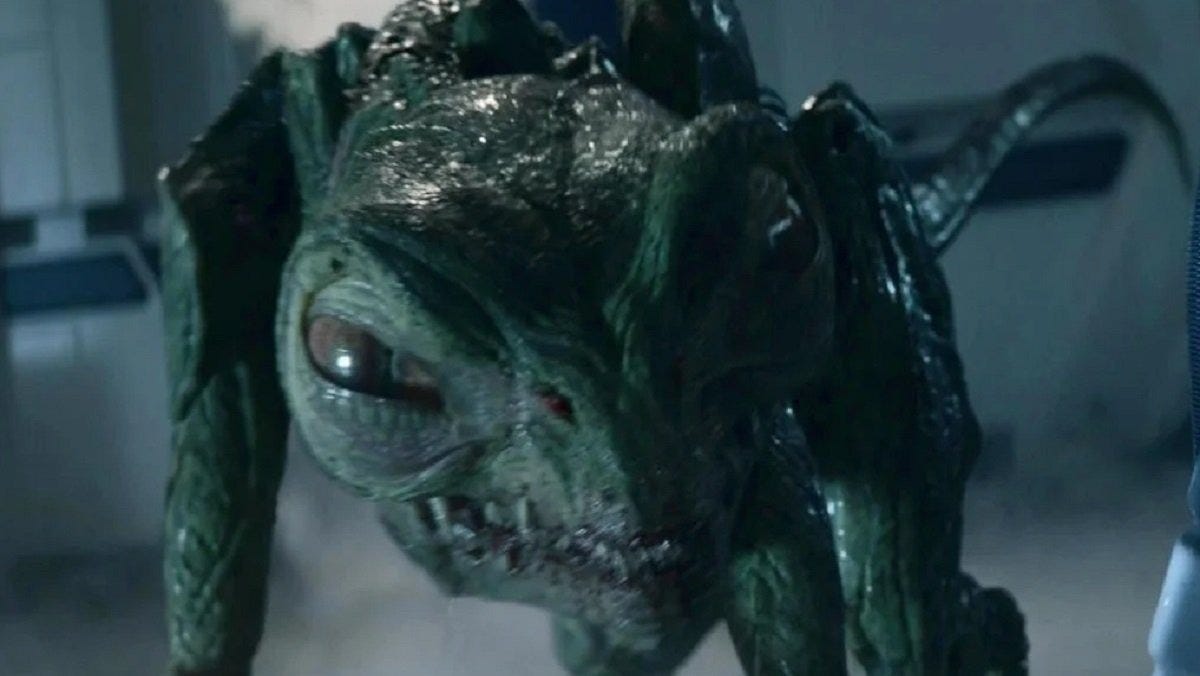
Someone may occasionally want to “kill” a brother or sister, but the Gorn take it to the next level. Shortly after emerging from the host, they go after one another. It’s a creepy, horrific thing as seen in Strange New Worlds.
It’s also seen here.
“There are cases on Earth, but we don’t really know why the animals do it,” Noor said. “This has been studied in boobies — the bird with the unfortunate name — and with them, it’s related to resource scarcity. Basically, the parents produce more offspring than available resources can support, so it’s every baby for itself.”
In the case of the boobies, siblicide results in one hatchling growing larger and stronger than the others, which it then kills or throws from the nest for other predators to pick off.
“It’s certainly not a pretty side of nature,” Noor said. “We tend to see more cooperation between siblings than siblicide. But if resources are limited, it’s better that one makes it than none make it so that the genes can be passed on to the next generation. It wasn’t siblicide, but Star Trek has touched on this idea in the original series episode, ‘The Conscience of the King.’ The crew suspected that the actor was actually Kodos the Executioner, who had put 8000 colonists to death because there weren’t resources for the entire colony.
“Also — siblicide, in a way, could be a hedge against incest and all the problems that can bring, genetically. It’s difficult to mate with your sibling if you’ve killed and eaten all your siblings. The behavior isn’t entirely uncommon, but when it happens between siblings — especially those just hatched — it makes us sit up and notice.”
The behavior is easily explained with the Gorn — the toughest sibling survives. As the stories suggest, mature Gorn return to a hatchling world to pick up the survivor, either to bring them to the home planet or toss them into a “lifeboat” and then into space to keep that “survival of the fittest” thing going.
That’s rough.
The Egg-Spraying Thing…
Gorn hatchlings (and presumably their other forms) spray anything that gets too close to them with a venom that can blind their target but also is loaded with eggs. The eggs enter the host’s body through the mucous membranes or burrow through the skin and start to develop. Sometime later, they hatch and eat their way out of the host.
Hope you’re not eating because this directly correlates to animals on Earth.
“There’s a freshwater mussel genus called Lampsillis in many places that has a little bit of itself that extends outside of its shells and looks like something larger fish would like to eat,” Noor says. “But when the fish comes to bite the lure, the mussel releases a cloud of larvae called glochidia. These latch onto the fish’s gills, where they develop before eventually dropping off. These babies latch on to the fish’s gills, where they feed and grow. They often drop off once they reach a certain size after riding the fish for a few days to months. This fish may suffer a little bit, but usually, they live through the experience.”
But still — very Gorn-like, catching a spray of babies in the face.
But let’s look at the egg spray together with another aspect of Gorn reproductive physiology: the hatchlings are apparently loaded with viable eggs from the start and ready to spray anyone who gets near them.
Not unheard of. Aphids, for example, are “born pregnant.” Other animals follow these lines from birth, but let’s start with aphids as a simple example. Aphids, for example, can quite literally be “born pregnant.” During the asexual part of their life cycle, females produce genetically near-identical daughters through parthenogenesis. Those daughters can already contain developing embryos of the next generation — a reproductive trick called telescoping generations.
Reproduction without a male is called parthenogenesis and is relatively common in insects, amphibians, and reptiles.
“Geckos, whiptail lizards, some snakes, and even Komodo dragons can reproduce asexually if the conditions are all right for it,” Noor said. “Essentially, though, most are just making clones of themselves, if that’s the case.”
In the old ecological shorthand, the Gorn look strongly r-selected. That means producing large numbers of offspring quickly, with the expectation that many will die before reproducing. In r-selected species, many offspring are produced, but not all of them will survive.
It may become clearer if we can pull back and look at it from a distance. Gorn eggs are laid inside hosts, say 20 colonists, each getting four viable hatchlings inside them. 80 hatchlings show up. That’s explosive growth and more than the environment can support, so, through competition for resources (via siblicide), their numbers drop until more hosts are found.
This style of explosive growth might be ringing recognition bells in your head - it’s quite similar to the exponential growth seen in viruses. Put a Gorn hatching in a large city, and let it spray. Each host produces four viable offspring, which then spray others, generation after generation. That was COVID-19.
Virus spread can be measured by its Basic Reproduction number, R0 (R-naught). During the height of the pandemic, epidemiologists hoped for R0 to drop below 1, meaning that every infected person infected, on average, fewer than one other person, making it extremely difficult for the virus to spread. During the initial COVID-19 outbreak, we looked at the classic Batman: Contagion storyline for examples of the R0 of the “Clench” virus and its exponential growth. (archive articles coming soon!)
If each infected host ultimately produced four hatchlings, and each hatchling successfully infected one new host, the process would have an effective reproduction number of 4. Not wildly big, but large enough to do the job. Of course, the hatchlings would also be going after one another, so the analogy’s not perfect.
But if you want to think of the Gorn as intelligent, viral space dinosaurs, that does get the idea across.
With all that in their favor, what stops the Gorn from taking over star systems and, ultimately, galaxies?
I’m going to go with the Federation. And probable Klingons and Romulans, too. Maybe the Borg. Competitors for resources on a galactic scale.
That Gorn Reproduction Thing…
If you were thinking that the Gorn probably can’t rely on cloning alone forever, you may be right — although nature is weirder than that. Some species reproduce asexually for enormous stretches of evolutionary time. But for many organisms, sexual reproduction offers a major advantage: recombination continually reshuffles genetic variation.
A newly established population founded by only one or a few individuals can also suffer from a founder effect, carrying only a fraction of the genetic variation found in the original population. Genetic variation enables adaptation to the environment and protection against threats. If everyone’s genes are the same and a disease is introduced, no one has a defense for it, and the population is wiped out.
Genetic variation usually gives populations more evolutionary options when environments change.
So a single hatchling could establish a small colony of Gorn on a breeder world, but then what? Yes, there would be some mutation when the DNA of the Gorn is being copied, but that wouldn’t be a huge amount. Asexual reproduction will only get them so far. You need sex to really shine as a species.
Come out on top of the heap on a Gorn breeder world, and you may get picked up and taken back home.
To have sex.
Sexual reproduction reshuffles genetic material, producing genetically different offspring and potentially giving populations more ways to respond to disease and environmental change. More robust offspring can better handle environmental challenges. Without sexual reproduction, your species is at a serious disadvantage to those that do.
That Gorn Evolution Thing…
How would you end up with a Gorn world, anyway? In the world of Star Trek, it’s a given - lots of alien species. But let’s play in our sandbox — Earth.
Biologist Stephen Jay Gould famously explained the chance nature of evolution by saying that if you “wound the tape back” on Earth’s evolution, there’s no guarantee you would end up with humans being the dominant species.
Biologist Jonathan Losos, author of Improbable Destinies: Fate, Chance, and the Future of Evolution, explained Gould’s classic line through the use of Disney’s The Good Dinosaur. The Chicxulub impactor — the asteroid that helped wipe out the non-avian dinosaurs 66 million years ago missed the Earth in the film. As a result, dinosaurs remained the dominant life forms on the planet but continued to evolve.
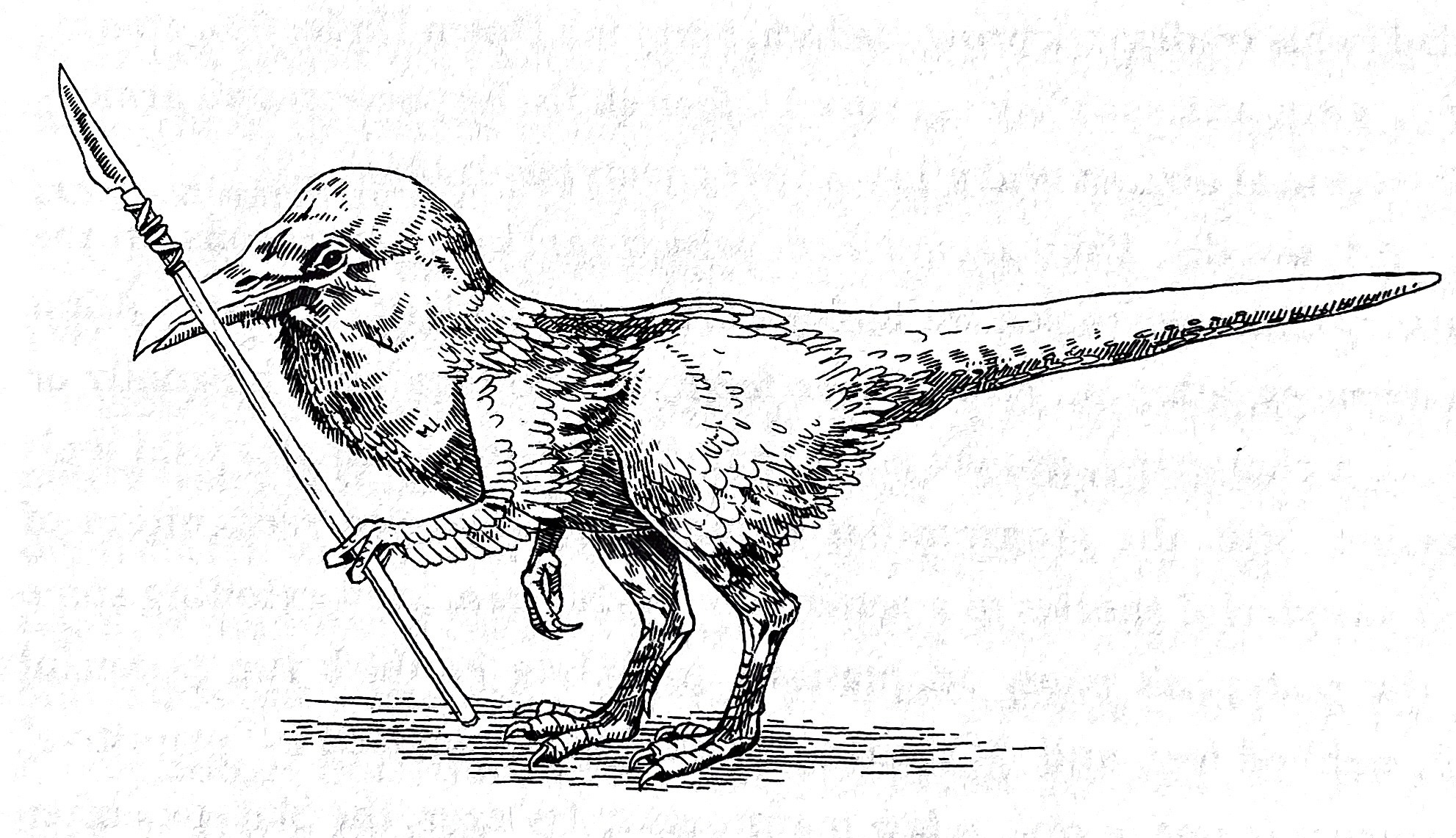
On that Earth, our Gorn analogs — theropods like Velociraptor and troodontids — were doing well — feathered, hunting in packs, and more than likely, demonstrating other bird-like behaviors. Given their anatomy, these bird-like dinosaurs would likely retain the classic theropod body plan, with the head carried forward and the tail acting as a counterbalance, even though they walk on two legs. If their brains and skulls became larger over millions of years, their bodies would have needed to compensate for the shifted center of mass — perhaps with changes to the tail, torso, or posture.
This isn’t to say that a fully bipedal humanoid (or Gorn)-style dinosaur couldn’t have evolved on Earth — it’s just that the theropods were doing pretty well, and the pathway for the evolution of a proto-Gorn wouldn’t have been a clear one. They would have had tough competition from the already-established theropods, which certainly would’ve seen them as a delicacy.
Back to Losos’ theropod-ruled earth…
As Losos explains, there’s no reason to think that these super-smart birds wouldn’t have adopted the use of tools, artificial colorations, tribal society, and even technology. As the illustration from Losos’ book offers:
But as for “pure” Gorn on another world? Noor: “I don’t think it’s a stretch. All of these features we see with the Gorn are at least very close to those we see in the animal kingdom on Earth, and evolution tends to follow its tried-and-true patterns for overcoming environmental obstacles. So it’s not a stretch to think that all of those characteristics we’ve been talking about could have come together in one particular, large reptile. Nothing there is breaking the laws of physics or something like that. I’m just glad it didn’t happen on Earth.”
Like all Strange New Worlds fans, Noor wants to see more Gorn, and hey, if there’s an opening for a science team to set up a research outpost on the Gorn homeworld someday (safety must be guaranteed), sign him up. “I really want to know their origin,” Noor said. “I’m wondering if the Gorn are going to touch on what we saw in the Voyager episode, ‘Distant Origin,’ where some dinosaurs from Earth somehow moved into space and wound up in the Delta Quadrant, and evolved their civilization, or if they’re something entirely new. I hope we get to find out.”
Curiosity is what brought me here.
Teaching is what I do with it.
If you’d like to read more about education, classrooms, students, and the craft of teaching, you’ll find those stories in Teacher, Teacher.
Great article, much cool information and thoughts.
Your example of sibilicide was a species that does it occasionally. Some sharks (most notably sand tigers and threshers) do it all the time. In the womb they eat all their siblings so only one per womb is born, on sand tigers sometimes one will actually travel to the other womb just to eat the last sibling. Oophagy and Embryophagy are other terms for it.
On thee evolution side, there is a bit of dark humor in the dinosaur going out in a mass extinction event, given they only came to dominate because of the earlier one. The End Triasis extinction event took down the Rauisuchidae who were out competing dinos in every environment, and were evolving into basically every nice that dinosaurs later occupied. Just as there's no guarantee that mammals were going to take over, there was no guarantee for the dinos either, we could have had crocodilians. Also a plausible path for the Earthly Gorn.
The Voyager dinos were called Voth, and it's a very fun episode!