
The Science of Avengers: Doomsday: Can Universes Really Collide?
Marvel’s multiverse brings together alternate Earths, branching timelines and colliding universes—and the real physics may be even stranger.
Artifact Recovered: original version publication date: 5/3/22
This piece was originally published on a previous version of The Science Of and has been recovered from the digital strata. It’s re-presented here because it’s useful, weird, fascinating, updated, or some combination of the four. This piece was heavily updated to reflect the Avengers: Doomsday connection and updated science since its original publication.
The Marvel Cinematic multiverse is about to have a terrible, horrible, no good, very bad day.
In Avengers: Doomsday, heroes from three different universes are set on a collision course. Then comes Secret Wars a year later, where (if the movie borrows even loosely from the comics) the walls separating those universes may come down altogether, leaving the MCU with one, streamlined universe.
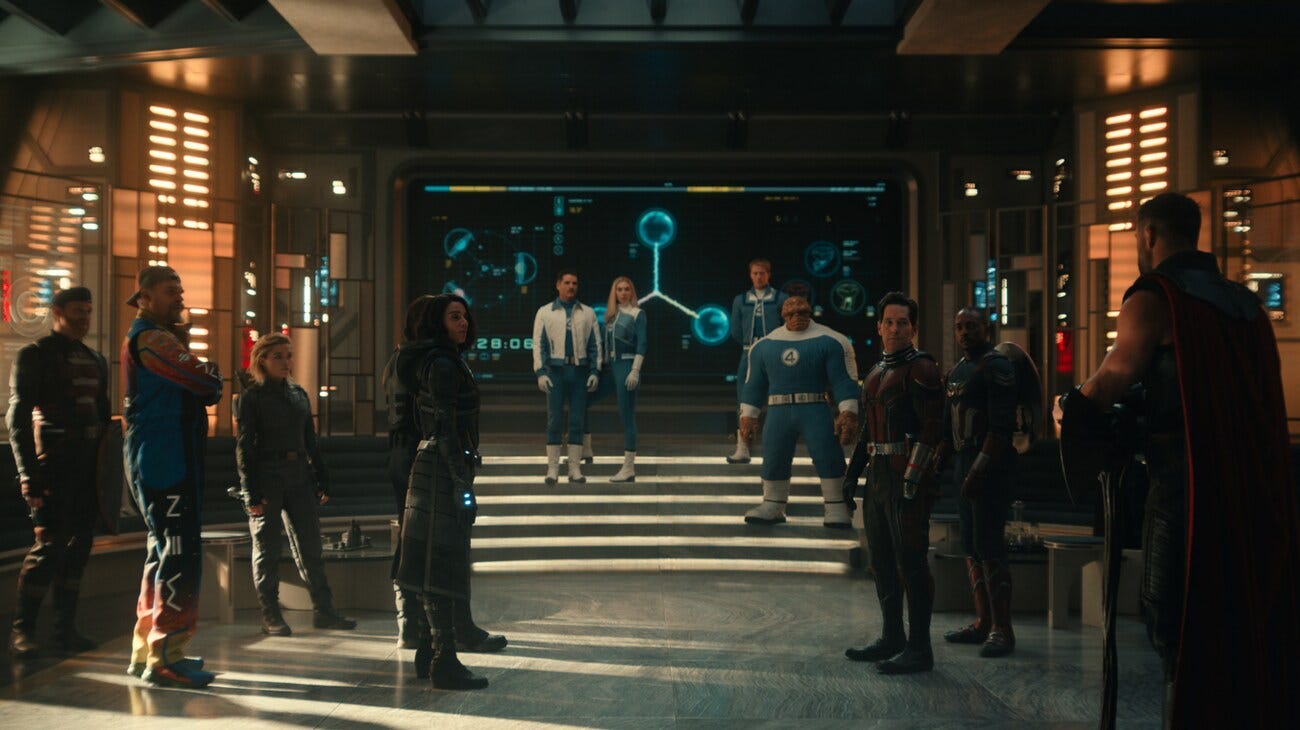
Before Doctor Doom starts mashing realities together, we should probably settle a fairly important question:
What exactly is a “universe,” and what do physicists mean when they say there might be more than one?
There was a time when the multiverse was specialized knowledge shared mostly by comic-book fans (“Flash of Two Worlds” and everything after, yo) and theoretical physicists. There’s a combination for you. Now everyone knows what a multiverse is.
Or thinks they do. No shade meant, my nerds.
Marvel uses universe, timeline, dimension, world, and reality as though all five words came free in the same box. In Avengers: Endgame and Loki, timelines branch when events unfold differently. Elsewhere, parallel universes appear to exist independently, complete with their own histories and inhabitants. And in Doctor Strange in the Multiverse of Madness, entire universes can collide in events called incursions.
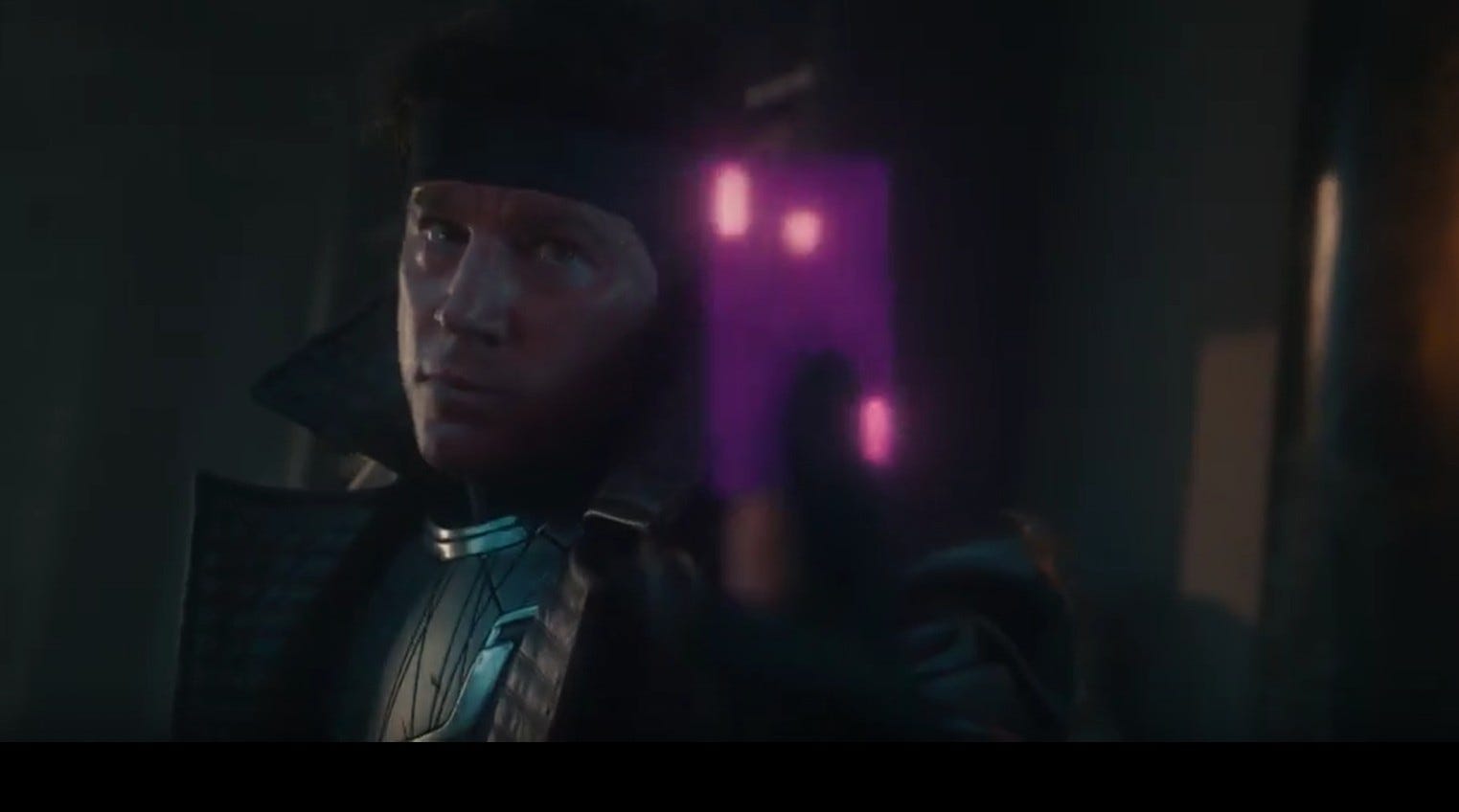
Those are not alternate names for the same thing. They are different ideas wearing one very large multiverse trench coat.
This is going to be a deep dive, so buckle up.
So What Counts as a Universe?
Let’s start with the least exotic kind of multiverse, the one that may not be a multiverse at all. The one we can see.
We can see only the parts of the cosmos whose light has had time to reach us. That region is called the observable universe, and it extends roughly 46 billion light-years in every direction.
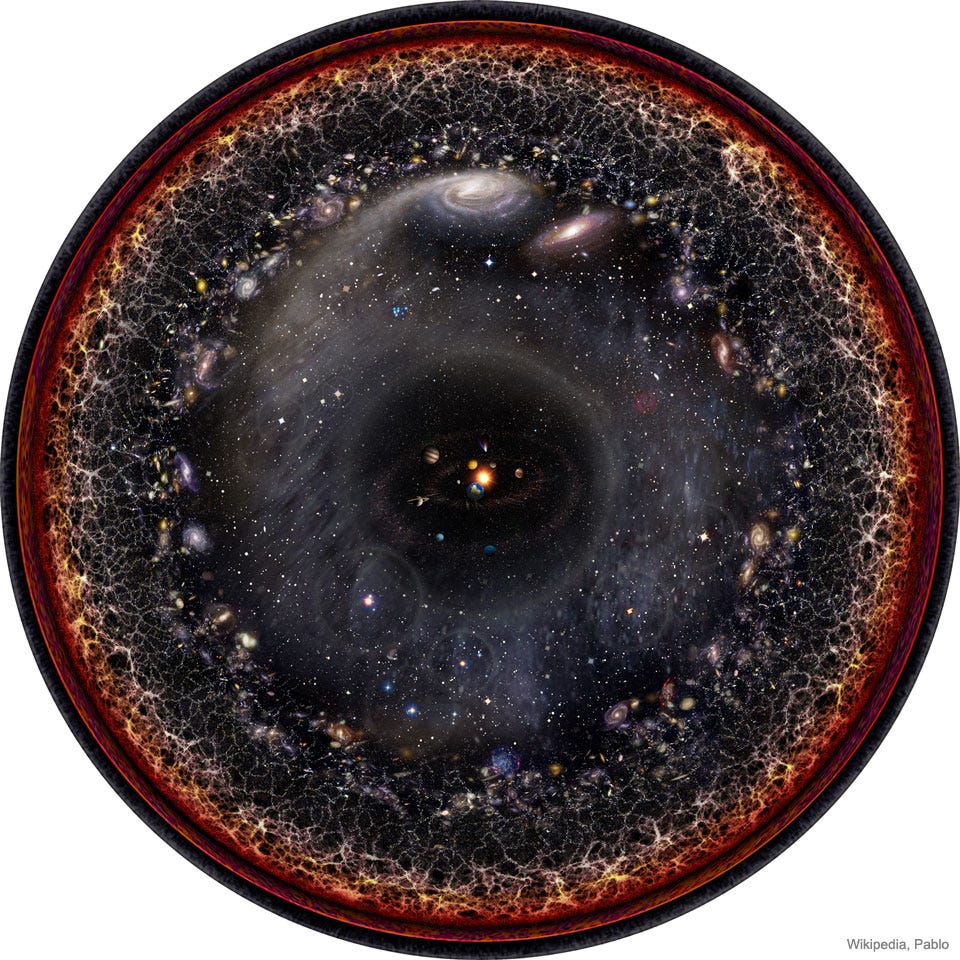
Wait. The universe is about 13.8 billion years old. How can we see something 46 billion light-years away?
Because the universe expanded while the light was traveling. The objects that emitted the oldest light we see were much closer when that light began its journey. Space stretched. They are now much farther away.
But the edge of the observable universe isn’t the edge of anything physical. There’s no wall there. No drop-off. It’s simply the farthest boundary from which light has been able to reach us.
Beyond it, there may be considerably more universe.
Not another universe, necessarily. Just more of this one.
Picture the cosmos as an enormous quilt in a dark room. The observable universe is the circular patch illuminated by our flashlight.
Move the flashlight, and you reveal a different patch. Move it only a little, and the two circles overlap. Move it far enough, and you uncover a region containing galaxies whose light has never reached us—and may never reach us.
Cosmologist Max Tegmark calls this a Level I multiverse, although the name makes it sound more exotic than it is. These regions wouldn’t have different laws of physics, extra dimensions, or evil versions of you with sinister facial hair. They would simply be unimaginably distant parts of the same cosmic quilt.
The universe may continue far beyond the patch we can see. It may even continue forever.
And if it does, things start getting weird again.
An infinite universe contains an infinite amount of stuff—but infinity alone does not guarantee another Earth.
For that, we need a few additional assumptions. Matter must be spread more or less uniformly across the larger cosmos. A region the size of our observable universe must have only a finite number of possible arrangements. And those arrangements must be distributed with enough randomness that, given infinite space, they eventually begin to repeat.
If all of that is true, then somewhere beyond the cosmic horizon is another Earth.
Keep going, and there should be another you. Then another. There’s a variation of you who became a physicist. A you who speaks German. A you with a deeply regrettable mustache. And eventually, you’re sitting on their device, reading this exact same sentence while another version of me wrote it.
Infinity is weird.
These wouldn’t be alternate timelines created when someone made a different decision. They would be ordinary collections of matter, unimaginably far away, that happened to fall into familiar arrangements.
How far away?
Tegmark estimated that the nearest region containing a person identical to you might be about 1010^29 meters away.
That number is not a typo. It is a 1 followed by roughly 100 octillion zeroes.
So yes, another you may be out there.
No, you are not going to visit.
Universes Blowing Bubbles
So far, our “multiverse” has consisted of distant regions of one enormous (and possibly infinite) universe. But what about just… “more” universes?
Actually, there is a way to make those. Theoretically.
To cook up more universes, we have to go back to a tiny fraction of a second after the Big Bang, when the infant universe may have undergone an extraordinarily brief period of expansion called cosmic inflation.
“Extraordinarily brief” barely begins to describe it. Inflation may have begun around 10-36 seconds after the Big Bang and ended by roughly 10-32 seconds after. During that sliver of time, space expanded by a crazy amount.
Physicist Alan Guth proposed inflation in 1981 to explain several suspicious things about our universe: why it looks so nearly flat, why distant regions have almost the same temperature even though they appear never to have been in contact, and why the cosmos is so remarkably uniform on its largest scales.
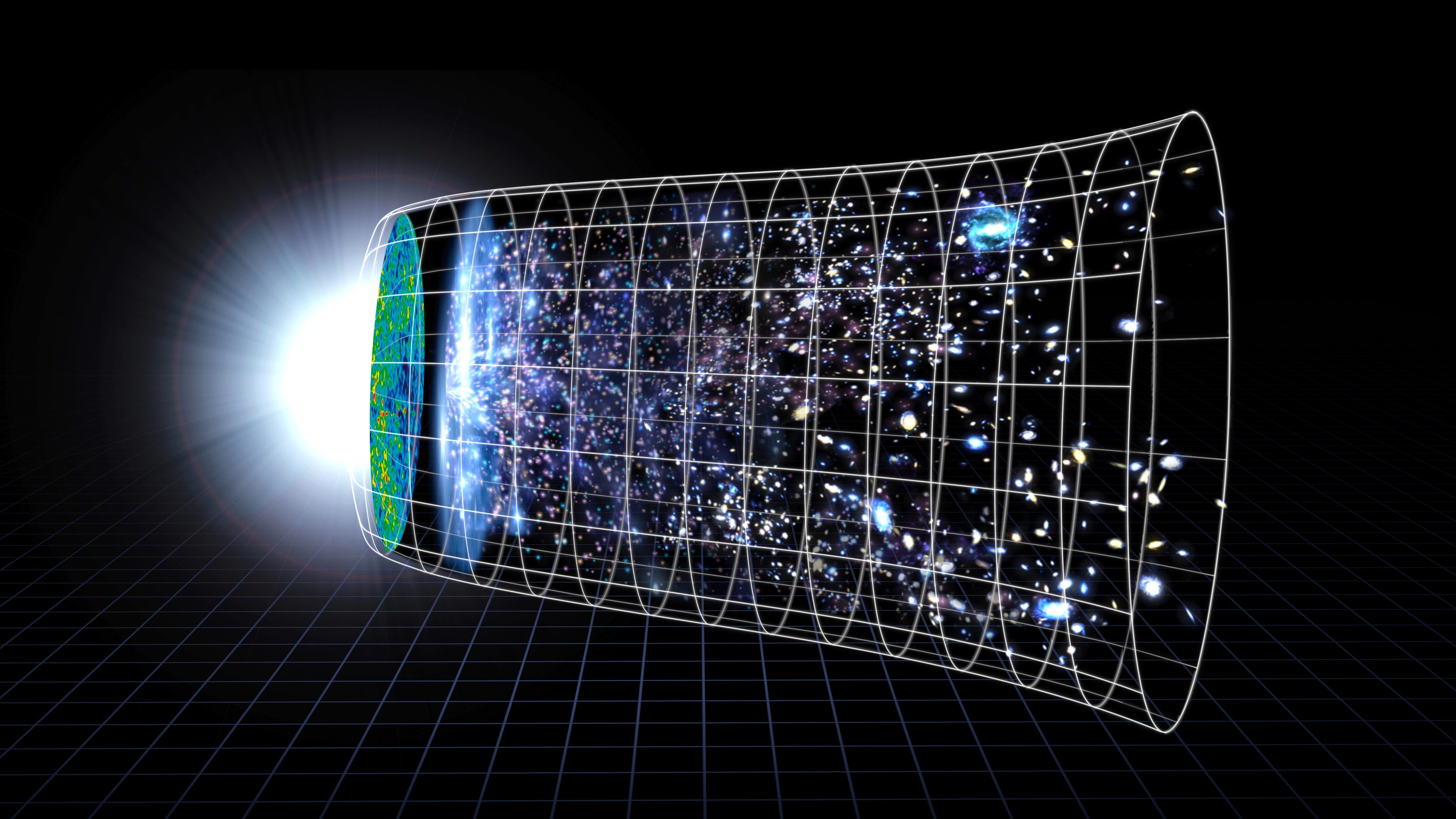
Inflation smooths those problems out—almost literally. Take a tiny, wrinkled scrap of spacetime and stretch it violently enough, and the part you can see begins to look flat and even.
But some versions of inflation come with an unexpected complication: inflation may not have ended everywhere at once.
In one region, inflation stops. Its energy transforms into matter and radiation, producing a hot, expanding cosmos like ours. Elsewhere, inflation continues, stretching space at a staggering rate. Then it stops in another region. And another.
Each region where inflation ends becomes what cosmologists call a bubble universe or pocket universe.
The larger inflating space keeps producing bubbles while also expanding fast enough to make room for still more bubbles.
It’s a universe factory whose factory floor grows faster than it can fill it.
The bubble image is useful; try to resist going too far with the metaphor. These universes aren’t soap bubbles floating through some larger cosmic room. That would require an even bigger room, followed immediately by the question of what that room is sitting in, and now we’ve ruined everyone’s afternoon.
A bubble universe is a region of spacetime where inflation has ended. Its “outside” is still-inflating spacetime, expanding so rapidly that neighboring bubbles may remain permanently separated even while each grows enormously on the inside.
Depending on the model, different bubbles could also settle into different physical states. The fundamental forces might have different strengths. Particles might have different masses. The cosmological constant might be larger, smaller, or catastrophically unfriendly to the formation of stars, planets, and anything else.
The underlying physics would still come from the same larger theory. But each bubble could be running that physics with different settings.
Now for the part Doctor Doom would care about:
Bubbles might collide.
Not with planets slamming together along a glowing seam in the sky. A collision would disturb the structure of spacetime where the bubbles met. Some models predict that such an ancient collision could leave a circular scar in the cosmic microwave background—the oldest light in the universe.
Scientists have looked for those scars.
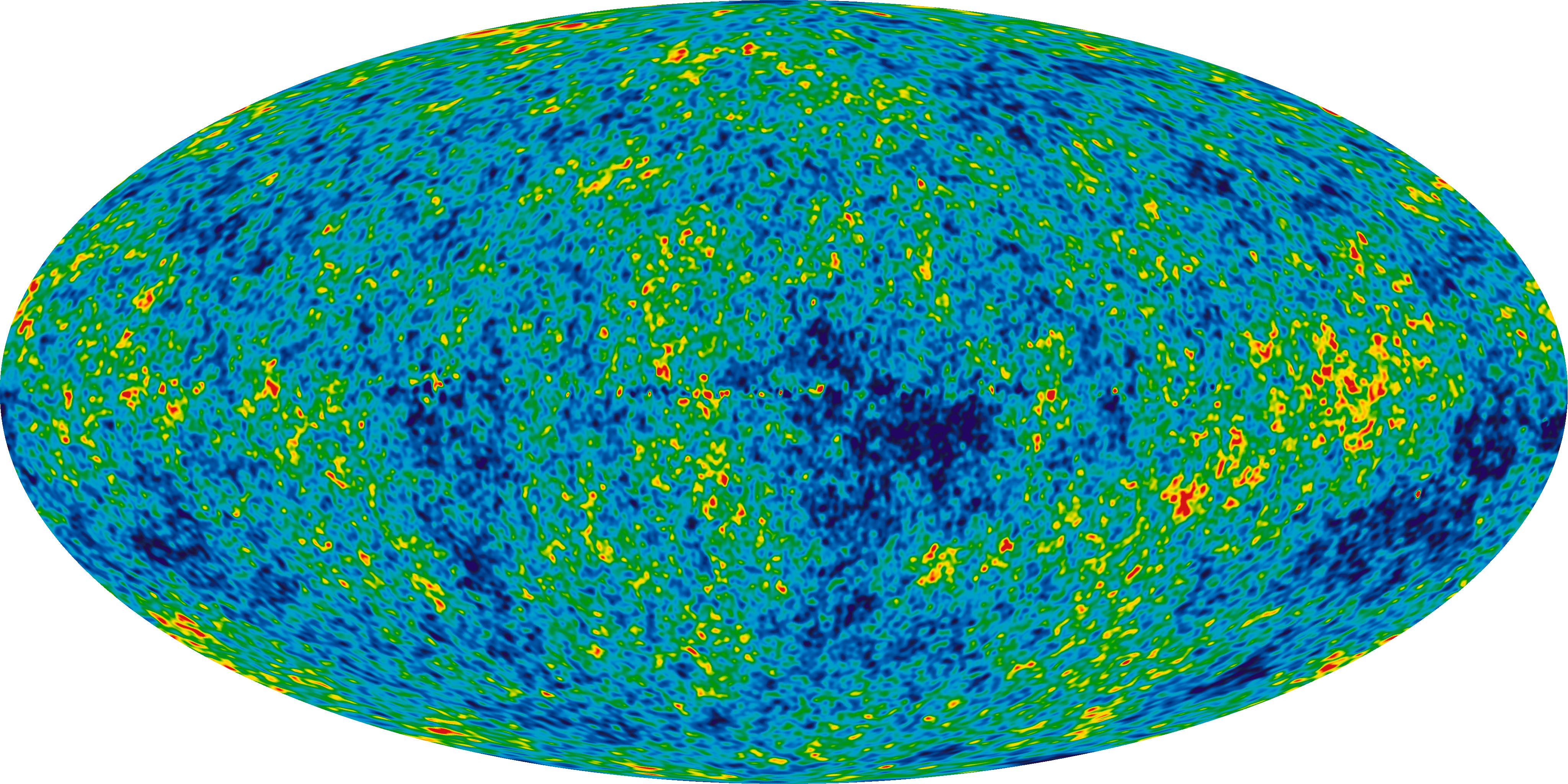
So far, they haven’t found a convincing one.
Bubble universes therefore give Marvel something it desperately wants: distinct universes that can, at least theoretically, collide.
Every Outcome Happens - Maybe
Bubble universes give Marvel separate universes. But they don’t give it the branching timelines of the Time Variance Authority.
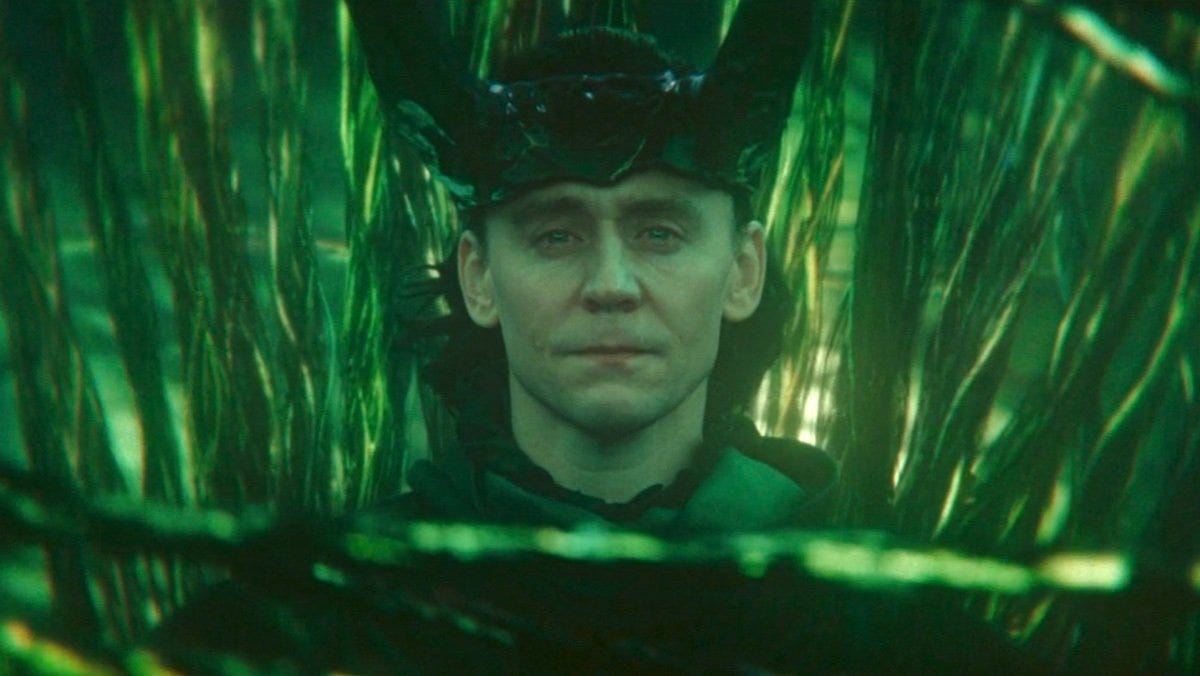
For those, we need quantum mechanics.
This is the territory Marvel enters in Avengers: Endgame, Loki, and What If…? A decision changes. An event unfolds differently. The timeline branches, producing another reality in which Loki escapes with the Tesseract, Peggy Carter receives the super-soldier serum, or Doctor Strange makes an extremely unfortunate romantic decision several thousand times.
It’s wonderfully clean storytelling.
The physics is not that considerate.
In 1957, graduate student Hugh Everett III proposed what he called the relative-state formulation of quantum mechanics. The name “Many-Worlds Interpretation” came later, but it captured the part everyone noticed:
When a quantum event has several possible outcomes, the universe does not choose one and discard the others.
They all happen.
In the usual simplified account of quantum mechanics, a particle can exist in a combination of possible states called a superposition. Measure it, and that superposition appears to collapse into one definite result.
Everett’s big move was to remove the collapse.
The quantum state continues evolving, with each possible result represented in a different branch. In one branch, the detector records one outcome. In another, it records the other. An observer becomes part of that branching process, seeing a definite result in each branch while remaining unaware of the others.
Nobody has to bomb the Sacred Timeline. The universe does all the branching itself.
This is where Schrödinger’s cat gets dragged into the box.
The cat is sealed inside with a radioactive atom, a radiation detector, and a mechanism that releases poison if the atom decays. Quantum mechanics allows the atom’s undecayed and decayed states to exist in superposition. Connect those states to the machinery and the cat becomes entangled with them:
Atom intact. Cat alive.
Atom decayed. Cat dead.
Schrödinger devised the thought experiment to show how ridiculous quantum superposition becomes when extended to an entire cat. He was making a point, not proposing an exciting new method of pet ownership.
In a collapse interpretation, opening the box yields a single definite result. In Many Worlds, nothing collapses. The cat, the detector, the box and eventually the person opening it all become entangled in the larger quantum state. One version of the observer finds a living cat. Another finds a dead one.
But the observer’s decision to open the box does not create the branches. Consciousness isn’t the trigger. The cat does not wait in quantum limbo until somebody bothers to look.
The crucial process is decoherence.
Quantum systems do not remain politely isolated. They interact with air molecules, light, heat and everything else around them. Information about their possible states spreads into the environment. The alternatives rapidly lose their ability to interfere with one another and begin behaving like separate, effectively classical histories.
This happens constantly and unimaginably quickly. There is no cosmic alarm that sounds when Loki picks up the Tesseract. No judge deciding that one choice is important enough to qualify as a Nexus Event.
Marvel has the order backward. Loki’s decision doesn’t make the universe branch. If Many Worlds is correct, the quantum processes inside Loki, the Tesseract, the floor beneath them, and every photon bouncing around the room have already been producing an extraordinarily complicated branching structure.
By the way, the branches don’t all peel off and get sorted and stored. Remember, we’re in a single universe (think of the bubbles). All the branches remain parts of the same universe, but are separated within an abstract mathematical realm called Hilbert Space.

The dramatic choice is merely where the writers decide to start paying attention to the event that causes a split, and what’s different in that timeline.
And that creates a fairly serious problem for Marvel.
Once those branches decohere, they are not supposed to remain neighboring roads that someone can revisit with the right wrist-mounted gadget.
The TVA treats branching timelines like physical roads. Agents step from one to another using TemPads. Reset Charges prune unwanted branches. The Time Loom organizes the survivors. By the end of Loki season 2, the whole collection of timelines can be gathered up and held like the glowing roots of an extremely consequential tree.
That is excellent television.
It is not Many Worlds.
An Everett branch is not a miniature universe sitting beside ours at a slightly different cosmic address. The branches remain parts of one universal quantum state. Decoherence prevents their different outcomes from producing observable interference, making each branch behave as though the others no longer exist.
“As though” matters.
Quantum mechanics is reversible at its foundations. The information connecting the branches is not necessarily destroyed; it has been dispersed into the environment. In principle, interference could be restored if every interaction responsible for the decoherence were precisely reversed.
All you would have to do is locate and control every air molecule, photon, vibration and particle that carried away information about the event, then return every one of them to exactly the right quantum state.
So: easy.
For a carefully isolated electron, scientists can preserve or recover interference. For Loki, the Tesseract, the room around them and the rest of the universe, the required information has spread so far and become entangled with so many particles that reversing the process is effectively impossible.
A TemPad would not merely need to locate another timeline. It would have to reconstruct and manipulate the quantum state of an entire macroscopic history.
Pruning creates another problem. Many Worlds preserves every outcome through the continuous evolution of the universal wavefunction. It offers no mechanism for deleting one branch while leaving the others untouched.
Marvel apparently noticed at least part of this problem. Loki eventually reveals that pruning does not actually erase matter. It dumps the pruned objects—and people—into the Void at the end of time.
The TVA is not destroying timelines. It is taking out the multiversal trash.
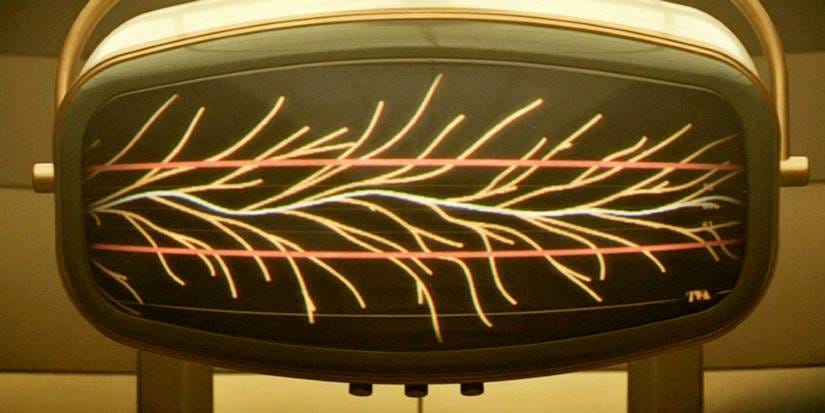
And none of this gives us an incursion. Everett branches are not objects floating beside one another in space. They do not have surfaces that can collide, planets that can overlap, or boundaries Doctor Strange can accidentally weaken.
Many Worlds gives Marvel all the alternate outcomes it could ever want.
It just won’t let Marvel visit them.
We know branches can affect one another before decoherence completely separates them because quantum alternatives can produce interference. That brings us to the most famous experiment in quantum mechanics: Young’s Double-Slit Experiment.
The experiment begins with a wall containing two narrow slits and a detecting screen behind it.
Fire ordinary particles at that wall—tiny BBs, say—and you expect two clusters on the screen. Some pass through the left slit. Some pass through the right. Two slits. Two bands. Completely reasonable.
Light, electrons, and other very small pieces of stuff refuse to be that cooperative.
Send light through both slits, and it spreads outward in overlapping waves. Where the crests meet, they reinforce one another. Where a crest meets a trough, they cancel. The screen shows an interference pattern: alternating bright and dark bands.
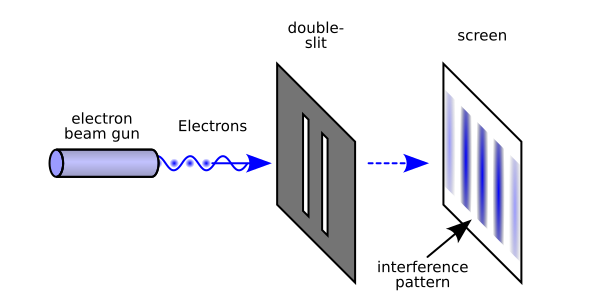
Fine. Light is a wave.
Except light also arrives at the screen in individual packets called photons.
So turn the source down. Send the photons through one at a time.
Each photon arrives at one specific point. A dot appears on the screen. Then another. And another. At first, the dots look random.
Keep going.
Slowly, the interference pattern returns.
One photon at a time, the universe draws a wave pattern.
That should bother you at least a little.
There is never a second photon traveling beside the first, giving it something to interfere with. Each photon behaves as though both possible paths, the left slit and the right, contribute to where it eventually lands.
This is not a tiny particle secretly checking both hallways like a TVA agent looking for the correct Loki. Quantum mechanics describes it using a wavefunction that contains amplitudes for both paths. Those amplitudes meet on the far side of the barrier and interfere, changing the probability that the photon will appear at each point on the screen.
The photon still arrives as one dot.
But the pattern formed by thousands of those dots contains information from both possible paths.
Now place a detector at the slits that can determine which path the photon took.
The interference pattern disappears.
This is usually described as the photon “knowing it is being watched,” which is a wonderful sentence if your goal is to make quantum mechanics sound haunted.
But the photon knows nothing. A conscious observer is not required. The detector must physically interact with the photon to record which-path information. That interaction entangles the photon with the detector and its surroundings. The two paths become distinguishable, decoherence takes over, and the interference is lost.
In Marvel terms, the alternatives can affect the same outcome only while they remain part of the same coherent quantum story.
Once the universe has recorded enough information to distinguish “photon went left” from “photon went right,” the alternatives stop behaving like two Avengers teaming up in the same third-act battle. They become separate histories that can no longer coordinate.
Many Worlds offers one way to understand what happened. The wavefunction never collapses. Both alternatives remain within the total quantum state, and their amplitudes produce the interference pattern while they are still coherent.
But this is not evidence that two fully formed universes briefly opened portals and fired photons at one another. These are quantum alternatives within a single experiment, before environmental interaction has separated them into effectively independent branches.
The double-slit experiment therefore shows us something stranger—and more restrained—than Marvel’s multiverse.
Reality can contain several possible paths at once. Those possibilities can interfere. And from that interference, one definite dot appears on a screen.
Then we do it again.
And again.
And probability slowly becomes a picture.
Two Universes Walk Into…Each Other
Many Worlds gives Marvel branching realities but refuses to let them collide.
For that, we need something with a little more structural integrity.
We need branes.
The name is short for membranes, although these are not necessarily thin, floppy sheets. In string theory, a brane can have different numbers of spatial dimensions. A zero-brane is pointlike. A one-brane resembles a string. A two-brane resembles a sheet.
Our universe could—in some highly speculative models—be a three-brane: three dimensions of space embedded within a larger, higher-dimensional spacetime called the bulk.
Picture two slices of bread in a loaf. Each slice is its own three-dimensional universe. The loaf provides an additional dimension separating them.
Yes, a slice of bread is two-dimensional, and our universe has three spatial dimensions. Analogies sometimes arrive missing a dimension. We work with what we have.
Everything we know- atoms, planets, stars, Avengers- might be confined to our brane. Light could travel across it but not leave it, which would make another brane invisible even if it were nearby in the higher-dimensional bulk.
Gravity might be different. In some braneworld models, gravity can extend into the bulk. Its strength could appear weaker to us because it is spreading through dimensions the other forces cannot enter.
That idea is speculative. We have no evidence that our universe is a brane, no confirmed extra spatial dimensions, and no detected gravitons wandering off into the bulk.
But branes give Marvel something the other models could not:
Two entire universes can exist near one another without sharing the same space.
And if they can move through the bulk, they can potentially collide.
Now we have something that begins to resemble an incursion.
Begins to.
Because when branes collide, Earth-616 does not appear in the sky above Earth-828 while both versions of New York fight over the same parking spaces. In some ekpyrotic and cyclic models, the collision releases tremendous energy and produces conditions resembling a hot Big Bang.
Side Note: We’ve talked before about how our universe doesn’t show any solid evidence for being cyclic, back when we discussed Galactus’ origin story.
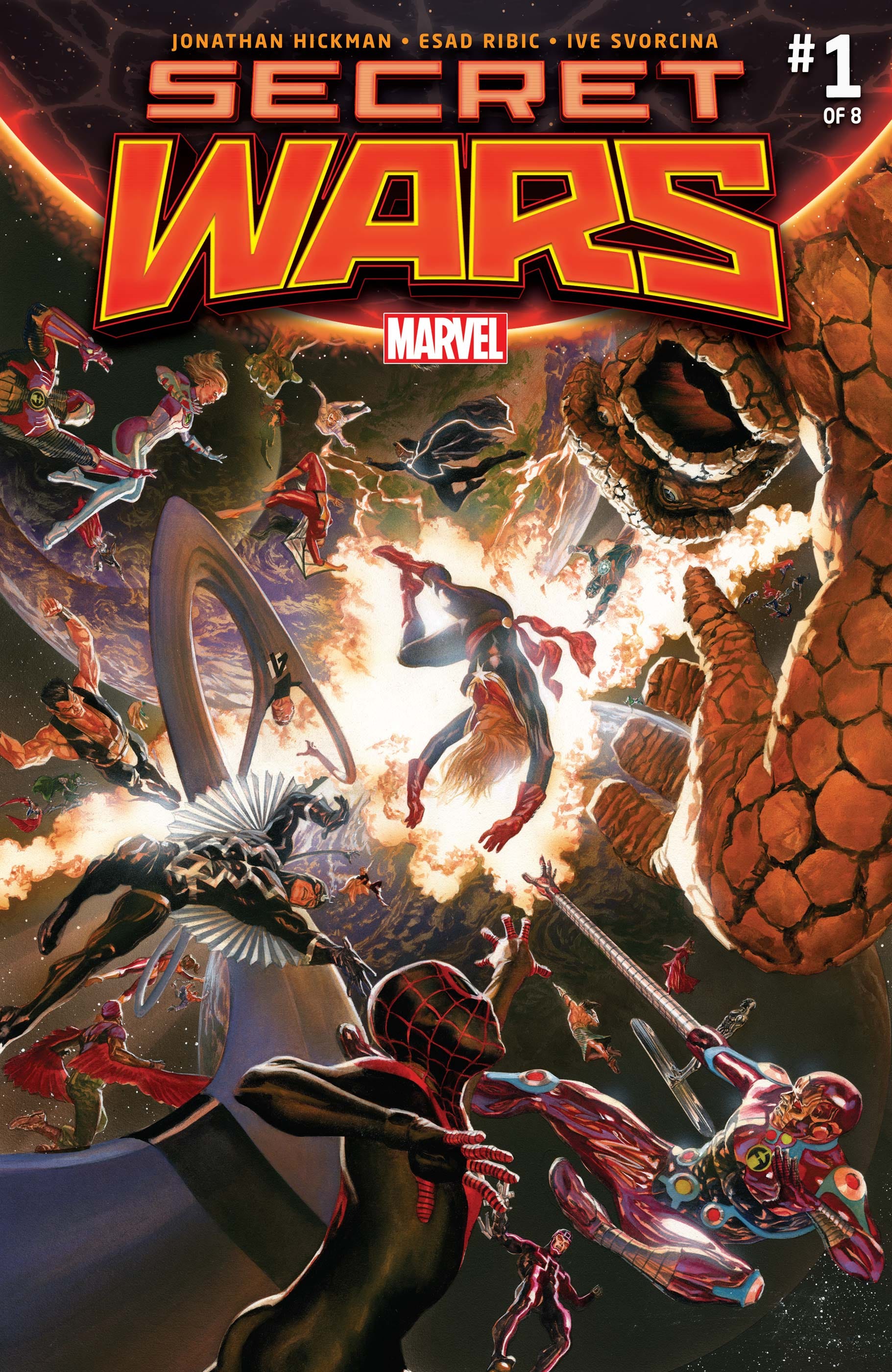
In Secret Wars (the comic series…) Marvel’s incursions can end a universe.
A brane collision might begin one.
Marvel’s incursions borrow the collision and leave behind almost everything else.
In Doctor Strange in the Multiverse of Madness, Reed Richards explains that an incursion can begin when someone from one universe spends too much time in another. The boundary between the universes erodes. They collide. One or both may be destroyed.
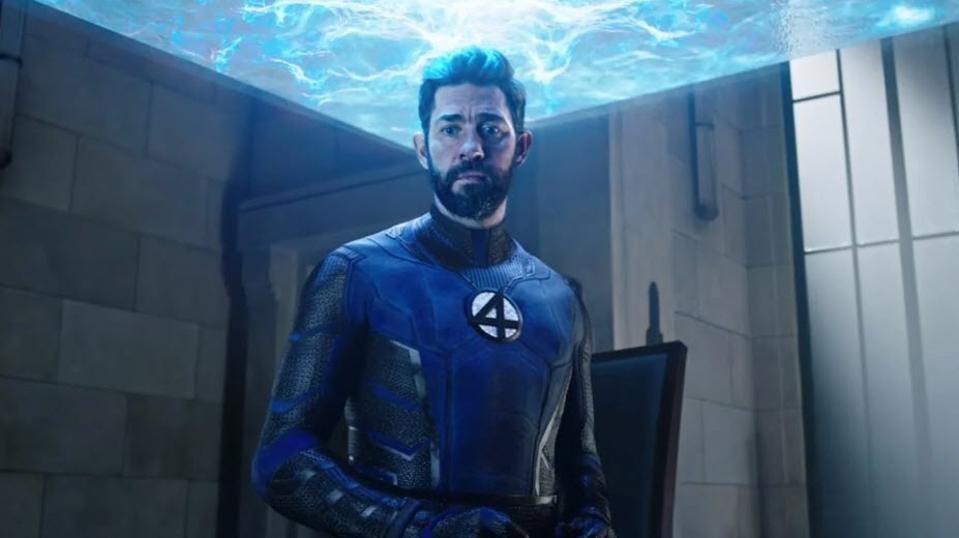
Apparently, the multiverse has an immune system, and Doctor Strange is a particularly aggressive infection.
But what does it mean for two universes to collide?
If they are completely separate spacetimes (bubbles), Earth-616 and Earth-828 do not occupy different locations. They each contain their own locations. “New York” exists inside both universes, but the two cities cannot crash into one another any more than two people standing on different maps can bump shoulders.
Branes offer Marvel a way around that problem. Two universes could be separated along an extra dimension we cannot perceive, then move together through the higher-dimensional bulk.
But, in our science, the collision would not care about New York.
Entire branes would meet. The event could affect every point in the universe, releasing energy throughout spacetime rather than producing one convenient planetary impact zone where the Avengers can assemble.
There’s also no known reason that one person crossing between branes would pull the universes together. Doctor Strange could be obnoxious in another reality for as long as he liked without changing the distance between two universe-sized membranes.
Marvel’s incursions are therefore not brane collisions as we think about them, however theoretically. They are brane collisions rewritten as a cosmic territorial dispute: two realities discover they have been assigned the same space, and existence begins evicting one of them.
That isn’t physics.
But it is probably the closest physics has brought us to Avengers: Doomsday.
Bubble universes gave us separate realities. Many Worlds gave us branching outcomes. Branes gave us universes that can collide.
Marvel took one feature from each, put them together and called the result a multiverse.
Which means it is time to see whether the pieces actually fit.
Marvel’s Multiverse Is a Mash-Up
Let’s take inventory.
Physicists have proposed several ways for there to be more than one “universe.” As Marvel works it, each model provides one piece of the machinery it needs.
The cosmic quilt gives us regions far beyond our observable universe. They could contain other Earths, even other versions of us (thanks infinity!), but only at distances so grotesquely enormous that far, far away becomes a mathematical understatement. No branching. No portals. No incursions.
Eternal inflation gives us bubble universes: separate regions of spacetime that may operate with different physical settings. The bubbles might even collide. But they aren’t alternate histories of our universe, and crossing between them would be less like stepping through a glowing doorway and more like attempting to escape spacetime itself.
Many Worlds gives us branching quantum histories. Every possible outcome remains part of the universal wavefunction (within a bubble). That sounds extremely Loki right up until we remember that decoherence makes macroscopic branches effectively inaccessible to one another. You get all the Lokis. You do not get the TemPad.

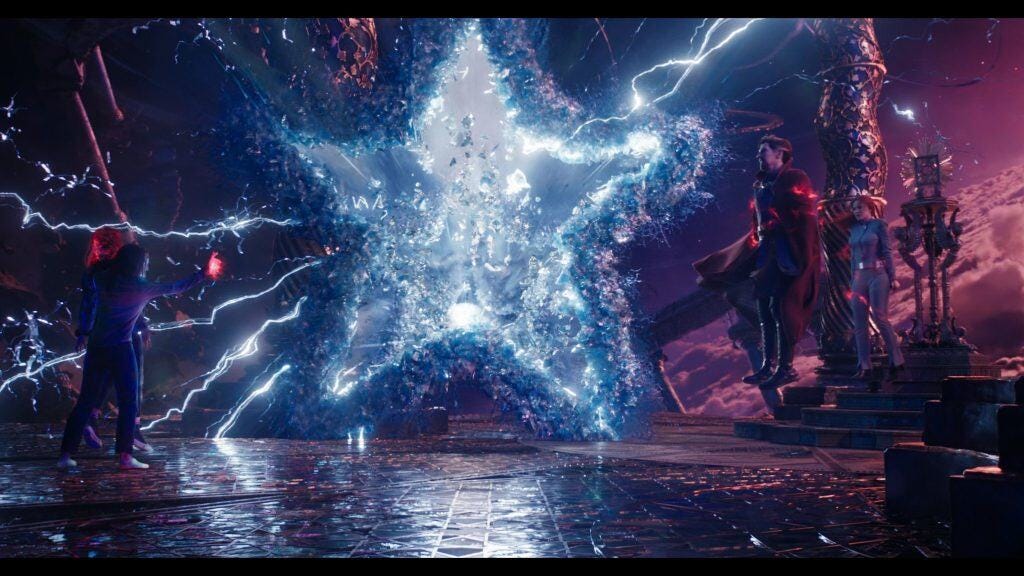
Braneworld cosmology gives us entire universes separated by a higher dimension. Those branes might collide, producing something vaguely reminiscent of an incursion. But they would collide everywhere, not just above Manhattan, and America Chavez punching a star-shaped hole between them is not included in the model.
So Marvel went shopping.
It took alternate histories from Many Worlds, independent universes from eternal inflation, inter-universal collisions from brane cosmology and portals from absolutely nowhere in known physics. Then it connected it all with glowing orange circles.
This produces a multiverse that works beautifully as a storytelling machine and terribly as a physical model.
A Marvel “universe” can be a quantum branch, a separate spacetime, a neighboring dimension, or an alternate Earth depending on what the scene requires. The distinctions disappear because the characters can travel among them using the same general set of magic, technology, and unresolved trauma.
That becomes especially important heading into Avengers: Doomsday. If its three universes are quantum branches, they shouldn’t be able to collide. If they are bubble universes, their versions of Earth shouldn’t share corresponding locations. If they are branes, their collision should involve entire spacetimes rather than three groups of superheroes converging on the same battlefield.
Marvel’s multiverse is therefore not one theory.
It is a handful of incompatible theories standing on one another’s shoulders, wearing a cloak and hoping nobody asks to see its equations.
Which, in fairness, has also worked surprisingly well for Doctor Doom.
How Do You Test Somewhere You Can Never Go?
We now have several possible multiverses and no way to visit any of them.
This is inconvenient.
Science does not require us to see something directly. Nobody has visited the core of the Sun, watched the Big Bang, or shaken hands with a quark. We accept their existence because theories predict measurable effects here.
A scientific multiverse needs to leave fingerprints on our universe.
Bubble universes offer one possibility. If another bubble collided with ours early in cosmic history, the impact might have left a circular distortion in the cosmic microwave background—the afterglow of the Big Bang.
Scientists have searched.
They have found unusual patches, including the famous CMB Cold Spot, but nothing that convincingly says, Here is where another universe hit us.
Braneworld models might leave different evidence: gravity behaving unexpectedly at very small scales, energy apparently disappearing into extra dimensions or particles produced by high-energy collisions. Again, no confirmed signal.
Many Worlds is harder. It uses the same quantum equations and generally predicts the same experimental results as other interpretations of quantum mechanics. The disagreement is largely over what those equations mean.
When the double-slit experiment produces interference, Copenhagen-style interpretations say the wavefunction contains several possibilities before measurement. Many Worlds says those possibilities remain within the universal quantum state.
Same dots on the screen. Vastly different account of reality.
Good luck building a science-fair display board for that.
Stephen Hawking and physicist Thomas Hertog attempted to make eternal inflation more scientifically manageable in Hawking’s final cosmology paper. Using a speculative holographic model, they argued that inflation might produce a finite, relatively smooth collection of universes rather than an infinite fractal mess.
The headlines announced that Hawking’s last paper had found a way to detect parallel universes.
It had not.
Hawking and Hertog developed a model, based in part on simplified examples, that might eventually yield more specific predictions about patterns generated during inflation. Those patterns could potentially be tested through the cosmic microwave background or primordial gravitational waves.
That would test the theory producing the multiverse. It would not amount to receiving a transmission from Earth-828.
And this is where the scientific debate becomes uncomfortable.
If a multiverse model explains measurable features of our universe and makes predictions that competing models do not, then its unseen universes may be legitimate scientific inferences. But if every possible observation can be explained by saying, “That’s simply the kind of universe we happen to inhabit,” the multiverse stops predicting reality and starts accommodating it.
Marvel has an easier standard.
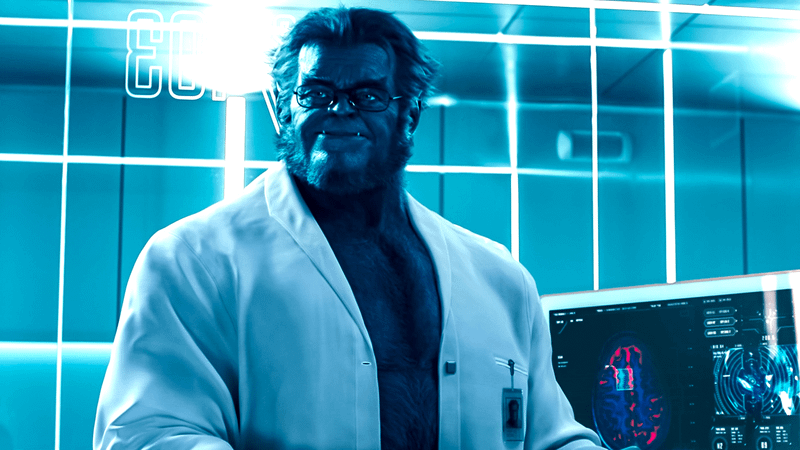
It can prove another universe exists by dropping Beast into the post-credits scene.
Physicists have to do it without Kelsey Grammer.
Bad News About the Glowing Door
After all of that, physics is surprisingly generous.
It gives us regions of the cosmos that will forever be beyond our view. Under the right assumptions, some may contain other Earths and other versions of us.
It gives us bubble universes born from inflation, potentially running the laws of physics with different settings.
It gives us quantum histories in which every possible outcome can persist.
It even gives us universe-sized branes that could collide in dimensions we cannot see.
Physics gives Marvel almost everything it needs.
Except the door.
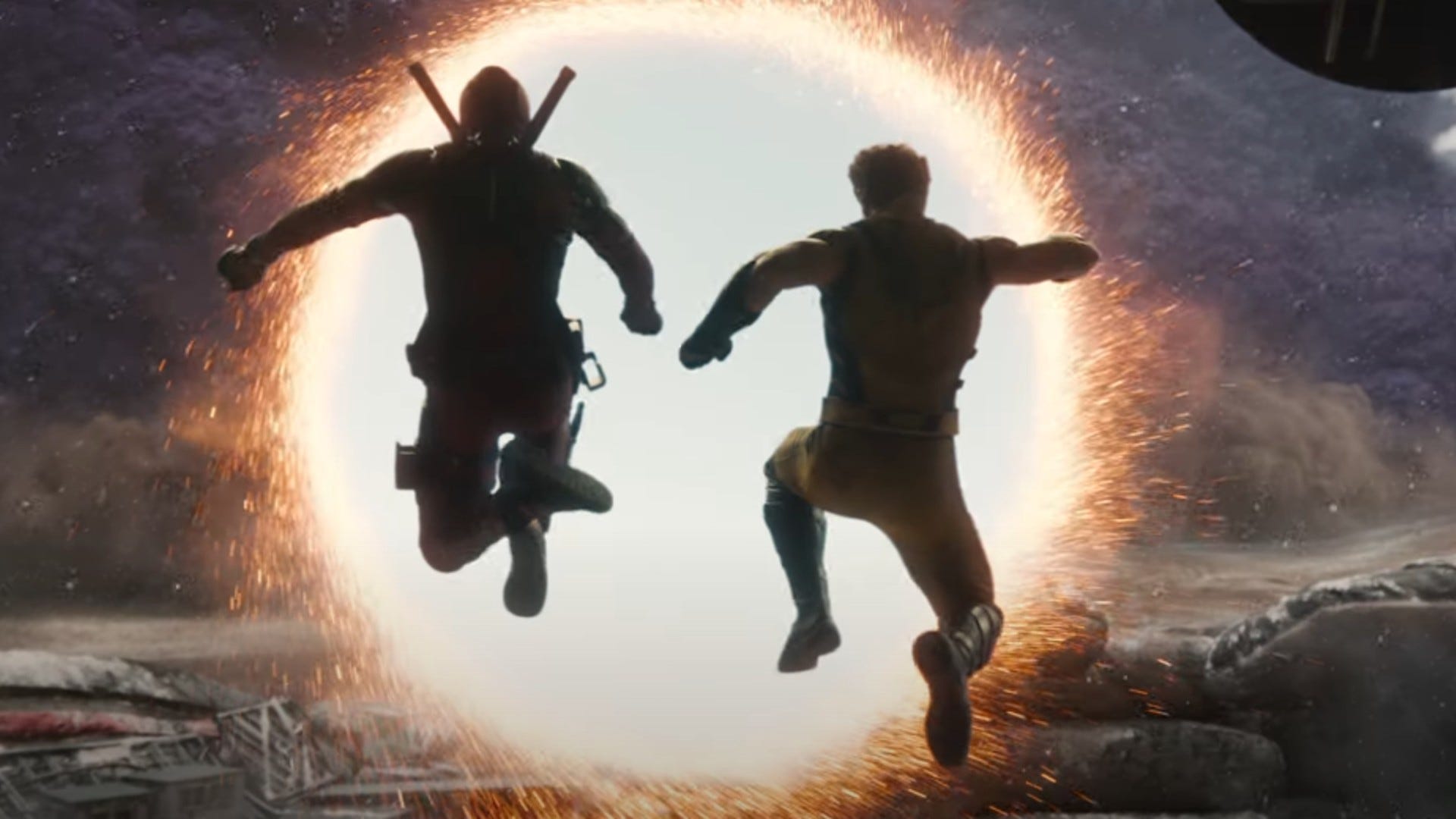
There is no known way to cross the cosmic horizon, escape into another inflationary bubble, step sideways into an Everett branch, or jump from one brane to another. No sling ring. No TemPad. No star-shaped punch through reality.
No wardrobe door hidden at the back of the universe.
That does not mean these other universes are impossible. It means they occupy an uncomfortable region at the edge of science: some emerge naturally from current theories that explain what we can observe, but the universes themselves may remain permanently beyond our reach.
They could be real predictions.
They could be useful interpretations.
They could be mathematical possibilities that nature never actually used.
Or they could be signs that our theories have wandered beyond the territory where evidence can follow.
Thankfully, Marvel does not have to wait for the evidence. It can take distant cosmic regions, bubble universes, branching quantum histories and colliding branes, compress them into one glowing piece of machinery and hand the controls to Doctor Doom.
That’s not how a scientific multiverse works.
But it is how stories work.
Avengers: Doomsday and Secret Wars will almost certainly make the multiverse visible. Universes will acquire borders. Collisions will happen in the sky. Heroes will stand in the ruins of one reality and look across at another.
The real versions—if any of them exist—would be stranger and less accommodating. They may surround us without being reachable, multiply without splitting in any place we could point to, or exist beside us in a direction the human mind was never built to imagine.
Feel small yet?
The multiverse may not contain another Doctor Doom, another Avengers team, or another you.
But the fact that our best attempts to understand reality keep opening the possibility of more reality - more space, more outcomes, more dimensions, more universes…it’s astonishing enough.
Even without the glowing door.
Author’s notes: Portions of this article were adapted and substantially updated from my chapter “Multiverse Theory” in The Science of Rick and Morty (Simon & Schuster, 2019).
A note on the process: I used AI to help me brainstorm, locate research, test explanations, and revise portions of this article. The scientific judgment, argument, source-checking, and final editorial decisions are mine, as is responsibility for anything I got wrong.
Curiosity is what brought me here.
Teaching is what I do with it.
If you’d like to read more about education, classrooms, students, and the craft of teaching, you’ll find those stories in Teacher, Teacher.