
There Are No* Blue Humans. There Are a Lot of Blue X-Men.
The strange science behind Beast, Nightcrawler and the blue mutants of X-Men ’97
Artifact Recovered: original publication date: 7/26/19
This piece was originally published on a previous version of The Science Of and has been recovered from the digital strata. Its lightly edited version is represented here because it’s useful, weird, fascinating, updated, or some combination of the four. This piece was heavily updated to reflect the X-Men ‘97 connection, as well as updated science.
X-Men ’97 on Disney+ is far better than any revival of a 30-year-old Saturday morning cartoon has a right to be. Yeah, I said it.
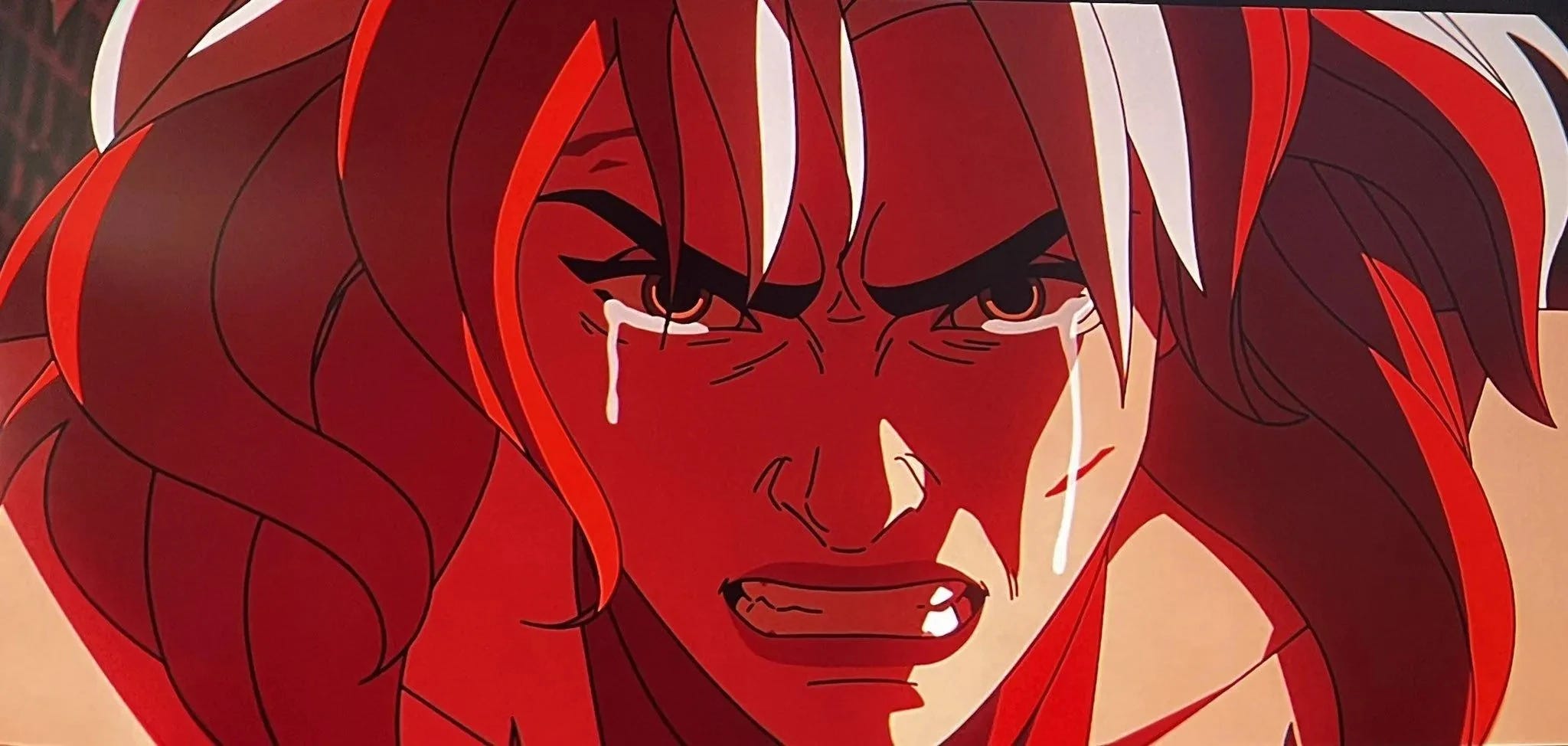
Season 1 was amazing, and Episode 5, “Remember It,” has made me tear up on multiple rewatchings. It just…man. It hits as hard as, or harder than, anything in the X-Men movies. Now that Season 2 is out, it plays all the right nostalgic notes and features two of my favorite X-Men from… well, forever: Nightcrawler and Beast. And Apocalypse is the main villain (so far).
Awesome.
While they’re three of my favorite characters, they all have something else in common: they’re blue (or blue-ish gray in the case of Apocalypse).
Blue has been a go-to character color for the X-Men and other comics, to be fair, for years. A quick and wildly incomplete rundown of blue mutants gives us Beast, Nightcrawler, Archangel, Mystique, and En Sabah Nur (Apocalypse). And that’s not counting Yondu, Nebula, the blue-skinned Kree or the pure-blood Atlanteans—Marvel’s, not DC’s. Add in all of Marvel’s alternate Earths, and we’re going to need a bigger list.
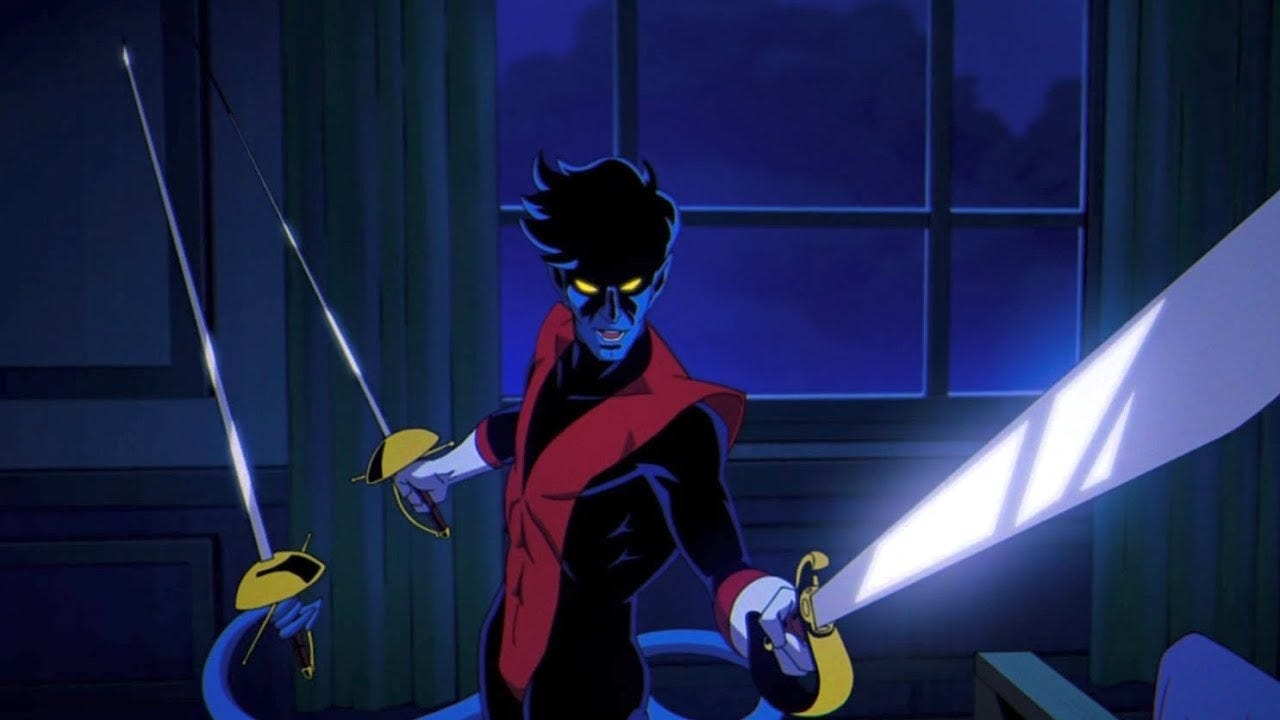
There’s a lot of blue being splashed around the Marvel Universe, and its mutants have gotten more than their share. Now, I get it. Blue is visual shorthand for someone who is immediately and unmistakably different. You can’t hide Nightcrawler in a crowd.
But this is The Science Of…, not The Sociology Of… So let’s talk about blue mutants.
Because humans don’t come in blue.
A few years back at The Science Of’s “Superhero Science: Ask Us Anything!” panel at AwesomeCon, Duke University biology professor Dr. Eric Spana rolled his eyes at the idea of a mutation producing a blue-skinned human.
Spana later confessed that declaring blue mutants completely impossible was a little too broad: blue humans might be possible. But a mutation producing a healthy, fully functional, superheroing blue human? That’s where things get…troublesome.
“We can sum up color into two broad categories: structural color and pigment color,” Spana says.
“Pigment color is what makes your jeans, pen ink, and stained-glass blue. Structural color is a physical effect of light absorption and reflection where only the blue light is reflected and seen by your eyes. There are only a few organisms on Earth that can make a blue pigment - a few butterfly species, for example.”
A few animals can produce genuine blue pigments, but among vertebrates, that ability is spectacularly rare. Almost every blue bird, fish, reptile or mammal you’ve seen is using microscopic structure to make blue—not blue pigment.
Vertebrate, here meaning animals with backbones. Genuine blue pigment is spectacularly rare among vertebrates. Humans aren’t one of the exceptions.
For humans, vertebrate and proud…well, we didn’t get the blue-pigment package.
We can’t make our own blue pigment. Don’t got the genes. Period.
People can’t be blue.
But there are blue people.
No, Seriously, Blue People
There have been cases of people born blue. Not Paul Karason blue. His skin turned blue-gray after years of consuming homemade colloidal silver, which caused a permanent condition called argyria. Different road to blue. Still, admittedly, very blue.
In an X-Men-ish connection, some people born blue owe the color to an inherited mutation. It does not, unfortunately, come with superpowers.
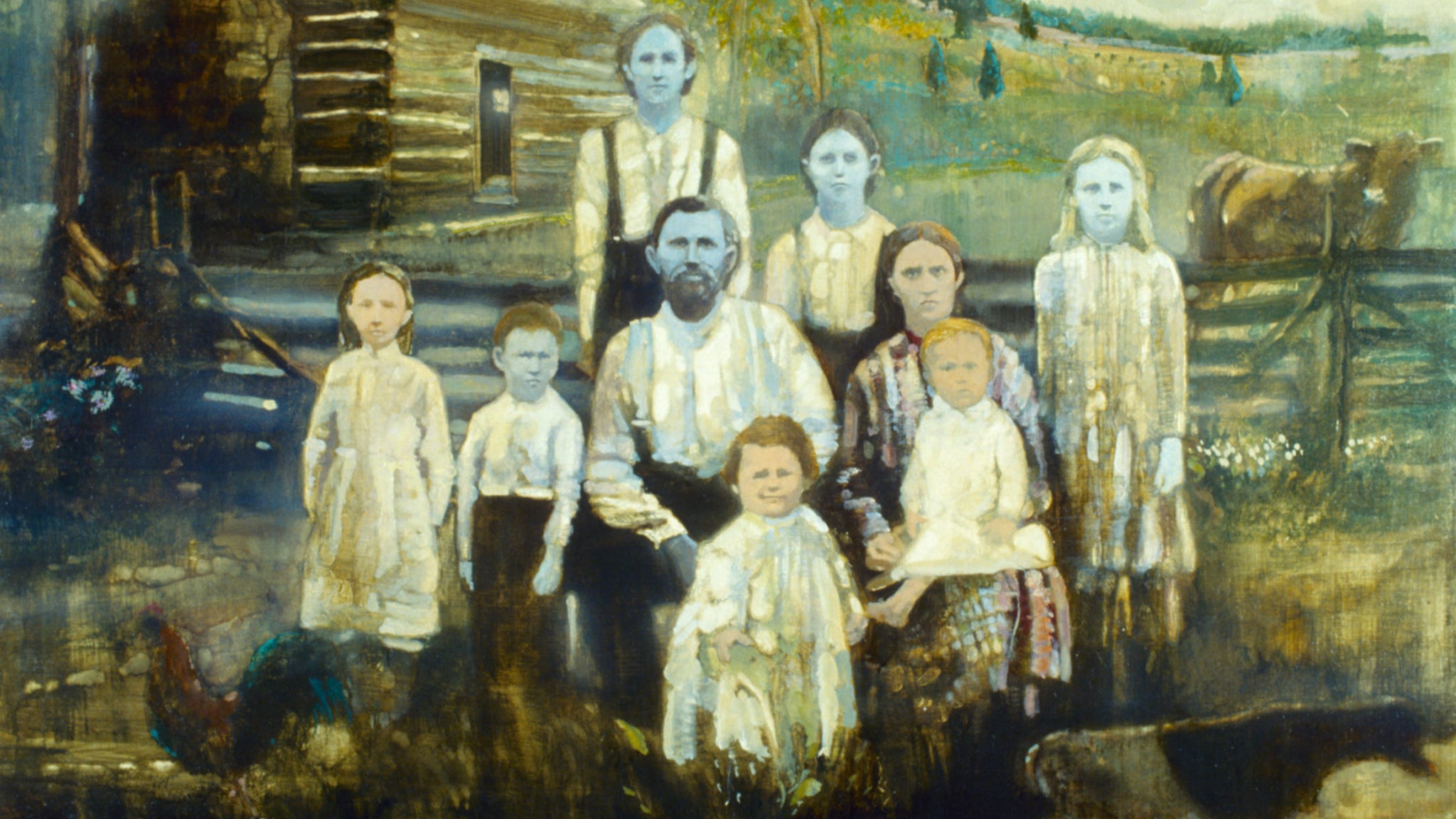
The most famous blue-skinned family in American history was the Fugate family of eastern Kentucky, whose story stretches from the early 1800s into the 20th century. Several family members had methemoglobinemia, a condition that can be acquired through exposure to certain drugs or chemicals—or inherited, as it was in the Fugate family.
Thinking back to biology, an autosomal recessive condition generally appears when someone inherits two altered copies of the same gene—one from each biological parent. The Fugates lived in a relatively isolated region where the local gene pool was small, and marriages sometimes occurred between relatives, including distant cousins. Over generations, that made it more likely that two people carrying the same rare genetic variant would have children together.
If both parents carry one altered copy, each child has a 25% chance of inheriting two altered copies and having the condition. There’s also a 50% chance the child will be an unaffected carrier and a 25% chance the child will inherit neither altered copy.
Every pregnancy rolls the genetic dice again.
And no, the parents don’t have to be closely related for this to happen.
Genes in a region can disperse through a population over generations to the point that two completely unrelated individuals could be carriers of the recessive form and not know it. A rare genetic variant can circulate through a population for generations, allowing two people who aren’t closely related to carry it without knowing.
Normally, less than about 1% of the hemoglobin in your blood is methemoglobin. In methemoglobin, the iron has been oxidized into a form that can’t bind oxygen. As that percentage rises into the 10–20% range, the skin can begin to look blue. Too much methemoglobin reduces the blood’s ability to carry and release oxygen. One visible result can be cyanosis—a blue or purple tint to the skin, lips and nail beds.
Cold can turn your lips and fingertips blue too, but it takes a different route. Blood vessels near the surface constrict to conserve heat, reducing circulation through those tissues and making deoxygenated blood more visible. That can produce cyanosis, but it isn’t the same blood chemistry found in methemoglobinemia.
Normally, an enzyme converts methemoglobin back into working hemoglobin. The enzyme was once commonly called diaphorase; today, it’s more precisely known as cytochrome b5 reductase. The inherited form associated with the Fugates reduced the activity of that enzyme, allowing methemoglobin to accumulate.
“In severe cases of this condition, altered oxygen binding to that form of hemoglobin causes lowered oxygen availability and cyanosis, which is a bluish skin trait,” Spana explains. “This seems unlikely for X-Men as the low oxygen causes substantial health problems, not superhero traits.”
As Spana hints, there is an important exception. In type I congenital methemoglobinemia, the enzyme deficiency is largely limited to red blood cells. A person may look dramatically blue while remaining otherwise relatively healthy. Some people with the type I form have lived long lives with few effects beyond the startling color of their skin. Family accounts described Luna Fugate as especially blue, yet she reportedly lived a long life and had 13 children.
Congenital methemoglobinemia remains rare. Among the Fugates’ descendants, affected children became less common as families moved away and the population became less isolated. Carriers were simply less likely to have children with someone carrying the same rare variant.
So yes—blue people do exist, and some people with the inherited type I condition can be remarkably healthy. But congenital methemoglobinemia is rare. That alone makes it a poor explanation for Marvel’s blue population. Beast, Nightcrawler and Apocalypse aren’t merely surviving with reduced oxygen delivery; they’re performing acrobatics, teleporting through combat and conquering timelines.
These are not people whose blood is struggling to deliver oxygen.
But just to be clear: people with methemoglobinemia aren’t blue because their skin contains a blue pigment.
No blue pigment. Just altered blood chemistry showing through the skin.
The True Blue Bloods of the Animal Kingdom
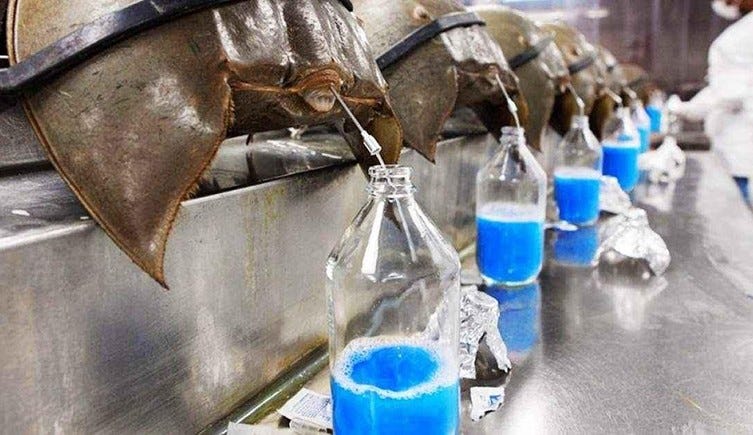
“Horseshoe crabs offer one possible explanation for blue mutants—but it doesn’t work,” Spana says. “The blue blood is caused by a copper-containing protein called hemocyanin that they use to carry oxygen in their hemolymph, which is the crab version of blood. Hemocyanin is found in many mollusks and arthropods, but humans don’t use anything like it to transport oxygen. Humans don’t have the genes or physiological machinery for a hemocyanin-based circulatory system. The Kree, on the other hand? Maybe that’s exactly what’s going on with their blue skin and blue blood?”
Side note: Horseshoe crabs aren’t crabs. Because biology enjoys making names as unhelpful as possible. And just to be 100% clear, oxygenated hemocyanin is blue. Actually blue. No cyanosis, no optical trick, and no disappointing lack of pigment.
Blue blood.
That last bit is where Spana’s scientific mind has to draw a line between real-world genetics and comic-book genetics. Mutations can alter, delete, duplicate, and rearrange DNA. What they don’t generally do is install an entirely new biological system—fully assembled, properly regulated and ready for superhero duty.
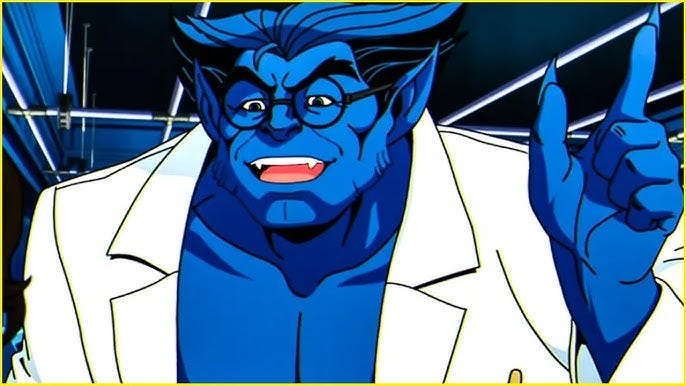
If X-Men ’97 suddenly announced that Nightcrawler has hemocyanin instead of hemoglobin, X-Men-loving biologists everywhere would feel a small but measurable part of themselves die. A spontaneous mutation couldn’t simply replace hemoglobin with hemocyanin. It would have to rebuild oxygen transport, copper regulation, blood chemistry, and probably several other systems we haven’t even thought of yet.
And then Marvel would have to do it again. And again. And again.
It’s the same problem that turns scientists into the bad guys at every superhero-science panel:
“How can that character have wings?”
“They can’t.”
Boooo, science.
No one likes to hear “They can’t,” but really—Warren Worthington III sprouted two enormous, fully feathered, functional wings from his back.
No one likes to hear, “They can’t,” but really - Warren Worthington III sprouting lovely, angelic feathered wings out of his back? Try tracking everything that would have to change: skeleton, muscles, nerves, circulation, skin, feather growth, balance, and the brain circuitry needed to control two entirely new limbs. That isn’t one mutation. That’s a full-body renovation.
Evolution can produce new structures by duplicating, modifying and repurposing existing ones—but it does that through accumulated changes across populations and generations. It does not hand one teenager a finished set of wings.
None of this is meant to rain on the X-parade. Not at all. The X-Men are cool. They were cool before I knew what a genome was, and they’ll remain cool regardless of what biology says. But if the X-Men get you interested in mutation and genetics, they’re the springboard—not the final answer. Follow that question into real genetics, and things get every bit as strange as the comics. Trust me, plenty of working biologists know exactly who the X-Men are—and some of them can identify an obscure mutant faster than they can identify a colleague. For some of them, asking why the X-Men couldn’t exist was the first step toward learning what actually could.
Oh, and Hank McCoy? He gets an asterisk. Beast was already a mutant, but his blue, furry form came after he injected himself with a serum of his own design and triggered another transformation. He can star in his own title, GMO-Men. And as we’ll see, Beast may be the one blue mutant biology can almost explain.
“But wait,” you say. “What about all the blue animals?”
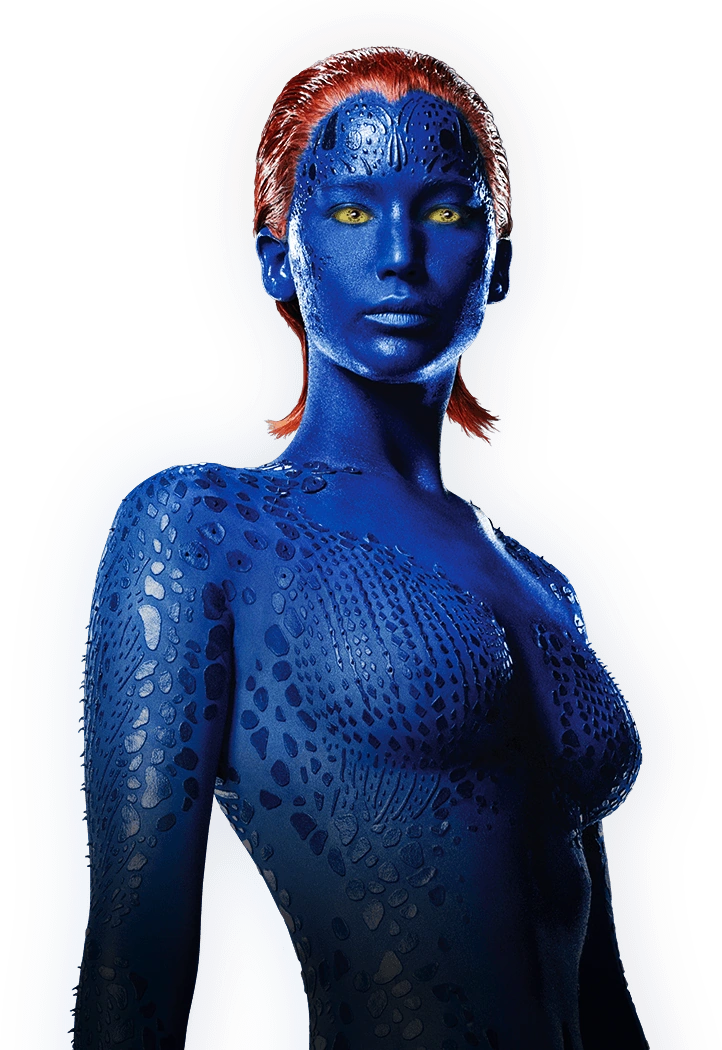
Mystique…just…wait. Blue skin, blue...scales on her skin, too? (Image: Disney)
What About the Actual, For Real Blue Animals, Then?
“What about that bird?”
“That mandrill’s face and butt?”
“That shrimp?”
“That bug?”
“That monkey’s scrotum?”
“My blue eyes?”
If blue pigment is so rare, why are there so many blue animals?
Because most of them aren’t using blue pigment.
They’re using physics.
“In many blue animals, microscopic structures interact with white light so that blue wavelengths are reflected or scattered back toward our eyes,” Spana says. “The color comes from the physical arrangement of the material, not from a blue pigment. In blue morpho butterflies, nanoscale structures in the chitinous wing scales reflect an intense blue.”
Change the spacing of those structures, and you change the color they produce. Same material. Different architecture. Different light.
“Blue jays and peacocks also use nanoscale structures in their feathers, built from keratin, air and, in some cases, melanin, to control which wavelengths reach your eyes,” Spana continues. “And in some mammals—including mandrills—carefully organized collagen fibers in the skin produce blue structural color.”
Wait…collagen? We have collagen…
Nightcrawler is back in the game.
Your blue eyes pull off a similar trick. There’s no blue pigment in a blue iris. In a blue iris, microscopic structures in the stroma (the front portion of the iris) scatter shorter wavelengths of light back toward you more strongly than longer wavelengths. You see that scattered light as blue. The butterflies, feathers, and mandrills use different microscopic arrangements, but the larger trick is the same: structure controls light.
Blue eyes contain less melanin in the front layers of the iris than brown eyes. With less pigment available to absorb incoming light, shorter blue wavelengths are scattered back toward the viewer while more of the longer wavelengths pass deeper into the eye and are absorbed.
The eye contains no blue “dye.” It just sends more blue light back at you.
The sky, skim milk, and bluish exhaust all pull related versions of the same stunt. Different materials. Different-sized structures. Same basic result: more blue light reaches your eyes.
And because that blue is produced by reflected and scattered light, its intensity changes with the lighting. Someone with striking, almost glowing blue eyes won’t look equally blue under every set of lights.
Those almost-glowing blue eyes? Part biology, part lighting department.
For the X-Men, two of those mechanisms give us something to work with,” Spana says. “Humans don’t produce chitin, so the blue-morpho route is out.”
Sorry Mystique, no butterfly upgrade.
“Hair and feathers aren’t chemically identical, but they are both protein-built structures,” Spana says. “That at least gives Beast’s fur something biology can work with. Beast might have one set of changes producing dense fur and another organizing that fur at the microscopic level so that it reflects blue light.”
Two enormous biological asks instead of one impossible blue pigment. Progress!
Nightcrawler isn’t walking around in a full-body blue-jay coat. His problem appears to be skin.
“His mutation might be one like the ordered collagen fibers seen on the noses and backsides of mandrills and give him blue skin all over,” Spana says.
That’s a very large “if,” but it’s a real biological road to blue skin.
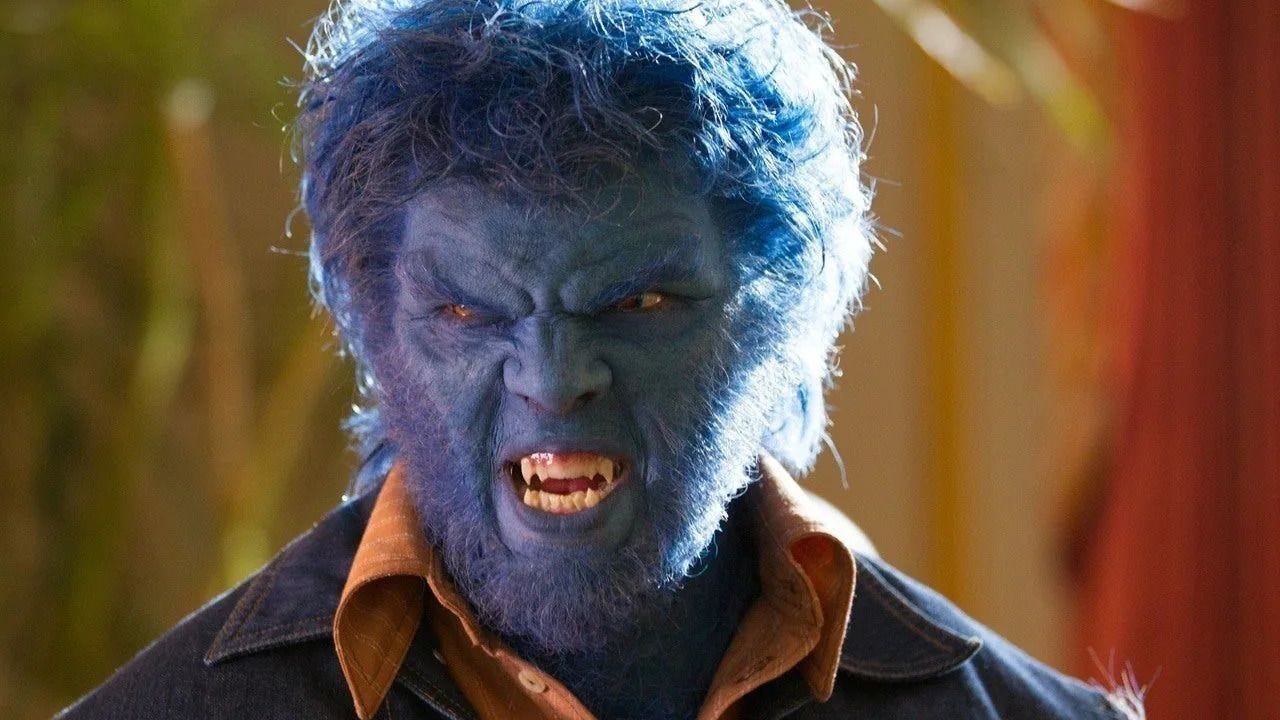
The mandrill comparison doesn’t make Nightcrawler easy to explain, but it keeps the door to blue mutants cracked open. Mandrills are primates, and humans already make the same basic structural material: collagen. But reorganizing that collagen across someone’s entire skin so that it consistently reflects blue light?
That’s a tough sell.
Could gene editing eventually get us closer? Maybe—but CRISPR isn’t a magic wand. It can target particular DNA sequences, but we would first need to know which changes create blue structural skin and then deliver those edits safely to the correct cells.
An easier sell? CRISPR - the technology that allows scientists (or largely, anyone) to insert genes at specific locations in DNA.
“Oh, that would be killer,” Spana says. “If the molecular change in human vs mandrill collagen fibers were easy, you could make genetic tattoos via specific application of CRISPR to skin regions! That would make the blue structural rather than pigment-based.”
To be clear, this is the part where we have sprinted past “current medical technology” and planted a flag in “extremely cool future possibility.” Scientists are working on gene editing in skin, but making a patch of human tissue grow a precise, light-reflecting collagen nanostructure is a whole different level of difficulty.
CRISPR can edit DNA. It cannot currently give you a Nightcrawler sleeve.
Your local tattoo artist would be a better bet. But again, that’s the insertion of pigment under your skin to make it look blue.
Marvel makes its mutants blue with ink and pixels. Biology would have to do it with structure.
No blue pigment required.
Beast? Keratin.
Nightcrawler: Collagen.
Apocalypse? Comics.
But still — no blue pigment. Only structure.
More:
How Animals Hacked the Rainbow and Got Stumped on Blue
How Nature Uses Physics to Make Blue Without Pigment
Why is the Color Blue Difficult to Find in Nature?
Curiosity is what brought me here.
Teaching is what I do with it.
If you’d like to read more about education, classrooms, students, and the craft of teaching, you’ll find those stories in Teacher, Teacher.