
Wolverine Doesn’t Just Heal. He Rebuilds.
Axolotls can regrow limbs. Logan can regrow himself. The difference requires far more than a healing factor.
Between X-Men ‘97, the trailers for Marvel’s Wolverine video game (PS5 exclusive, dropping September 15th), and sneaking anticipation for an Avengers: Doomsday cameo (prediction markets currently have the chances of Hugh Jackman showing up in the movie between 82% and 91%, which leads to the suspicion that Old Man Logan will call the new, consolidated, post-Secret Wars Marvel Cinematic Universe home)...Wolverine’s everywhere again.
Yeah, like he ever leaves.
Anyway—check out the new story trailer for the PS5 game if you haven’t seen it yet. It looks amazing.
There’s one thing that features heavily in virtually every Wolverine story: his healing factor. It’s legendary in the Marvel Universe (and copied by/transplanted into more than a few other Marvel characters). On the surface, it’s pretty straightforward. Wolverine heals fast. Cuts, gunshots, and stab wounds stitch themselves back together in a relatively short time. And it doesn’t stop there. Logan’s healing factor can handle much larger injuries—horrific burns, the loss of an eye, a bullet through the head, even skin and muscle being ripped or burned away. Stuff that would leave a regular human with nothing left to do but cool to room temperature.
But if we look at Wolverine’s healing factor close up and bring some science into it, his healing factor gets much cooler.
Seriously.
When you work through, step by step, what it does and how it must do it, you eventually reach a strange possibility: Wolverine’s healing factor may not preserve his body at all. It preserves the pattern called Wolverine.
The obvious scientific road to go down is how quickly Logan’s cells divide and rebuild damaged tissue. Yeah, that’s different and interesting (and occasionally gross). But the money question is how those cells know what to build, where to put it, and when to stop.
And then the harder question: if his brain is rebuilt from that same pattern, is the man who wakes up still Logan, or is he a perfect reconstruction who remembers being Logan? Digging into Logan’s healing factor starts scientific, gets really scientific, and then wanders into the metaphysical and existential.
Oh, and don’t worry—we’ll talk about the whole “regenerating from a drop of blood” thing, too.
Yeah. That was nuts.
“Wolverine Heals.” But What Does That Actually Mean?
You don’t have to search very hard online to find an image of something horrible happening to Wolverine. Take this moment, from about the 1:34 mark in the story trailer above:
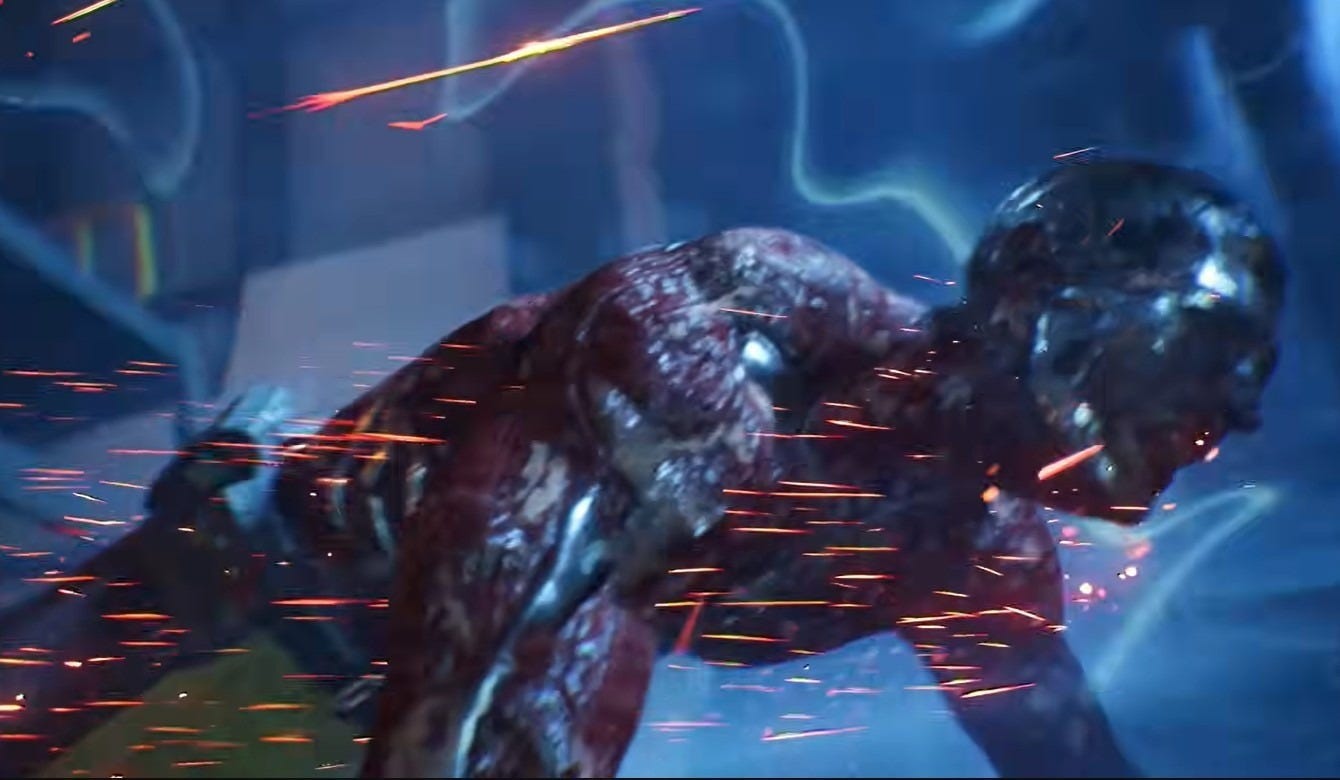
It looks like his skin (and quite a bit of muscle) is being flayed away, leaving parts of his adamantium skeleton exposed. Yeah—that’s a bad one. This kind of stuff happens with alarming frequency across nearly every medium in which Wolverine appears.
Like after he lost a fight to Gambit in Ultimate X-Men #51:
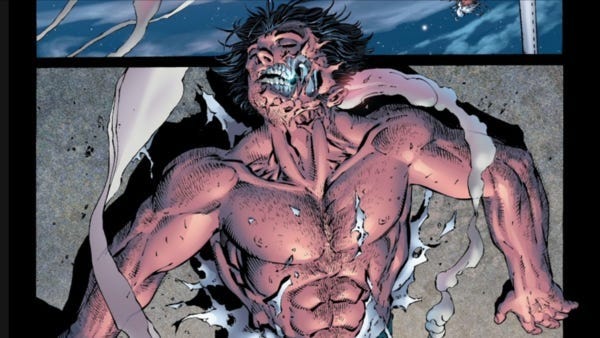
Or when he was shot in the head by William Stryker in X-Men Origins: Wolverine with an adamantium bullet…

Or the time he survived an atomic bomb in The Wolverine…

Or when Dark Phoenix burned away most of his flesh…
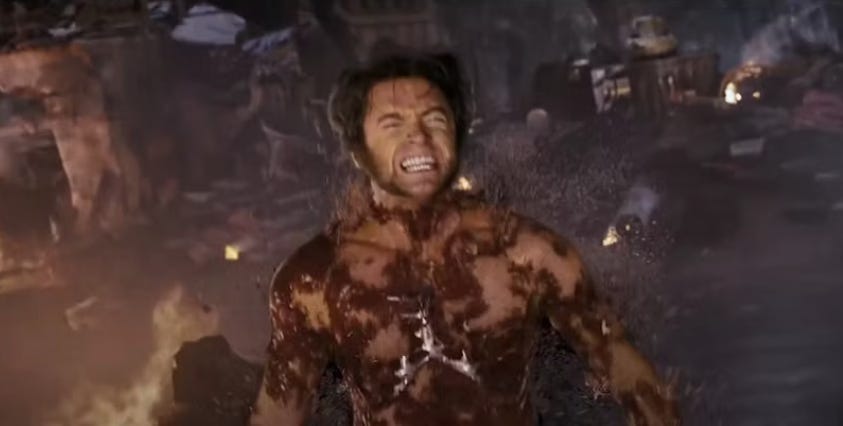
Or when Magneto ripped the adamantium out of his body in X-Men ‘97, s1e9…
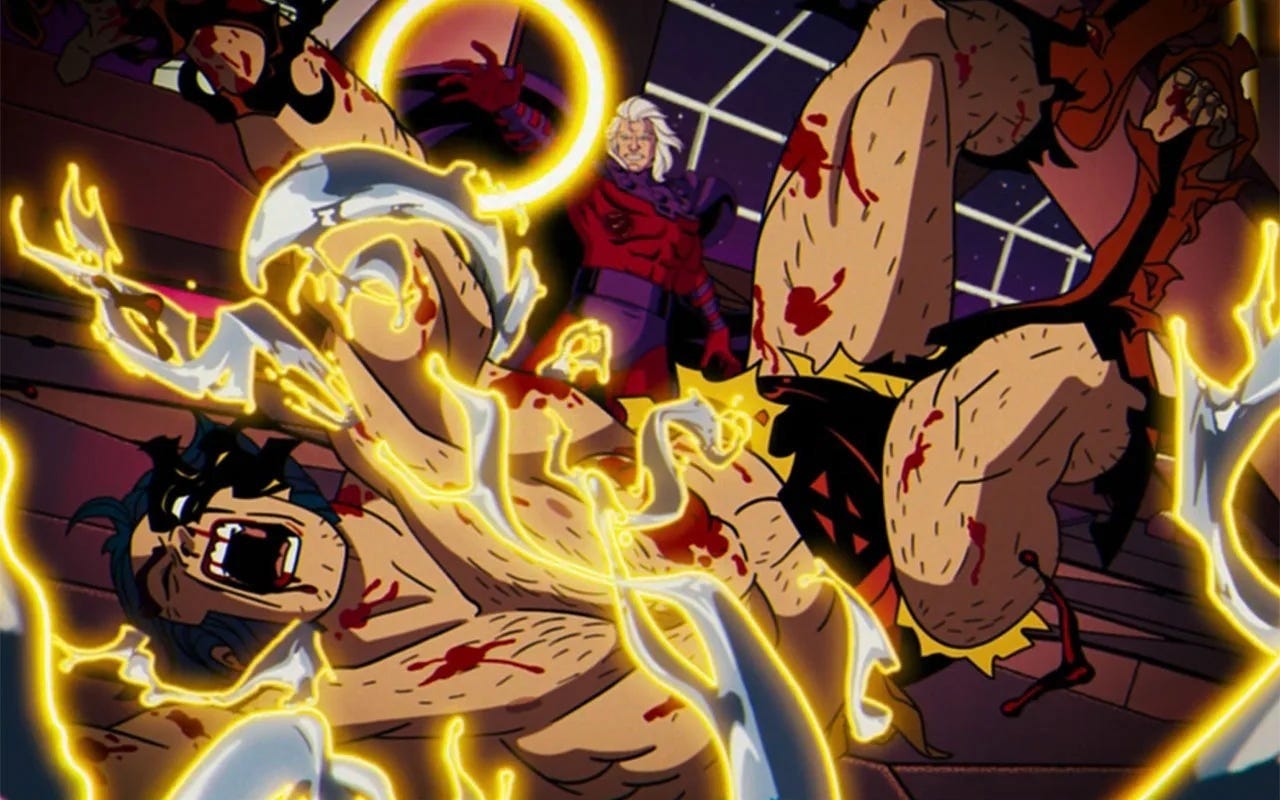
Or he loses a hand. Or an eye. Or gets run over by a steamroller (true! Wolverine and the Punisher have beef…). Or has his flesh completely burned away. Or has enough tissue chopped and sliced off that an ordinary person would be dead long before hitting the floor.
Okay, okay—we’re not going to turn this into a catalog of every weird and horrible thing Wolverine has survived. Plenty of other sites that have already done that.
Side note: Yes, there are far more extreme examples than these (he had his head removed one time back in the day for cryin’ out loud). The early ‘00s especially were a weird time with comic creators one-upping each other for the horrible things they could do to Wolverine. We’re going to keep things …well, extreme, but not crazy like some of the really rough stuff.
We know what happens next. The wounds close, everything grows back, and Wolverine is mostly okay.
But those deceptively simple visuals, along with our expectation of what comes next, hide the cool stuff.
When Wolverine heals, his body doesn’t just produce more cells. That would be somewhere between kinda helpful and useless. Instead, Wolverine’s body rebuilds (just a few examples):
The right bones in the right order
Joints bending in the right direction
Muscles connected to the correct tendons
Blood vessels that connect to the existing circulation
Nerves that find their original destinations
Skin with the right shape, thickness, and orientation
An eye whose many layers line up well enough to see
And then it stops.
Wolverine’s healing factor is usually presented as a matter of speed. His wounds close faster. His bones mend faster. Missing tissue grows back faster, and he’s ready to get back into the fight. But the speed with which he heals may be the least interesting thing about it.
The remarkable thing is that Wolverine always grows back into Wolverine.
So how does his body know what Wolverine is supposed to look like?
Now we’re talking the difference between healing and regeneration. Spoilers: one, we can do; the other…not so much, and certainly not as well.
Faster Healing Isn’t Enough
In our world (not part of the Marvel Universe), human healing prioritizes survival, not perfect restoration. Stop the bleeding. Close the wound. Fight the infection. Clear away the wreckage. Stabilize whatever remains.
All in all, it’s an amazing system, and absolutely necessary for our survival. When any part of it goes wrong, the consequences can range from a wound that refuses to close to chronic illness, runaway scarring, or death.
But our bodies often leave stuff behind when they repair the damage:
Scar tissue
Bones that knit together out of alignment
Tendons weakened or bound by scar tissue
Tissues stuck together by adhesions
Dirt, glass, or other debris sealed inside the body
Nerves that never find their way back to the main line
You occasionally hear people say that an injury or a wound “Didn’t heal right.” That’s because it’s easy to confuse healing with regeneration. Again, we do one, but the other…meh?
And just stepping on the gas of our normal wound-healing process could make everything worse. A dislocated shoulder could lock itself into place while it’s still dislocated. A wound could close around glass, dirt, a bullet, or scraps of clothing. A severed tendon could retract into the arm and scar into the wrong place. The body did its best. Here’s a sticker.

Human bodies are remarkably good at emergency repair. Wolverine’s “healing factor” has to close the wound, replace what was lost, and restore the model back to factory settings.
They’re not the same thing.
And that’s what should make any human doctor in the Marvel Universe go:
And then say:
“Okay. I’m going to need some blood, a tissue sample, three MRI scans, and the most aggressive informed-consent form ever written.”
Putting it this way, it’s no wonder that so many people want to get their hands on Logan and see what makes him tick. Yeah, yeah, Weapon X, mutant exploitation, crimes against humanity. But still…the medical breakthroughs.
Does that make me sound like Mr. Sinister?
I think it makes me sound like Mr. Sinister.
Actually, this may be more Dr. Cornelius and Weapon X than Mr. Sinister.
Is it still evil if we get informed consent?

Anyway…
Regeneration isn’t impossible in our universe. Humans do limited versions of it, and a few animals are genuinely Wolverine-level spectacular at it. We can look at them as examples of how regeneration might work with Wolverine.
Let’s go with the crowd-pleaser in that latter category: axolotls.
The Uncanny Axolotls
This is an axolotl:
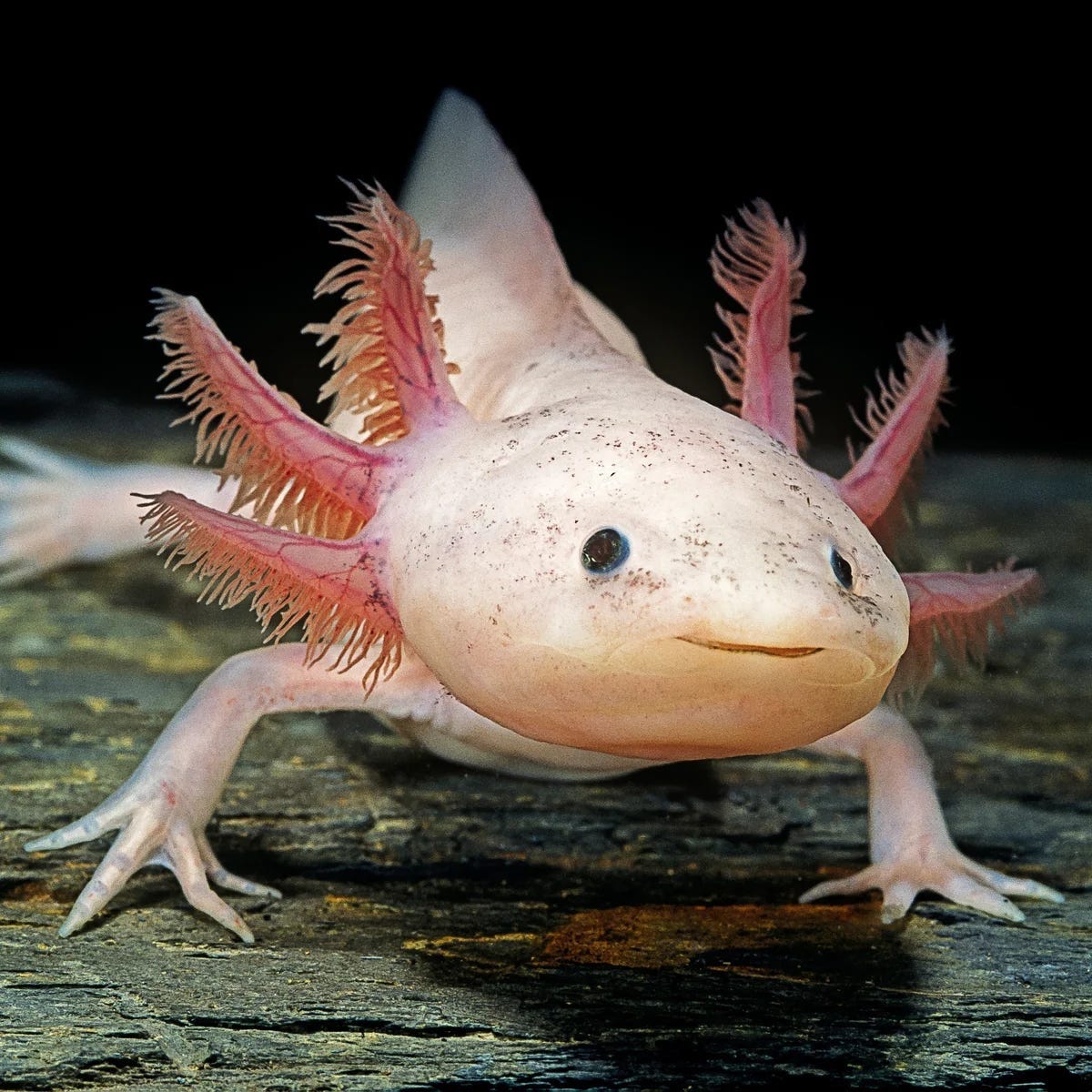
Salamanders native to the lakes and canals around Mexico City, axolotls look like Pokémon designed by a committee of eight-year-olds. The feathery branches sticking out from their heads are external gills. The little smile? That’s just how their faces work. Cute? Absolutely. But underneath all that pink, frilly charm is one of the coolest regenerative systems in the animal kingdom.
When an axolotl loses a hand (the horror! It’s so cute!), cells near the injury form a temporary regeneration zone called a blastema. The blastema is the fancy term for a group of undifferentiated cells that can proliferate and regenerate missing body parts. Its cells can divide, reorganize, and rebuild what is missing.
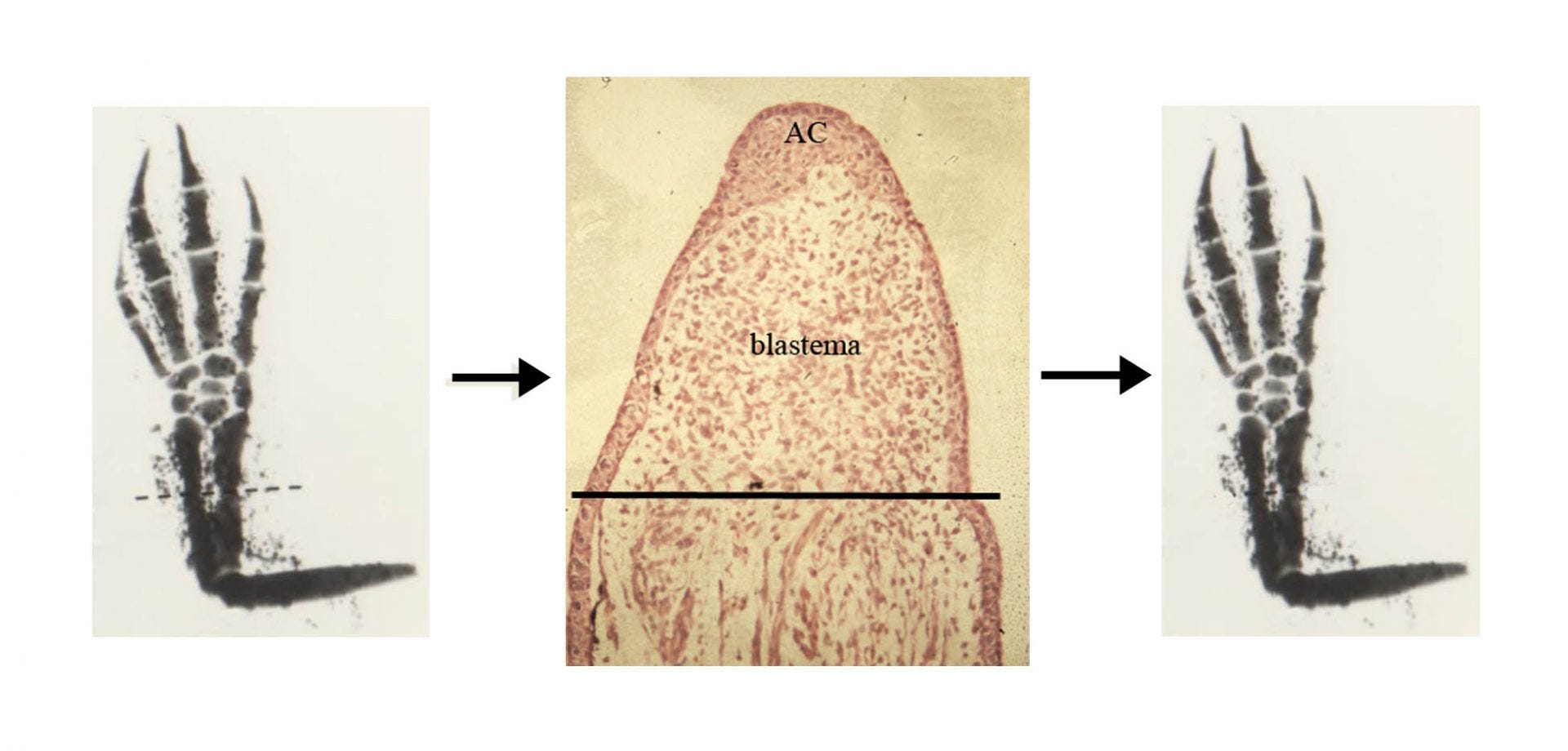
They don’t grow a random lump of generic axolotl cells; they regrow exactly what was missing.
For example, the blastema on the axolotl’s stump produces:
A wrist
The correct number of digits
The correct orientation
Bone, muscle, nerves, vessels, and skin
Only the portion of the limb that was lost
Cut the limb near the wrist, and it regrows a hand—not an entire arm.
Axolotls can do this because their cells remember where they are. It’s not a literal architectural drawing stored in one location like a blueprint, though. Instead, cells carry positional information needed for rebuilding, like:
I am near the end of the forearm.
This is the front.
That is the thumb side.
These tissues should be beside me.
Something is missing beyond this point.
The cells communicate through gene activity, chemical gradients, electrical signals, physical contact, nerves, and the surrounding extracellular matrix.
The reasoning behind this ability for axolotls dates back to their development. Generally, the cells of all organisms in development have an idea of who they’re going to be and where they should go. Regeneration in axolotls is studied because they’re relatively unique. The connective tissue cells in axolotls hold on to specific information assigned when the limb first developed. That information and developmental pathways can be reactivated when the animal is injured.
Side note: You may have heard that the regeneration in axolotls is due to them remaining functionally larval throughout their entire lives. That’s not entirely true. While they retain many larval characteristics, they mature and become adult axolotls while maintaining their regenerative abilities. They’re not “forever babies” as adults; they can tap into their original developmental programming.
Being an axolotl doesn’t make you amphibian Wolverine, though. There are limitations.
The positional memory of cells appears to be located mostly in connective tissue cells (such as fibroblasts), while muscle cells can mostly make more muscle cells, Schwann cells (part of the nervous system) produce Schwann cells, and other cells are likewise limited in their regeneration capabilities. In many ways, connective tissues have the overall plan, while other cells are like specialized construction teams that can only make those types of cells.
Once the axolotl is injured, specific signals are sent through the cells near the affected area. A currently researched example is along the axis of an axolotl hand, from the thumb to the little finger.
In the area, posterior connective-tissue cells retain the activity of a developmental on/off switch protein called Hand2. Following an injury, Hand2 turns on a crucial growth signal called Sonic Hedgehog (Shh) to regrow the missing limb. Together, Hand2 and Shh (and other factors) make a map that tells the growing tissue where to grow a thumb versus where to grow a pinky, making sure the new limb looks just like the old one.
The entire system is known by pieces. There’s no whole-organism cellular GPS that can be located and tracked within axolotls. And there are lots of caveats and considerations that prevent larger assumptions from being made, willy-nilly.
Just a couple of quick final things before this turns into a molecular biology/developmental biology lecture and we forget that we started this talking about Wolverine...
The Hand Does Not Grow a New Body
The positional memory shown by some axolotl cells is not a complete backup copy of the whole creature. It tells what cells belong near the current location, and that’s it. You may be thinking of starfish. Completely different thing with its own caveats.
Consider the detached axolotl hand. It’s lost its blood supply (no oxygen, no nutrients or waste removal), so the tissue will die. Limb regeneration is directional - a wrist stump regrows a hand away from the body; the hand stump can’t grow a body away from the hand. The regrowth system needs a living wound environment. Hand cells keep their positional identity and aren’t going to change into arm cells, trunk cells, or head cells. And finally, an axolotl is not a planarian. Those flatworms can do the whole, new-body thing. Creepy and cool.
Also…
Axolotls Are Not Immortals
But they may live longer thanks to their unique biology - but it’s not the regeneration that does it. Regrowth is specific; aging is whole-body. Axolotls still get sick, suffer from lousy environments, get organ failure, and can be injured past the point of no return.
But they do appear to be resistant to some aspects of getting old. But that may be related to creating new tissue through regeneration, rather than regeneration freeing them from aging. The research is limited, and the jury is still out.
The TL; DR of all of this side quest? Axolotls form blastemas, blastemas are pretty amazing, and humans don’t form them at injury sites. But Wolverine might have something like it.
Hey - his name is in the title. Let’s get back to Wolverine…
What Have We Learned About Logan?
If we model what Wolverine’s healing factor does on known biology, then he is a little axolotl-like. His cells don’t need to remember all of Wolverine. Each one only needs to remember where it belongs in Wolverine, and recognize when its neighbors are missing.
This is far more than what axolotls can do, which makes for great stories, but envious axolotls.
Let’s apply what we’ve learned a little. Suppose Logan loses a hand.
His surviving wrist cells encounter an anatomical impossibility: tissues that should have neighbors beyond them now face open air. The pattern has been interrupted.
His healing factor could proceed like this:
Detect the broken anatomical pattern.
Temporarily seal and protect the wound.
Create a blastema-like regeneration zone.
Establish the body’s axes: front/back, left/right, near/far.
Grow the missing tissues according to their positional addresses.
Reconnect vessels, muscles, tendons, and nerves.
Stop when all of the anatomical mismatches have been eliminated.
Some of the things on this list have analogs in our world’s animals, but some are still wish-list items. The best way to think about it is Wolverine’s healing factor is a mishmash of a handful of different features we see across a variety of organisms.
(And no, we’re not going to go into how he gets adamantium back, because…??? Is there a precedent for that in comics? If he loses a leg and it grows back, adamantium-free, does he have to go in for Weapon X-style “treatment” again? Who does it? Why would he chose that? It seems like it hurts.)

Turns out that the best metaphor for Wolverine’s healing factor isn’t a static blueprint. It’s an error-correcting network.
Wolverine’s body continually compares what is there with what should be there. An injury creates a discrepancy. Regeneration continues until the discrepancy disappears.
Or, more simply:
Logan’s body doesn’t stop growing after an injury because his body has produced a predetermined number of cells. He stops because there are no anatomical errors left to correct.
Side note: the error-correcting network idea also allows for Wolverine’s immune system - he doesn’t get sick, his lungs don’t suffer from the cigars he smokes, his liver is fine, despite the beer. This guy is made for hard living.
This lets us inventory what his “healing factor” actually includes:
Injury detection
Scarless wound closure
Cellular reprogramming
Rapid but controlled cell division
Positional memory
Three-dimensional pattern formation
Blood-vessel reconstruction
Nerve reconnection
Cancer (cell overgrowth) suppression
A reliable stop mechanism
Yeah, “fast healing” is almost the least interesting item on this pretty-amazing list.
Bringing this into reality, we already have a limited version of this in our bodies: the liver. Remove part of a healthy human liver, and the remaining tissue grows until the body has roughly the amount of functioning liver it needs. It doesn’t count out a predetermined number of new cells. It responds to a deficit, and stops when that deficit has been corrected.
The catch is that the liver restores capacity, not the original architecture. Logan does both.
But hear me out…

What Counts as Wolverine?
If your body has an error-correcting mechanism hiding under the name “healing factor,” you’re going to have some deep questions.
The healing factor can’t just restore his genetically encoded body, because Logan now has some other features: an adamantium skeleton, memories, scars, and age, to name a few. To do what it does, Logan’s body has to somehow distinguish change from actual damage.
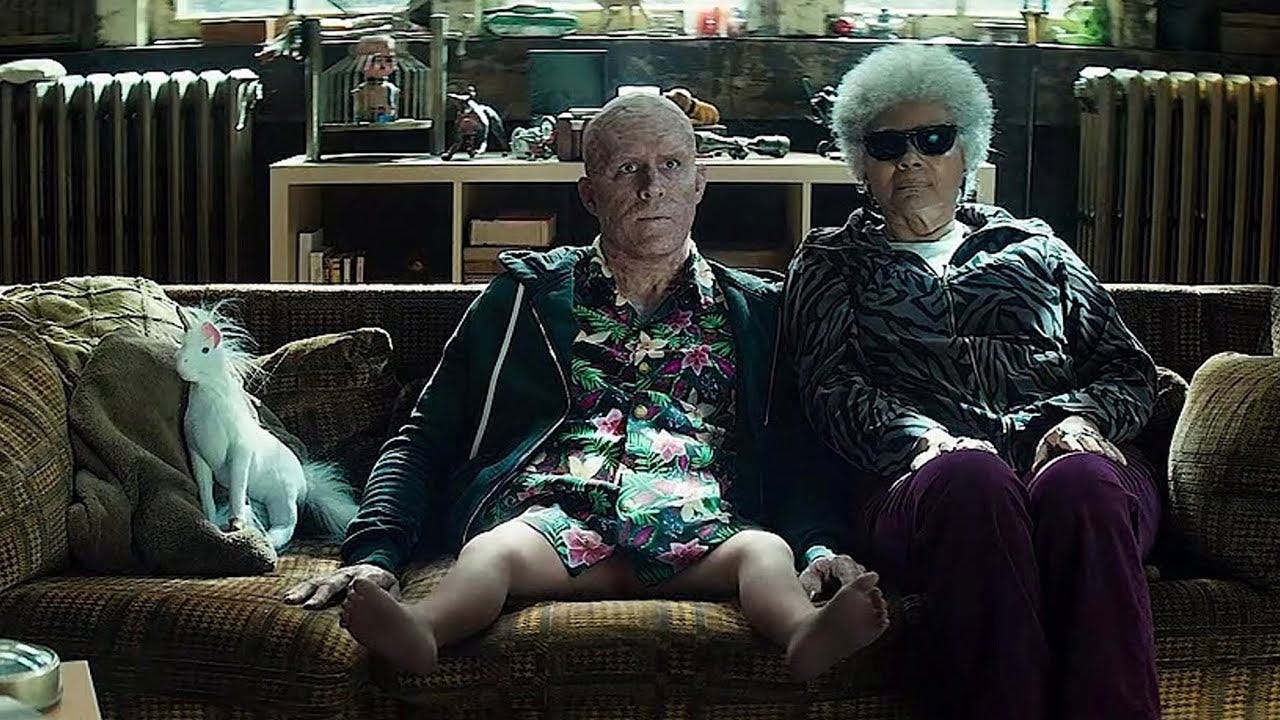
Along with repairing anatomy, Logan’s healing factor must continually decide what makes up “Logan” and what doesn’t.
Start stroking your chin now. There are some things to consider:
First, what pieces of Logan get priority for regrowth? If every fragment of Logan’s DNA contains the “whole Logan rebuild” protocol, then DNA can’t be the determining factor for which piece gets to rebuild the whole person. Every cell may have the blueprint, but not every cell gets to be Logan. Otherwise, every bloodstain and severed finger becomes another Wolverine.
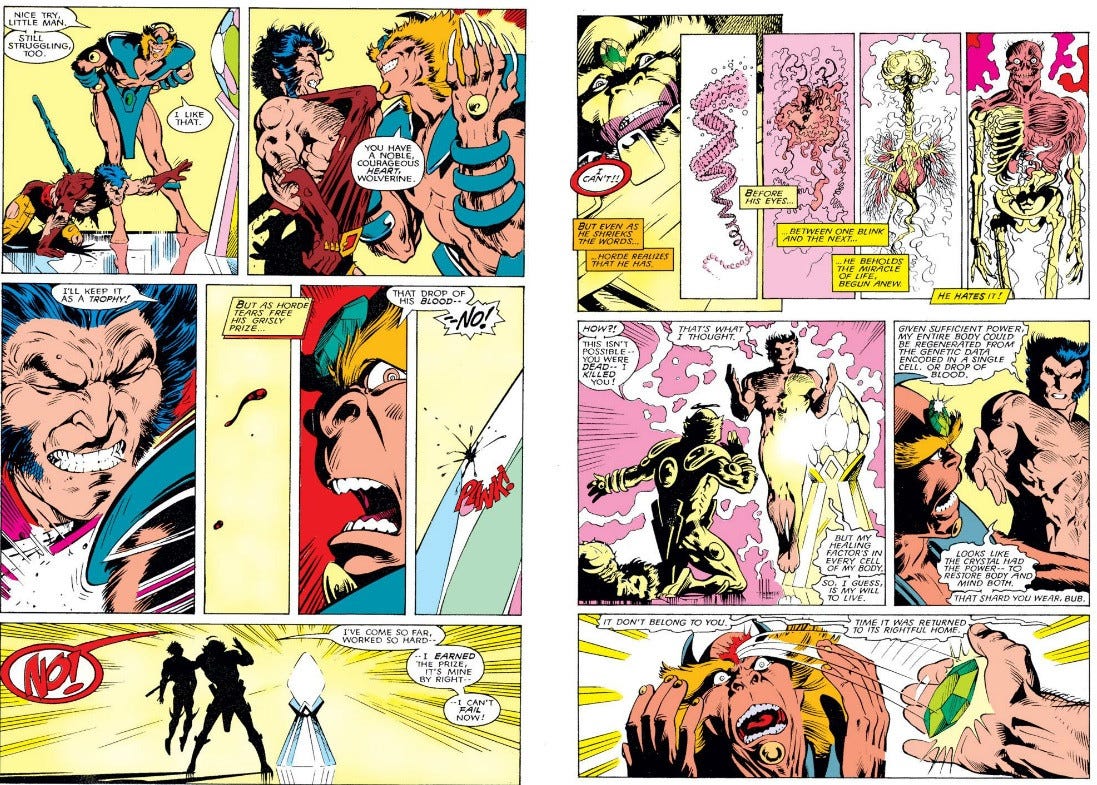
Wolverine’s healing network therefore needs:
One surviving fragment designated as “original”
A hierarchy among tissues
A way to distinguish “Logan” from “material formerly attached to Logan”
The brain and upper spinal cord remain the best biologically defensible organizing center when we look at this from a reasonable science perspective. Yes, as mentioned earlier, creators have occasionally pushed his survival beyond what that model allows.
Second deep Wolverine thought - information. A brain is not a mind.
Regeneration covers the brain rebuild — missing cells report that there are cells missing, and everyone starts to rebuild what was there before. Will that rebuild reconstruct the exact neural organization that was there before? The organization and connections between neurons help form memories, behaviors, habits, instincts, and more. Without those connections, they’re just not there.
And the deeper question - how does Logan’s healing factor preserve the continuity of consciousness given a traumatic brain injury? More than memories, now we’re into the realm of identity, personality, connection to others. The movies have touched on this a bit - the brain damage of being shot in the head with an adamantium bullet was responsible for his memory loss, which Professor Xavier helped him recover, but repeated head injuries? Logan does have memory issues, so this could actually be the underlying reason. Parts of his brain are so damaged that his healing factor rebuilds them, but the connections don’t reconnect. Memories are gone.
Continual severe damage to Logan year after year really brings up a “Logan of Theseus” question. How much can you replace and still have Logan, rather than a human who thinks he’s Logan? Wolverine gets a huge head injury and is out for days. Who wakes up?
The Cost of Being Wolverine
In any universe, there’s no free lunch. Everything costs something.
Let’s apply that idea to Wolverine’s healing factor. It’s constantly checking and updating matter and structure in the body, as well as maintaining information, that is, keeping the pattern that makes the body “Logan.”
Short phrases, but that’s a lot of energy expenditure.

Let’s run a list of what the healing factor has to be doing for it to work as we’ve seen it work. Its list of jobs includes:
Producing new cells and proteins
Copying DNA
Rebuilding membranes, bone, muscle, vessels, and nerves
Pumping blood through new tissue
Removing dead material and metabolic waste
Preventing infection
Regulating temperature
Suppressing cancer
Continually repairing toxins, radiation damage, oxidative damage, and ordinary cellular wear
Maintaining or reconstructing neural information
24/7/365
Recovering from catastrophic injury cannot be free. Logan needs energy, raw materials, and very specific instructions.
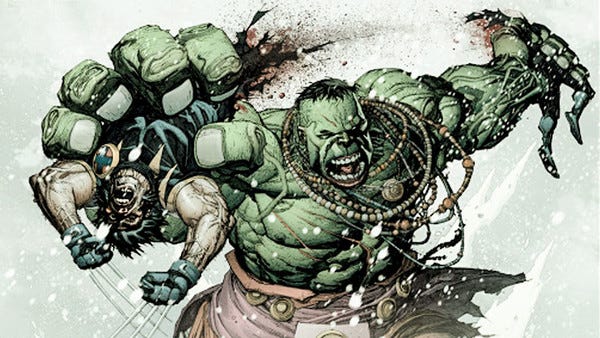
Yes - I am aware that I’m talking about needing raw materials for someone who lives in the same universe as the Hulk, who can add to his mass whenever he gets all huffy. I know, but go with me here. There’s a sad ending coming up.
Tweak things for Logan towards the realistic, and we’ve got a recently-healed Wolverine who’s ravenously hungry, dehydrated, oxygen-starved, overheated, out of stored fat and glycogen, and running low on whatever was needed to rebuild the missing tissues (calcium, iron, etc). And it does it again in an hour. And an hour later, if the Sentinels push their assault.
(Let’s not get into his occasional dalliances into self-cannibalization…energy-wise? Nope. That would not work. Also - gross.)
What I’m getting at here is that the healing factor has an endpoint.
And that Logan is one of the best Wolverine stories ever.
Why Wolverine’s Healing Factor Fails in Logan
In Logan, we saw an aging Wolverine, knowing that his end was coming.
Well, yeah. He cannot live forever. He’s not Superman.
Any modestly realistic maintenance system is going to gradually get slower and lose the race against accumulated damage. For decades, Logan’s system has been working to correct regular cellular damage, repeated catastrophic injuries, toxin exposure, adamantium poisoning, and just the wear and tear on his body from living as long as he has.
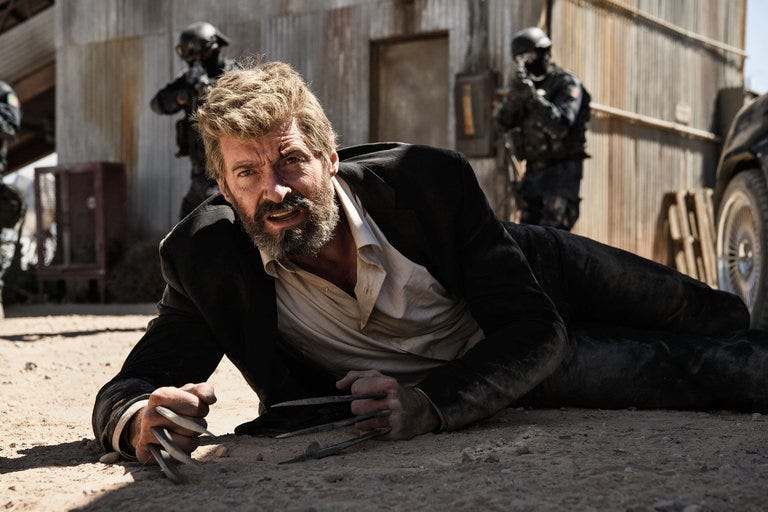
Logan’s body has spent a lifetime continuously correcting itself back into Wolverine. By the time of Logan, the errors are arriving faster than they can be corrected. Aging is what happens when error-correcting becomes imperfect. Even if we go with the idea of the healing factor healing itself, we’ll end up going down the same road eventually.
Death is when the system cannot cross the gap between what is there and what should be there. Eventually, remaining Wolverine costs more than Wolverine can pay.
And in the film, we saw Logan, a warrior until the very end, coming to terms with this and choosing to end his story on his own terms.
Keeping Wolverine, Wolverine
In the end, Wolverine’s healing factor isn’t just accelerated wound repair. For it to work as we’ve come to see over the past 50+ years, it’s his entire body engaged in unending self-preservation, not just keeping him alive, but rebuilding the boundary between Logan and everything that’s trying to turn him into something else. The mutation isn’t about just repairing his body; it’s about preserving the pattern we call Wolverine.
It’s an amazing mutation, loaded with possibilities and potential for incredible stories and scenes, and it’s also a springboard, as we’ve used it here for thinking about science and deeper topics.
And it has an endpoint. Bodies can’t regrow and heal forever. But instead of taking the fun out of it, working through his healing factor adds more than it takes away and makes Logan’s story long and rich, full of possibilities and opportunities until the final page is written.
Got a favorite example of Wolverine’s healing factor not mentioned here? A story I need to know about where identity gets a mention with the whole healing process? Let me know in the comments!
Curiosity is what brought me here.
Teaching is what I do with it.
If you’d like to read more about education, classrooms, students, and the craft of teaching, you’ll find those stories in Teacher, Teacher.