
Wonder Woman's Doctor Poison Was Real
The strange, tragic story of Fritz Haber, the chemist who helped feed billions—and pioneered chemical warfare.
Artifact Recovered: original publication date: 6/4/17
This piece was originally published on a previous version of The Science Of and has been recovered from the digital strata. Its lightly edited version is represented here because it’s useful, weird, fascinating, updated, or some combination of the four.
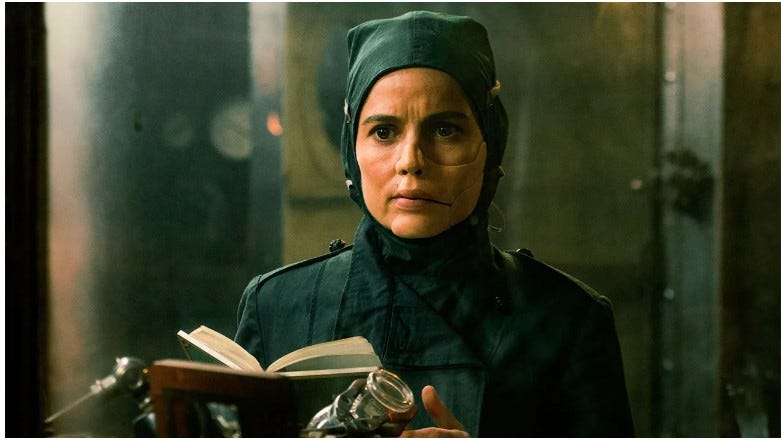
In the Wonder Woman film (2017), Dr. Poison has everything going for her as a classic villain. She’s broken. She’s creepy. She’s troubled. She’s brilliant. And she knows her science.
Apparently in the thrall of General Ludendorff, Dr. Poison – Isabel Maru, played by Elena Anaya - was responsible for developing, well…poison weapons for the German army in World War I, including a hydrogen-based gas (small molecular-sized particles could slip through filters) that could penetrate gas masks (and crack their glass too).
As for where the character came from, Dr. Poison was Wonder Woman’s first “costumed” villain, appearing in 1942’s Sensation Comics #2. In that appearance, Dr. Poison (created by Marston and Harry Peter) was revealed to be Princess Maru, an Asian Princess tied to both the Yellow Peril and the rising anti-Japanese sentiment in the United States at the time. Since her first appearance, Dr. Poison has been rebooted three additional times in DC Comics, and is currently Marina Maru, leading an organization called…Poison (no, not the ‘80s hair band).
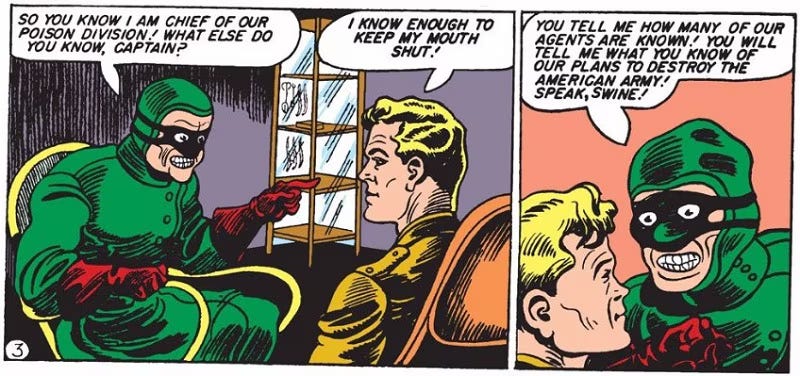
Dr. Poison in the film is frightening enough, but in this case, there’s a real-world analog, someone who has been celebrated and castigated through the years. Our world’s own complex character using science to help and hurt – Fritz Haber, the “Father of Chemical Weapons.”
And also, “the man who killed millions, but saved billions.”
Okay, but before we get into it, was Haber really the inspiration for the original Dr. Poison in 1942?
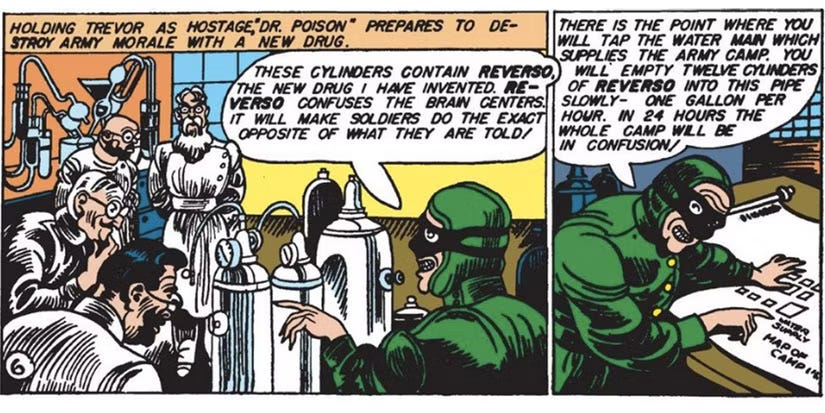
I mean…(waves hands).
Sensation Comics was originally written by William Moulton Marston, who created Wonder Woman and her initial cast, including Dr. Poison in issue #2. While there is no direct evidence connecting Dr. Poison with Haber, Marston was in college when chemical weapons made their debut.
The Wonder Woman creator was at Harvard from 1915 to 1921, earning a B.A., a law degree, and a PhD. in psychology. He was certainly no stranger to science and almost certainly would’ve heard of the use of chemical weapons by the Germans following their first use in the Second Battle of Ypres in the spring of 1915. The use of the gas was widely reported in papers throughout America, from The New York Times to The Chicago Tribune.
Firsthand accounts of the gas were stuff of nightmares – a sickly looking yellow-green gas rolling across the landscape, turning any vegetation brown and wilted, flowing down into depressions and pits in the ground, ultimately drifting down into the trenches where the Allied soldiers waited.
So does Haber equal Dr. Poison? The lines are conjecture, so… maybe not directly, but Haber and the memory of WWI gas warfare would have been part of the cultural atmosphere Marston inherited (and was probably goosed by the news of Haber’s death in January 1934).
Before we get into our suspected scientist-inspiration, we should note that Dr. Poison hasn’t been left behind in the ‘40s. Along with appearing in 2017’s Wonder Woman film, there have been other (five…six?) iterations of the character over the years thanks to continuity reboots and restarts.
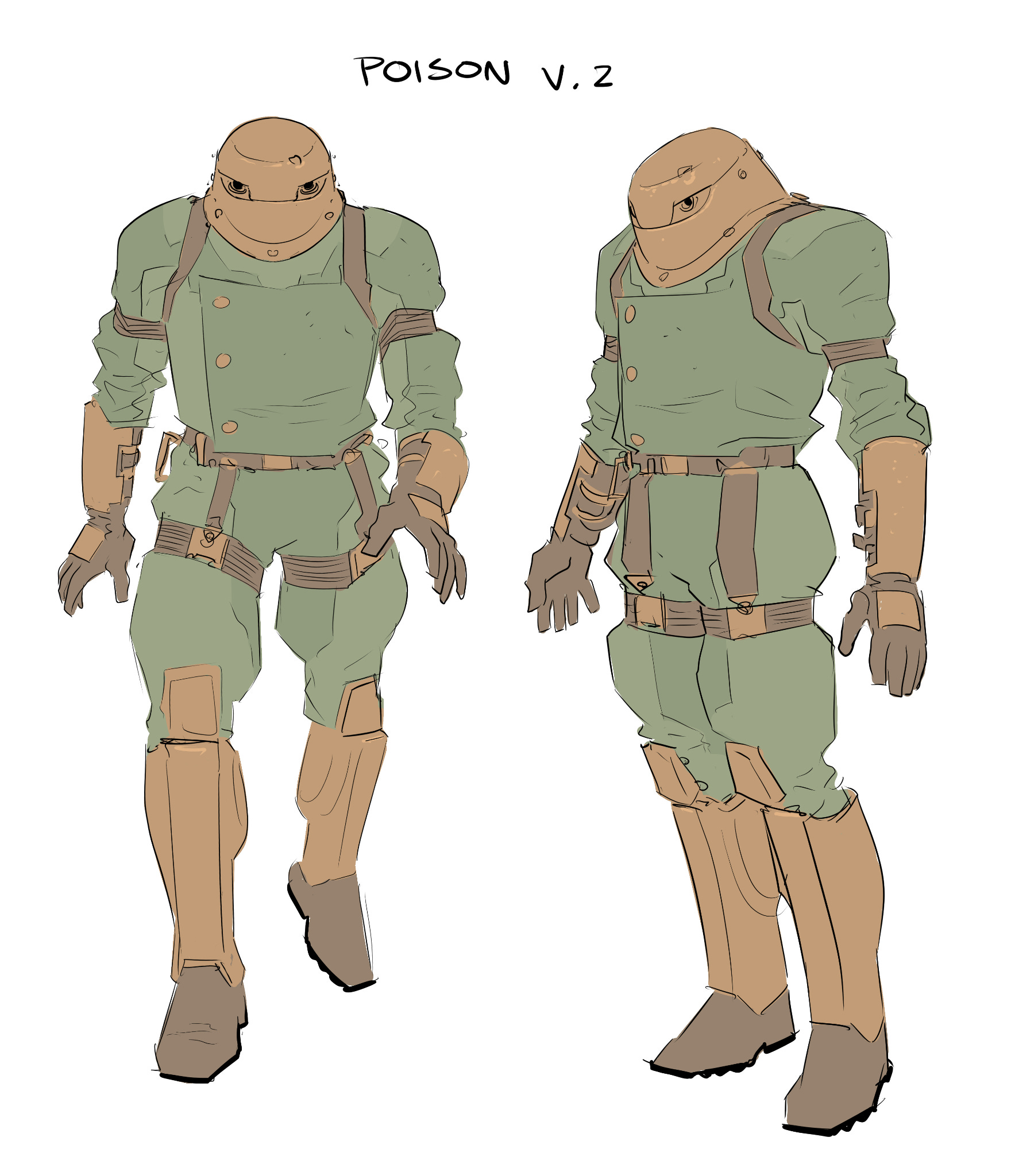
Most recently, Dr. Poison has returned in Absolute Wonder Woman, where she’s a member of Veronica Cale’s Suicide Squad. This time, the character gives more than a passing nod to poison gases - she is a sentient cloud of poison gas.
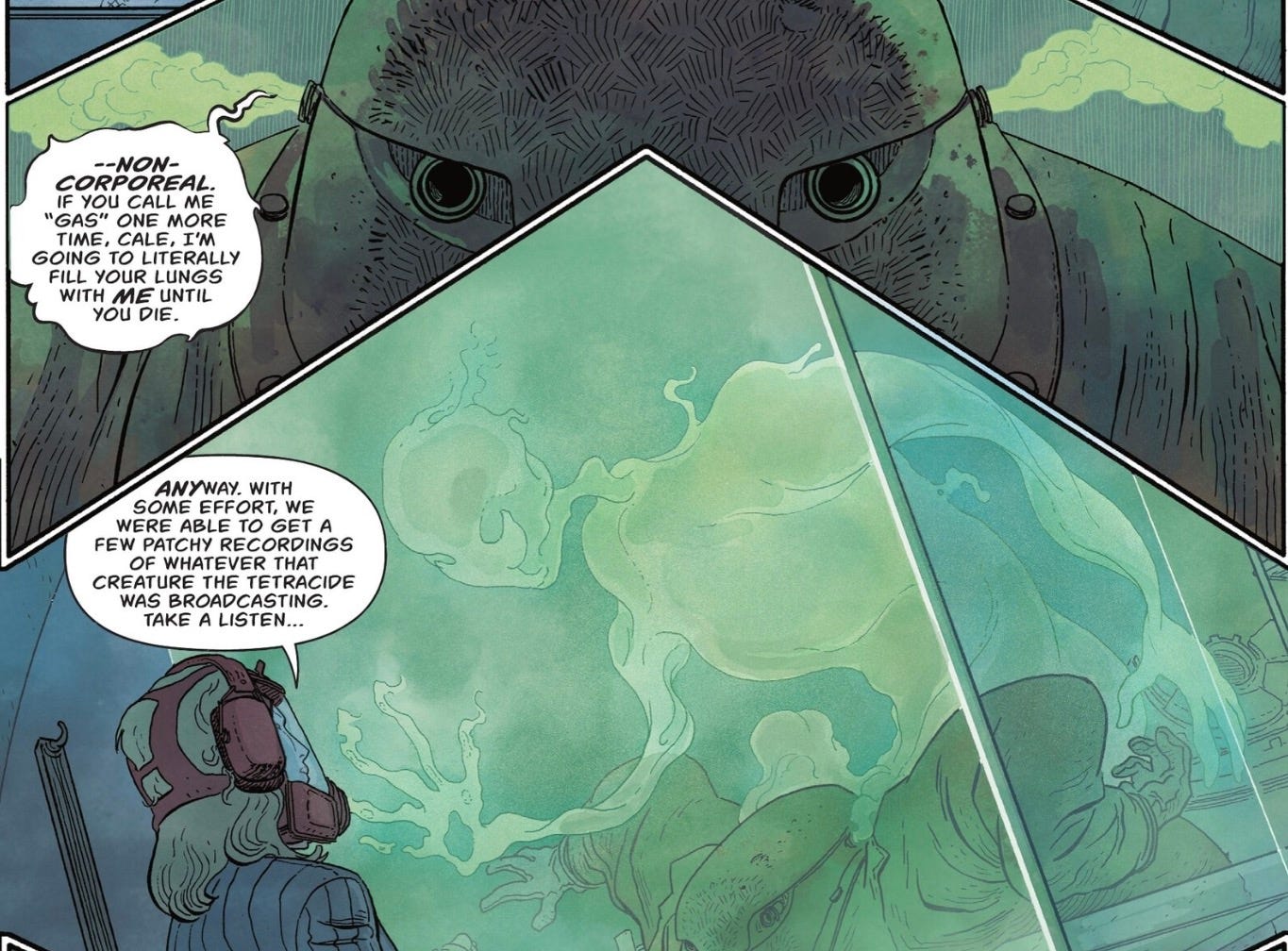
Her original version from Absolute Wonder Woman #8, designed by Kelly Thompson and Hayden Sherman
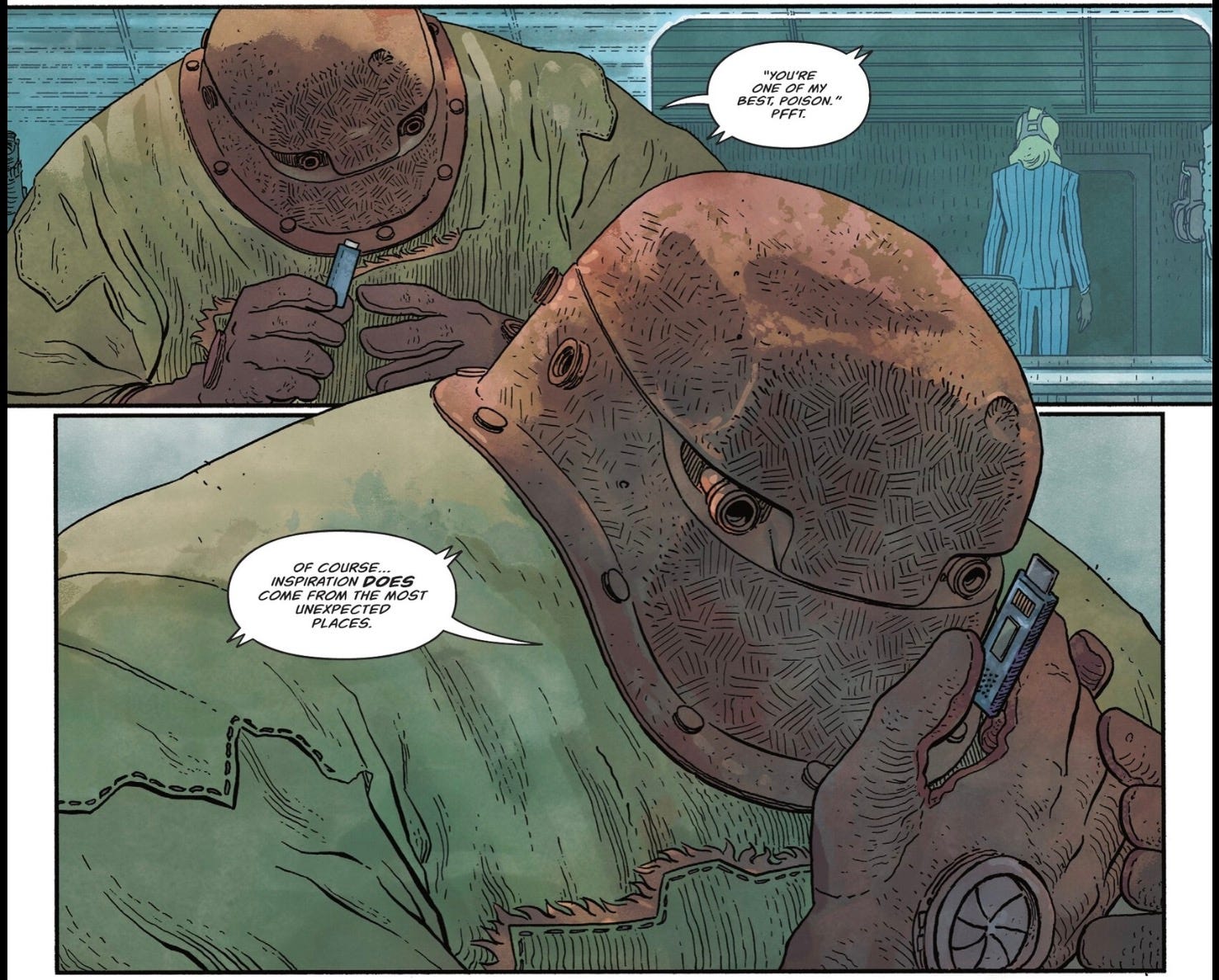
The image below is actually Poison’s second suit, after she…colorfully complained to Cale that the first one, which was bulkier, didn’t allow her to do delicate work.
So, back to Fritz Haber, our maybe kinda real-life inspiration for Doctor Poison.
If you can maybe remember him from a chemistry class or a YouTube video, you may already have a sense for who Haber is. But if we’re being honest, Haber, like Wonder Woman’s Dr. Poison, is a complex individual who resists the broad-brushing of turning him into a simple villain.
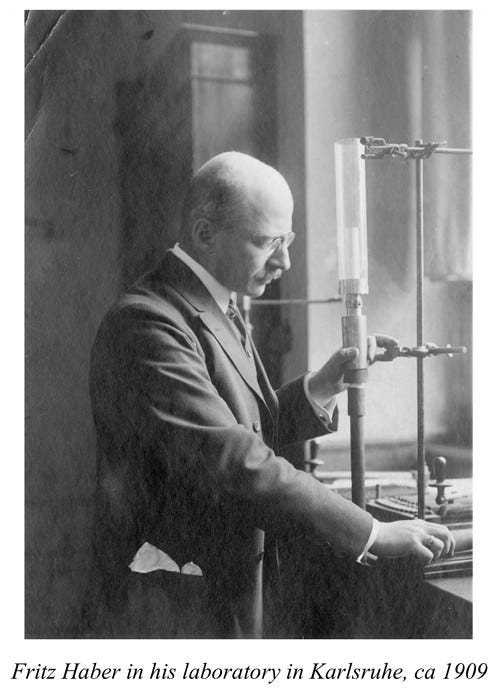
Fritz Haber is often cast as a lone German mad scientist in stories about chemical weapons used in World War I, but that’s not quite accurate. Chemistry was the hot science in the early 20th century. In many ways, World War I was an opportunity for the leading industrial nations to showcase their technologies to the rest of the world. Despite the Hague Convention of 1899 and 1907, which prohibited the use of asphyxiating gas projectiles in war, France used tear gas/irritant agents on the Germans in 1914. Once the Germans introduced gases on the battlefield, the Allies answered with gases of their own. Lost to most history and chemistry texts, in fact, is Haber’s rivalry with the French chemist Victor Grignard, who also studied gas weapons. No, this wasn’t a case of Haber secretly toiling and developing chemical weapons for war. The whole world was headed in that direction. Haber just got there first.
But before we expose his dark side, let’s make one thing clear – Haber was a brilliant chemist. Before he became known for his work with chemical agents, Haber, in collaboration with Carl Bosch, invented the Haber-Bosch process, a means to literally pull nitrogen out of the air (with the use of a metal catalyst under high temperatures and pressures)
Chemistry students know the Haber-Bosch equation well – it’s usually the go-to equation to explain Le Chatelier’s Principle:
N2 + H2 -> 2NH3
The ammonia (NH3) is then used to produce fertilizer, which, in Haber’s time, was desperately needed to help feed the world’s rapidly growing population. The process is still used today and is often pointed to as one of the main factors that has allowed the Earth’s population to grow to over 7 billion. For their work on a process that benefits all humanity, Haber won the Nobel Prize in 1928 for ammonia synthesis, while Bosch won in 1931 for high-pressure chemical methods. Haber’s win in 1918 was…controversial to say the least, with the Nobel committee explaining that they only considered his work that benefited agriculture, rather than his wartime activities.
However, pulling all that nitrogen in the air and making it useful drew the attention of the German Army, which needed it for nitrogen-based explosives during the Great War.
When the Great War came, Haber saw himself as a German first and a chemist second (in opposition to his friend, Albert Einstein, who was critical of Germany), and told the German government he would do whatever his country needed to help in the war effort.
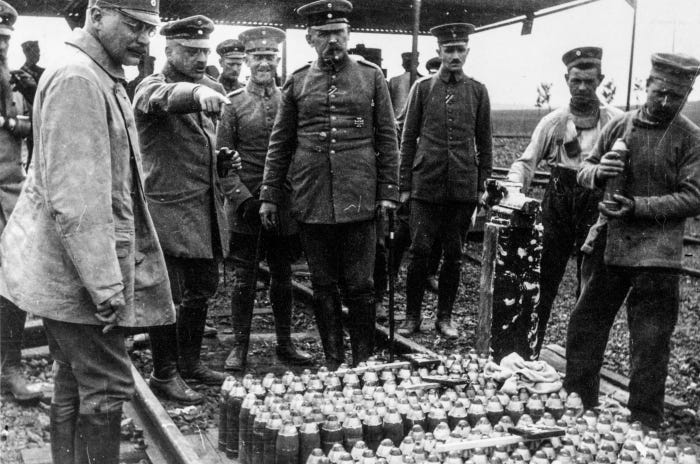
Like Dr. Poison, Haber was not regarded as a traditional war hero by the German military leadership. These were generals and soldiers of the Victorian Era – gentlemen first, soldiers second. Haber’s ideas of killing the enemy with gas were seen as “unchivalrous” and “repulsive.” But Haber was steadfast, insisting that the gas would be a means of reducing German casualties (while increasing those of the Allies) and of ending the war faster (with Germany on top). In the end, Haber’s plans for chlorine gas were a means to an end, and the generals finally took Haber’s advice of “using chemical warfare with conviction.”
With the military finally behind him, Haber threw himself and his lab at the Kaiser Wilhelm Institute for Physical Chemistry into the business of making a poison gas for the troops. By April of 1915, Haber had his perfect concoction and was on the front lines at Ypres, Belgium. There, he waited for weeks until the winds were just right, and on April 22nd, he released over 168 tons of the gas from canisters, which exploited the wording and was still plainly against the spirit of the Hague Convention, which outlawed gas projectiles whose sole purpose was spreading asphyxiating/deleterious gases.
Denser than air, the gas drifted like a low, yellow wall towards the French trenches. Hundreds to thousands (depending upon your source) of French and Algerian soldiers died from exposure. While the gas use did not lead to an immediate victory for the Germans, it emboldened Haber and the German High Command to view gas weapons in a favorable light.
Haber oversaw another attack at Ypres, this time on Canadian troops, and by May 2nd, had been promoted to a uniform-wearing Captain and was headed home to Berlin for a party in his honor. He was living a celebrated existence at this point – a party on the 2nd, and then on May 3rd, he was headed to the Eastern front to oversee a gas attack on the Russians.
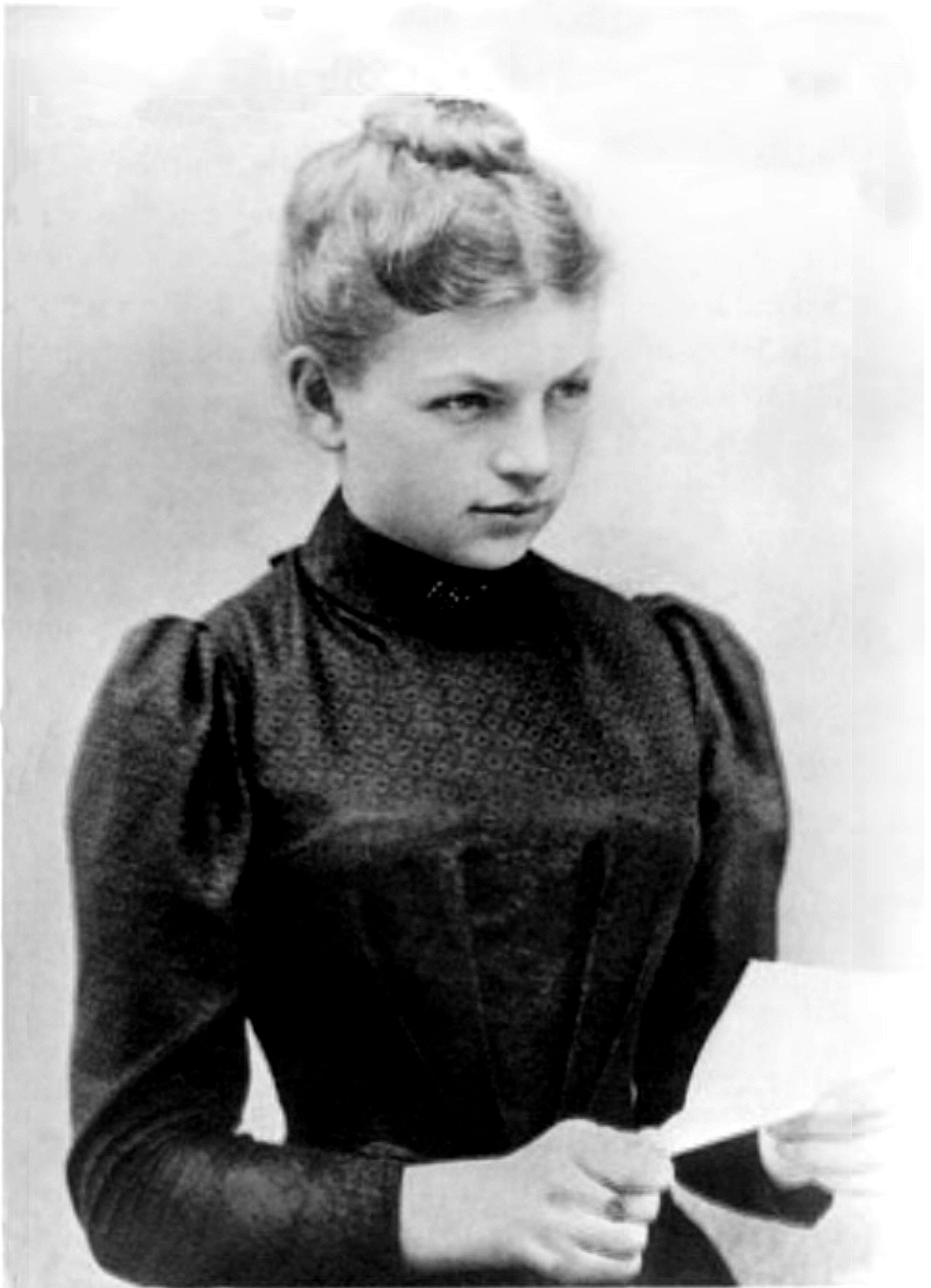
Haber’s wife, Clara Immerwahr (a brilliant chemist in her own right, and the first German woman to earn a PhD in chemistry), long disagreed with her husband’s militarization of science and development of chemical weapons, and on the night of the party, shot herself in the chest with his service revolver (she didn’t die immediately and was found by their 12-year-old son, Hermann, but Fritz reportedly slept through the shooting).
Haber was so not broken up by his wife’s death that he didn’t bother changing his plans and headed out to the Eastern Front the next day – though he later said Clara’s face and words still haunted him.
But whether or not his wife’s ghost haunted him, it didn’t slow down his work.
After the debut of Haber’s chlorine gas, the chemist went on to oversee the development of phosgene gas (COCl2) and mustard gas ((ClCH2CH2)2S). Each of the three gases used in World War I is horrible, and while both German and Allied armies rapidly developed gas mask technology to minimize the effects of the gases, there were approximately 1.3 million gas-related casualties and around 91,000 deaths from poison gases in World War I between their debut at Ypres in 1915 and the end of the war in November of 1918.
Strictly from the chlorine gas side of things, inhalation of the gas is a horrible way to go, thanks to the reaction that happens in the lungs that produces both hydrochloric acid and hypoclorous acid:
Cl2 + H2O <-> HCl + HOCl
The water on the reactant (left) side would be found in the lungs or on the surface of the eyes. The gas could blind those without protection, while in the lungs, the alveoli would be damaged or scarred, reducing the ability to absorb oxygen – if you were lucky. If you were unlucky, exposure to hydrochloric acid would cause lung cells to rupture (lyse), releasing their contents. Fluid-filled lungs would literally lead to drowning on dry land.
On April 26th, 1915, The New York Times reported on the battle:
“Some (soldiers) got away in time, but many, alas, not understanding the new danger, were not so fortunate and were overcome by the fumes and died poisoned. Among those who escaped, nearly all cough up blood, the chlorine attacking the mucous membranes. The dead were turned black at once … (The Germans) made no prisoners. Whenever they saw a soldier whom the fumes had not quite killed they snatched away his rifle … and advised him to lie down to die better.”
Mustard gas and phosgene were, reportedly, even worse, sometimes delaying their deadly effects until after the battle was over. Haber also worked on a gas blend called maskenbrecher or “mask breaker” – an agent that would be small enough to get through the filters of a gas mask and cause a violent reaction from sneezing to vomiting, forcing soldiers to remove their gas masks, and then be exposed to the other, deadlier gases from which their masks were protecting them. Hey - what was that gas Dr. Poison was working on again?
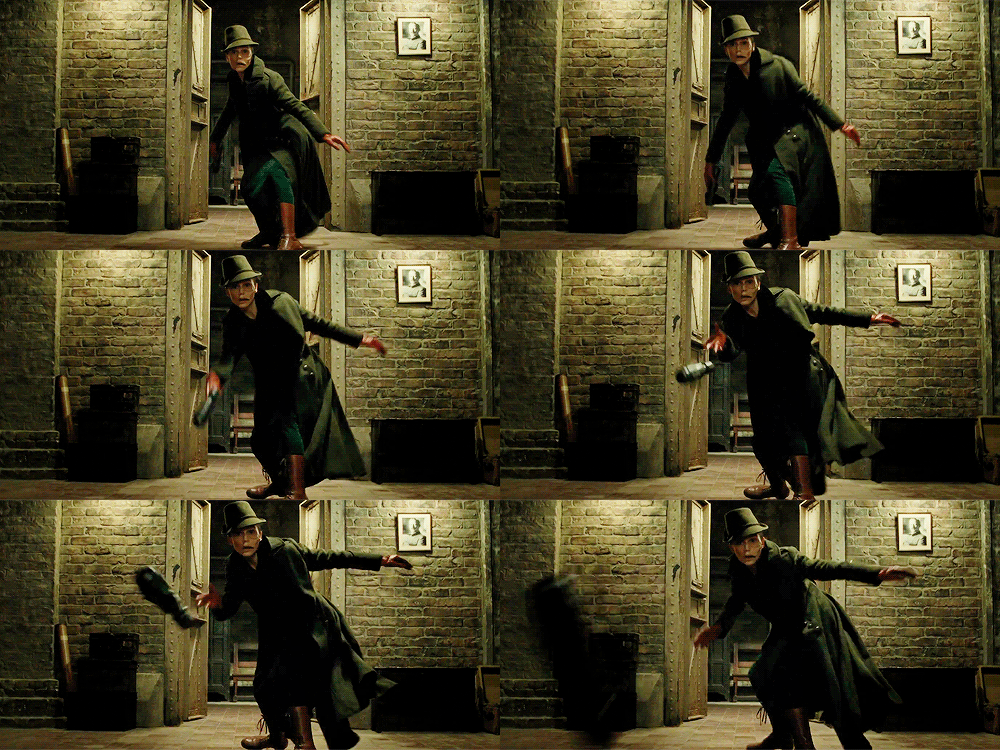
Following World War I, Haber was designated a war criminal by the Allied Powers, but, like Dr. Poison in Wonder Woman, he escaped capture and prosecution, fleeing to Switzerland in 1919. His name was later removed from the list of wanted war criminals, and he returned to postwar Germany a hero.
During these postwar years, Haber continued his research into poisonous gases, in direct opposition to the Treaty of Versailles. Part of the research into poisonous gases led to the development of the pesticide Zyklon A in the 1920s. Another Haber project in the years of reparations being paid by Germany – he proposed that he could extract gold from seawater.
He wasn’t wrong about gold in seawater. There’s a little bit of everything in there. But Haber’s methods were not up to the challenge, and ultimately, his plans bore no fruit.
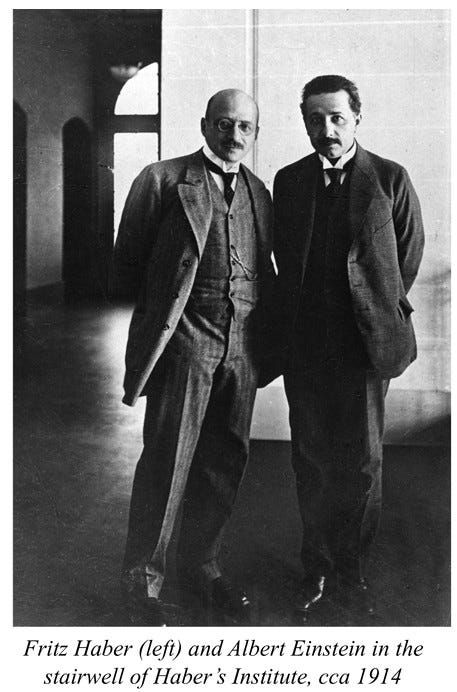
While he was initially seen as a favored son in his beloved Germany, the postwar years became difficult for Haber as the National Socialist Party rose to power. Haber’s Jewish ancestry, long known but previously overlooked because of his conversion to Christianity (1924) and patriotic service to Germany, suddenly became impossible to ignore under Nazi racial laws, effectively ending his scientific career.
Doors that were once thrown wide for him were firmly closed. Haber fled his beloved Germany for England in 1933, but his work with chemical weapons kept him from finding a home there. Haber wandered Europe for some time, ultimately dying of a heart attack in a Swiss hotel in January of 1934.
In a cruel twist of fate, or what some might see as karma, Haber had one final role to play in the story of poison gas.
Now, to be clear, Haber did not invent Zyklon B. That pesticide was developed by other German chemists in the 1920s. But it emerged from the same German chemical industry and scientific world that Haber had helped build and champion throughout his career.
Years later, the Nazis would repurpose Zyklon B for something far darker than pest control. The gas became one of the primary tools of mass murder during the Holocaust, killing millions of people, including countless Jews.
And that’s where the story takes one final, bitter turn.
Haber had spent much of his life trying to prove he was German. He converted from Judaism to Christianity. He devoted his scientific genius to Germany’s war effort. He considered himself a patriot first and foremost.
It wasn’t enough.
The Nazis saw only his Jewish ancestry. He was forced from the country he loved, stripped of the place he had spent a lifetime earning. Worse still, likely, some of his own relatives would later become victims of the regime.
History rarely gives us neat endings. But it is difficult to imagine a more tragic irony than this: a man who helped pioneer chemical warfare, who dedicated his life to Germany, ultimately rejected by that same nation while a poison associated with the chemical establishment he helped create was turned against his own people.
A complex man during his lifetime, Haber’s legacy is equally complex. Some estimates suggest that half the world’s population would not be here if not for the Haber-Bosch process, which enabled the cheap, easy production of fertilizers in bulk. Conversely, the descendants of the victims of Haber’s gas attacks (including those killed by Zyklon B) are not here.
Real-life “villains” are indeed complex characters.
More:
A Brief Biography of Fritz Haber (1868 - 1934) (pdf)
Fritz Haber’s Experiments in Life and Death
Organisation for the Prohibition of Chemical Weapons
Chemical and Engineering News: 100 Years of Chemical Weapons
Curiosity is what brought me here.
Teaching is what I do with it.
If you’d like to read more about education, classrooms, students, and the craft of teaching, you’ll find those stories in Teacher, Teacher.