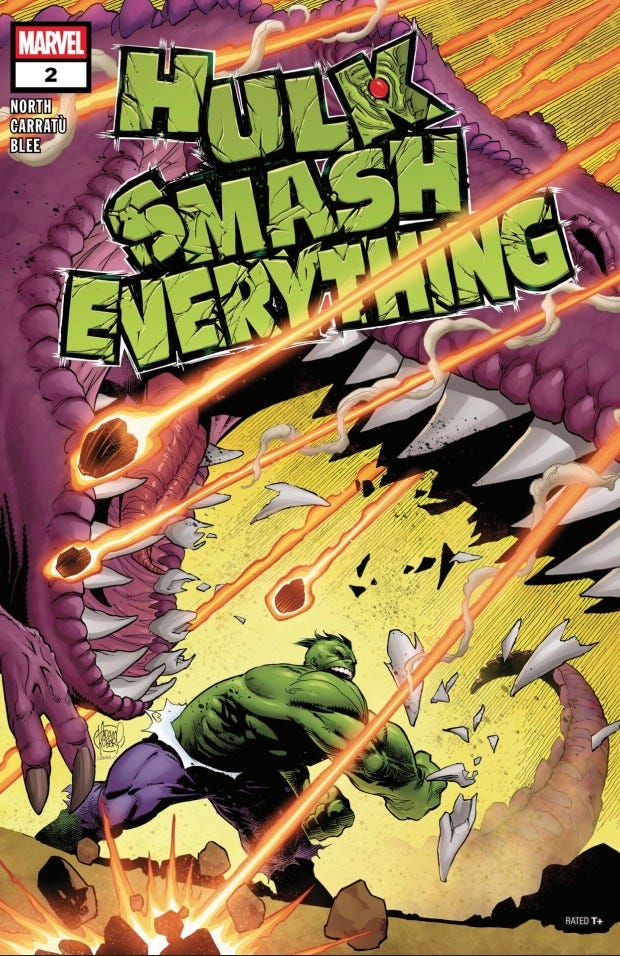
And it all checked out nicely — in an effort to rid himself of his nemesis once and for all, the Leader sent the Hulk back in time, 66 or so million years ago, to the Yucatán region, just in time for the Chicxulub (pronounced “chick-shaloob”) Impactor to hit. The dinosaurs the Hulk was fighting were appropriate for the time period, the location was right, and everything looked good.
Actually, bad for the Hulk. The asteroid that wiped out the dinosaurs was coming, visible in the sky. The Cretaceous Period, the last act of the Mesozoic Era and the Age of Dinosaurs, was about to end in spectacular fashion.
The Hulk (strongest one there is) is still fighting the dinosaurs he met at the end of the last issue (note: the Leader’s really flexing his intelligence here by pinpointing the time within an hour or two of the asteroid hitting Earth), and then, the impact.
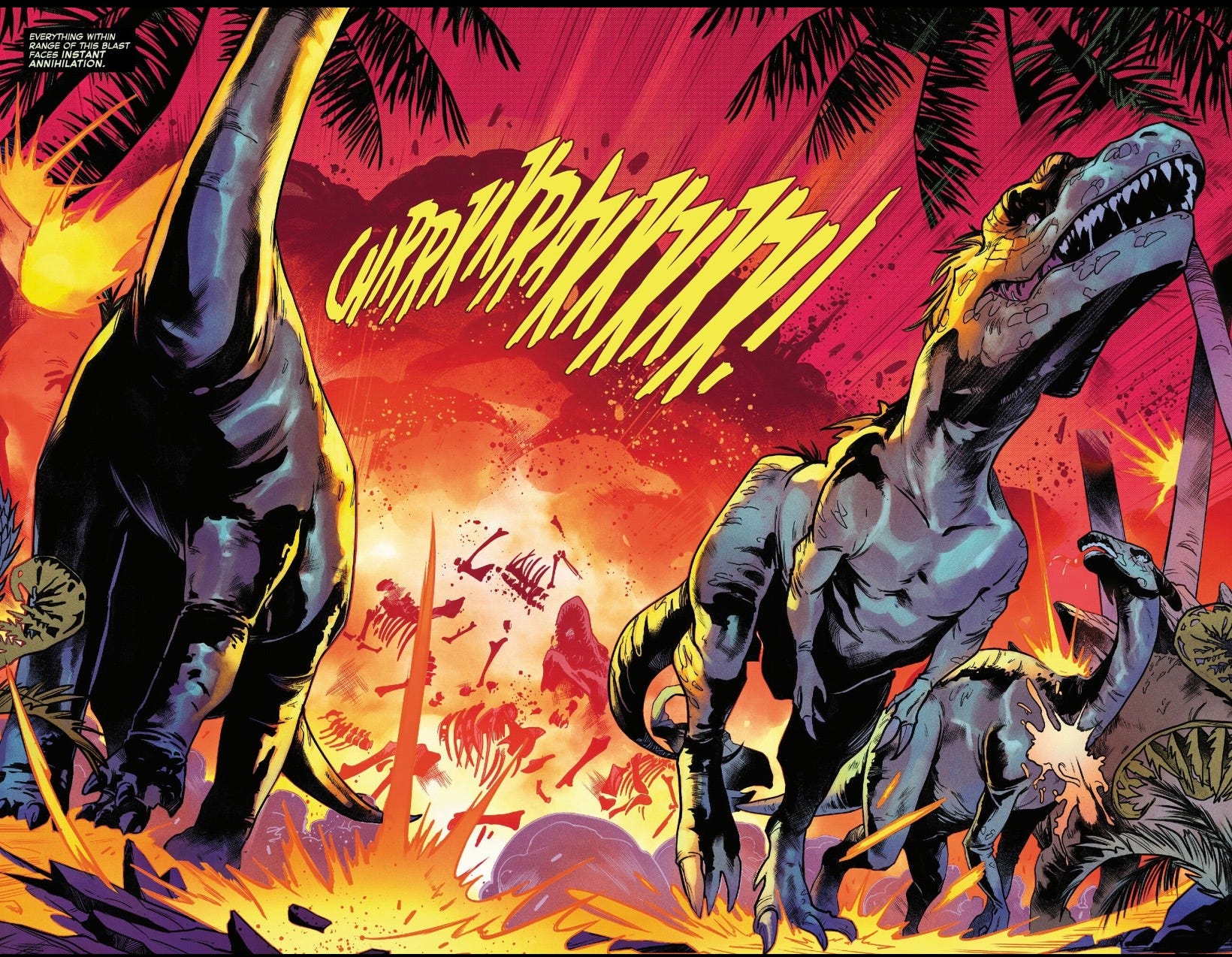
Everything close to the impact site is instantly vaporized. Best research suggests that the rock that hit Earth was between 10 and 15 km across (6–9 miles), with a mass of roughly a trillion metric tons, traveling at about 20 kilometers per second, or roughly 45,000 miles per hour. It was most likely a clumpy mass of carbon-rich rock that originally called a region of our solar system beyond Jupiter home before it came in for a close-up look at Earth. Don’t ignore that speed — moving that fast, it could’ve crossed the United States in 4 minutes. Or, more importantly, when dinosaur eyes registered the flash of impact, the crater was already excavated.
The asteroid didn't kill all the dinosaurs at once. First came the flash. Then the fire. Then the desperate sprint for survival. For a brief moment, creatures that had ruled Earth for more than 160 million years found themselves running from something they couldn't fight, outrun, or even understand.
I still love the fact that if you look up “Chixculub Impactor” on Google, the results pop up, an asteroid streaks across your screen, and the screen shakes with the impact.
The force of the asteroid’s impact cannot be overstated. It was so massive and moving so fast that when it struck the Yucatán Peninsula, it vaporized. Quick science lesson: think of it like an ice cube. You can heat an ice cube until it melts, and if you keep adding heat, you can boil the water, turning it into vapor. In a beaker or on your stove, it takes time for the energy to do its job. Now imagine skipping over the whole “solid turns to liquid, and then the liquid warms up” part and putting enough energy into the ice to turn it into a gas in less than a second.
That’s scary. And the asteroid had enough energy to do that and more.
Fun Fact: We know a lot about the impact. For instance, we know that the asteroid came in at a steep angle, probably around 60° relative to the impact surface. This was probably the worst possible angle it could have had. As a result, it blasted up more debris and vaporized more of the site than a shallower angle would have. We also know that the impactor hit during Northern Hemisphere spring, thanks to fossil evidence. This was a particularly bad time, as life was just starting up for the season—eggs were being laid, and trees and plants were flowering and kicking off their annual growth. And if the impact had happened just three hours later, the asteroid would not have struck the shallow sea covering the Yucatán region, but rather the deep Pacific Ocean, and things probably would have gone very differently. And finally, when the leading edge hit the ground, the trailing edge was still about 10 km above the surface - just about the altitude for airlines.
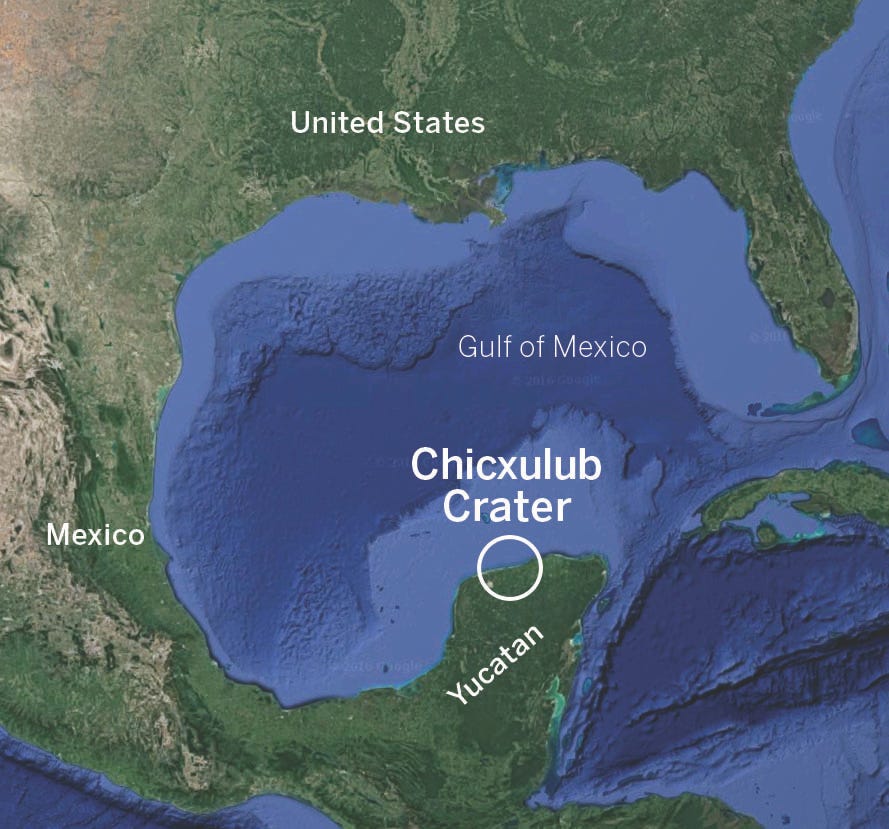
The crater from the impact is 180 kilometers in diameter (110 miles), but again, there’s nothing of the actual asteroid left down there. Just some broken and buckled bedrock that attests to the energy of the impact and its angle.
Ground zero. The Chicxulub impact crater lies buried beneath Mexico's Yucatán Peninsula, marking the spot where a 10–15 km asteroid ended the Age of Dinosaurs 66 million years ago. (image: Jackson School of Geosciences, The University of Texas at Austin)
One of the reasons the impact was so devastating comes from the same adage used in real estate: location, location, location. The impact site was loaded with sulfur-rich bedrock, and much of it vaporized along with the asteroid. This resulted in sulfur compounds (sulfur dioxide, sulfur trioxide, and others), along with carbon compounds (lots of carbon dioxide) and soot, being blasted into the atmosphere.
After getting cooked and regrowing tissue a few times, the Hulk (who somehow survived being near ground zero) leaps himself out of there.
While the Hulk was right to get as far away as he could from the impact site, in reality, it probably didn’t matter much. Earth was hell.
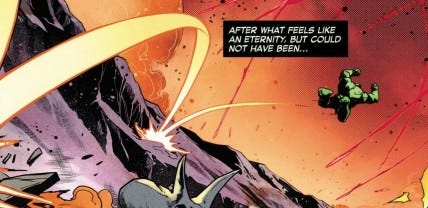
It’s not entirely clear how long the Hulk was jumping around post-impact (“After what feels like an eternity…”), but he wouldn’t have found safety anywhere. In the immediate hours to days after the impact, materials that had been blasted into the upper atmosphere—the ejecta—would be falling back to Earth. As the material fell, it compressed the air beneath it, heating both the air and the material itself (for more on this, check out the article about the Artemis II reentry and the Flash running really fast).
The Hulk survives ground zero. Unfortunately for him, so does the extinction. Escaping the impact crater only means trading instant vaporization for a planet-wide disaster of fire, darkness, and collapse.
There’s still debate about exactly how hot it got and what that meant for life on Earth, but many dinosaurs were likely broiled to death, and much of Earth’s vegetation burned, releasing even more soot and carbon dioxide. During that time, it would have felt like you were inside a toaster oven, with the sky glowing red as millions of tons of material fell back toward the ground. And fires surrounded you. Extinction Wave #1.
Understandably, it would make the Hulk mad.
Then, things get really bad. After Earth’s temperature setting comes down from “broil,” all of the sulfur compounds and other particulate matter that remain airborne reduce the amount of sunlight reaching the surface, cooling the planet and wiping out even more plants (and, by extension, the herbivores and carnivores that depended on them). The oceans cooled as well, taking out many organisms that had been lucky enough to survive the immediate effects of the impact. All told: Extinction Wave #2.
But despite being dealt one of the worst hands imaginable, life somehow endures. Animals that could burrow, retreat deep enough into the water, or survive as scavengers—and those that were simply too mean to die (crocodiles, I’m looking at you)—eked out an existence and endured.
And for some of those poor creatures, the Hulk finds them.
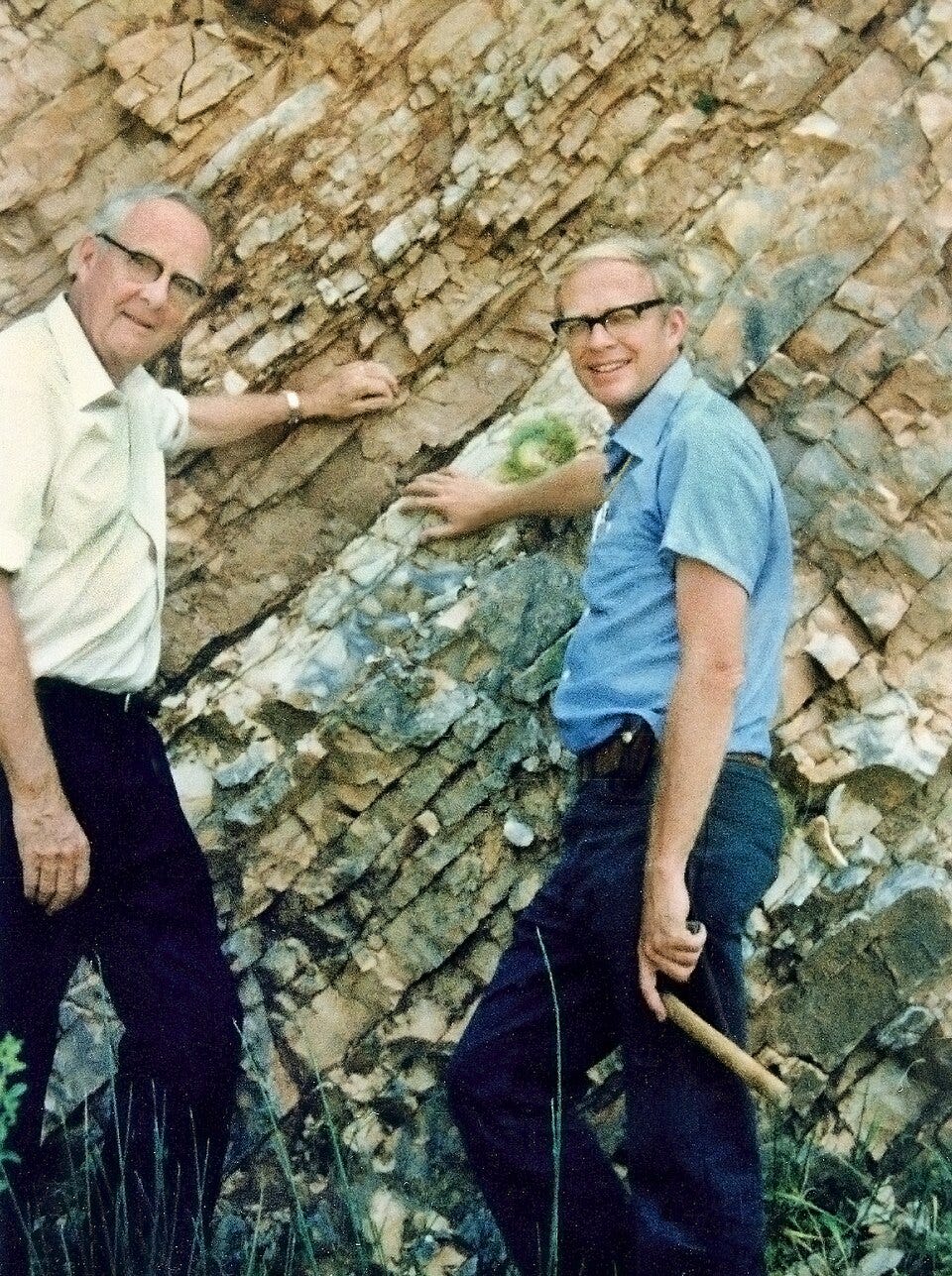
Fun Fact: That stuff that fell from the sky after the impact—the soot from burning forests, particulates, and even the vapor that once made up the asteroid—settled all over Earth and is still around today. In some locations, if you know where to look, you can spot the line of dark material sandwiched between other layers of rock. This thin band of dark clay, often only a few centimeters thick, is called the K–Pg Boundary. In the rock layers below the K–Pg Boundary, you find fossils of the large non-avian dinosaurs. Above it, none. It’s a bookmark in Earth’s history, a physical reminder of one of the worst days our planet has ever experienced. It’s distinctive because of the combination of elements it contains—particularly iridium, which is rare in Earth’s crust but relatively common in asteroids.
That’s Luis on the left and Walter on the right, at theK-Pg Boundary in Gubbio, Italy in 1981. (photo courtesy of Lawrence Berkeley National Laboratory (LBNL)
The initial suggestion that the K–Pg Boundary represented an asteroid impact came from physicist Luis Alvarez and his son, geologist Walter Alvarez, in the late 1970s. Based on its composition, they proposed that a roughly 10-km-wide asteroid had struck Earth 66 million years ago. Remarkably, Alvarez and his colleagues advanced the hypothesis before the Chicxulub crater was identified, and later crater research largely confirmed their estimates of the impactor’s size. There is still debate about some of the details and methods because... science.
Please Don’t Kill Our Ancestors
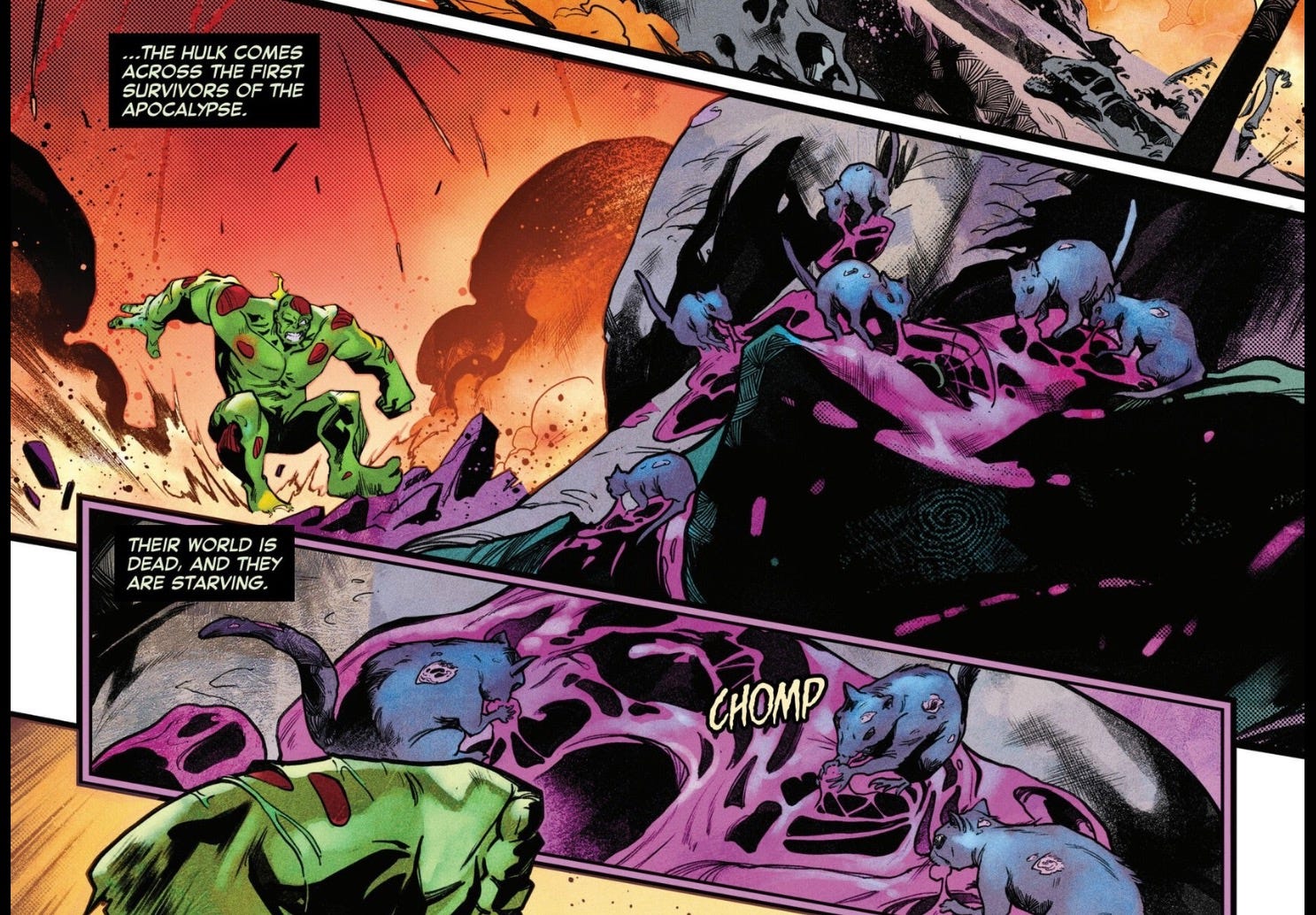
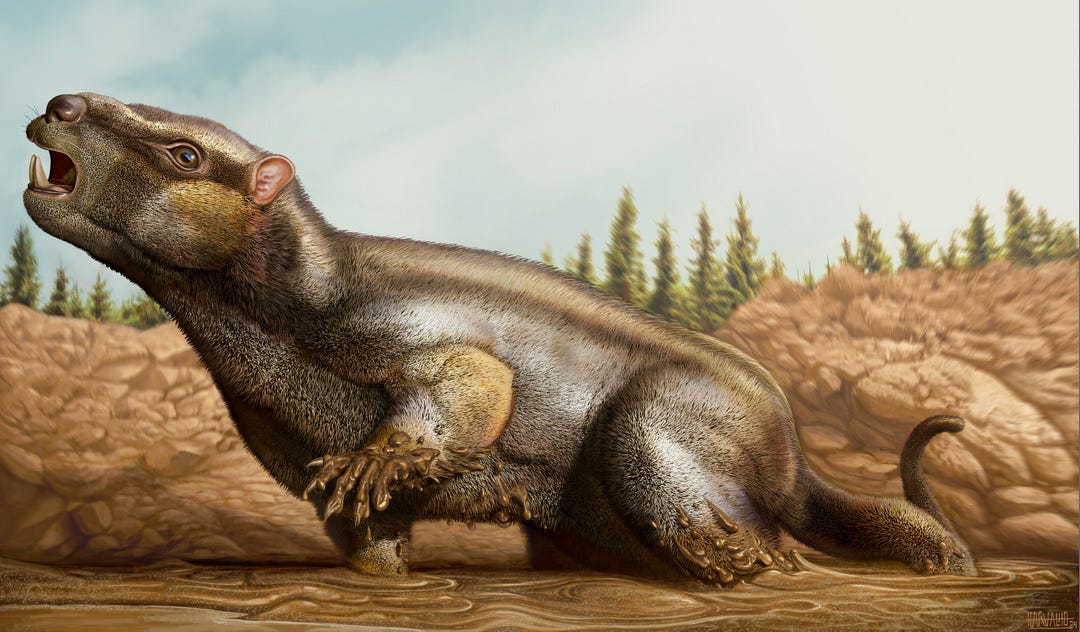
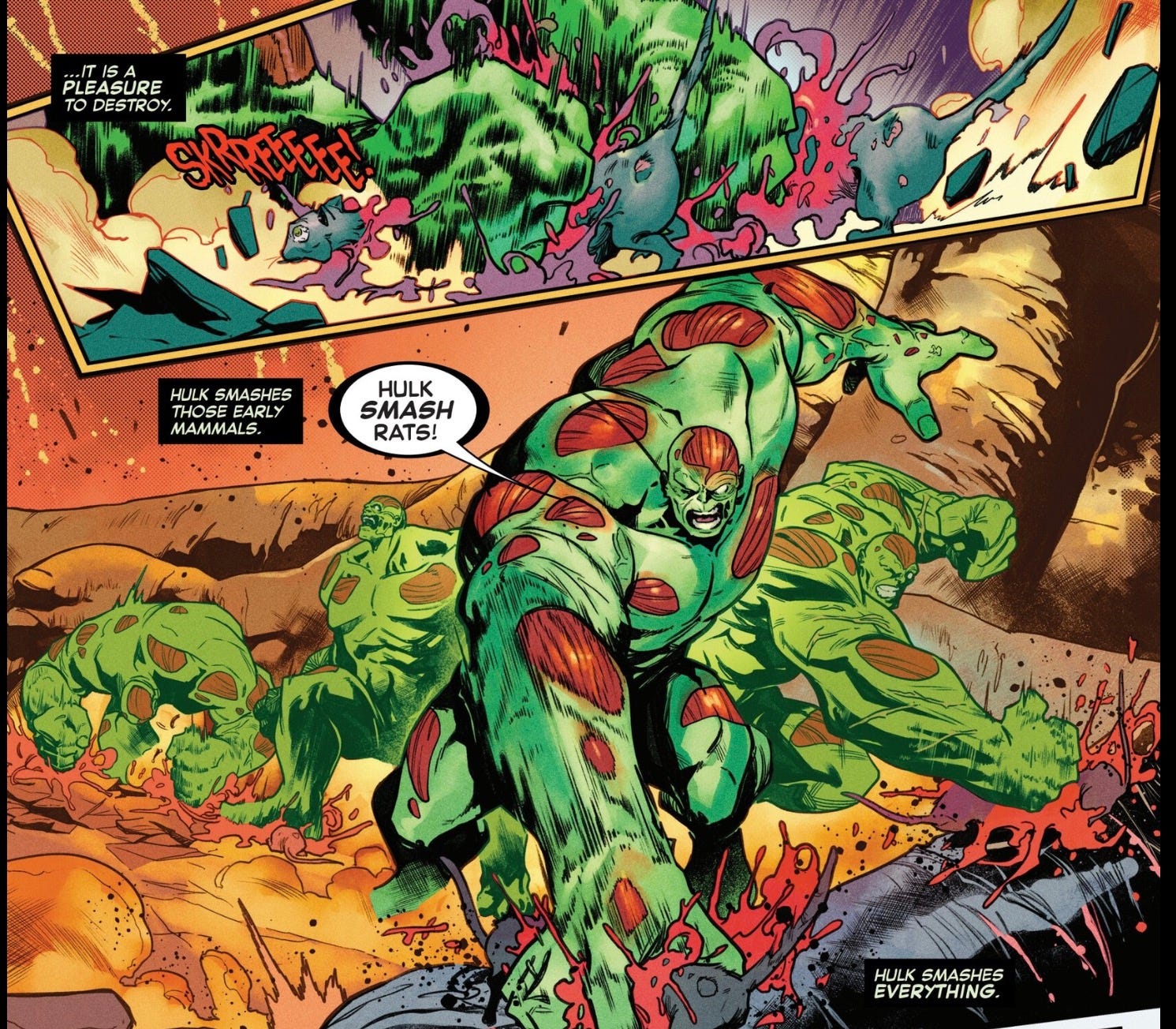
At some point after all his jumping, the Hulk lands near a dead dinosaur being nibbled on by a group of small mammals. Yes, mammals. They existed alongside dinosaurs right up until the end of the Cretaceous.
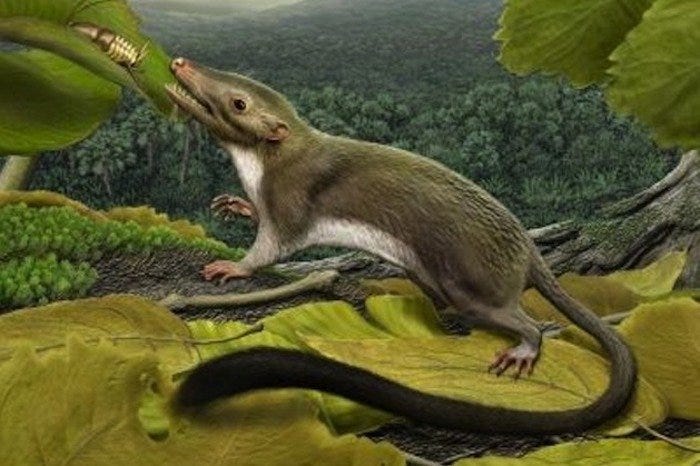
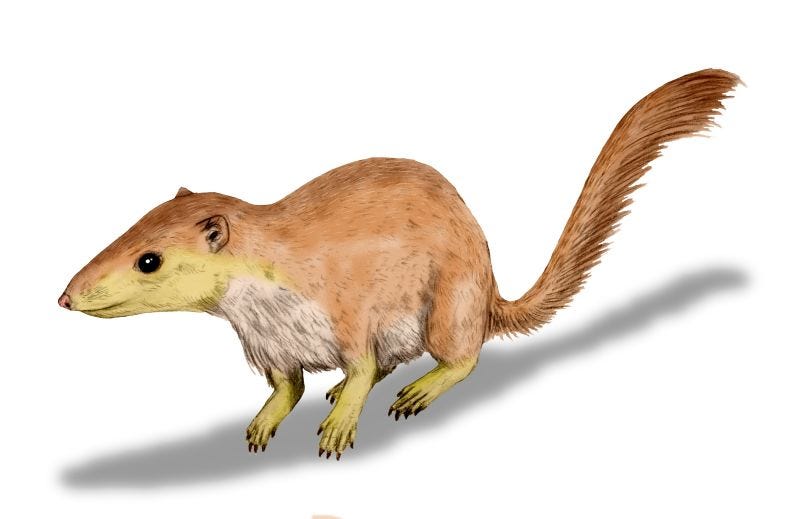
Meet the winners. While the dinosaurs were vanishing and the planet was busy trying to kill everything, these tiny scavengers were doing what survivors do: finding food, staying hidden, and hanging on. Sixty-six million years later, one branch of their family tree would be reading comic books.
You may think the image is showing rats, and that’s what the Hulk calls them, but they are definitely not rats. Rats didn’t arrive on the scene until roughly 3 to 5 million years ago. More likely, what the Hulk sees is a representative visual of several types of mammals that were around at the time, such as:
They were all rodent-like in the sense that they could reproduce quickly, burrow, survive on small energy budgets, and eat almost anything.
Including a dead dinosaur.
In fact, if you let the evolutionary tree grow from small mammals like the ones the Hulk spots—mammals that are about to become very important to our story—it might look something like this:
66 million years ago → small mammal survivor
60 million years ago → early placental mammals
55–60 million years ago → primate lineage emerges
40 million years ago → early anthropoid primates
20–25 million years ago → apes
6–7 million years ago → last common ancestor of humans and chimpanzees
300,000 years ago → Homo sapiens. Yay!
The big idea here is that, with the non-avian dinosaurs out of the way (and the theropods doing their own thing, thanks guys), mammals were able to explode into thousands of different forms, each finding a niche in the biosphere left vacant by the impact.
It just so happens that the Hulk (still angry and looking to smash) showed up near a group that was incredibly important to the branch that would eventually lead to us.
Seeing our distant ancestors, the Hulk…
And there goes humanity. The Hulk calls them rats, but the science is worse: these are exactly the kind of small post-impact mammals that would eventually give rise to primates, apes, and us.
…smashes them. Great.
You kind of want to side with the Leader here, don’t you?
If Not Us, Then Who?
In the present, immediately after the smashing of our early ancestors by the Hulk, the Leader feels a temporal wave…one of a variety of hand-wavey time-travel conventions in science fiction that suggest changes in the deep past are only reflected in the present when they serve the plot. Quickly realizing that the Hulk somehow survived the asteroid impact, he jumps back 66 million years to make things right.
But wait— let’s just say, for a second, that he didn’t get to the time platform in…time, and the present reshaped itself around the past where the Hulk smashed the early placental mammals that were our ancient ancestors. Ignoring the idea that, if the Hulk stopped humans from existing, he would have stopped himself from existing and therefore wouldn’t have been around to smash the small ancestor mammals in the first place (I know, big ask)...what would the “present” be like?
So, take a peek outside the Leader’s base in the “present,” where the Hulk has destroyed all chance of primates evolving. What would you see?
Birds. Lots and lots of birds.
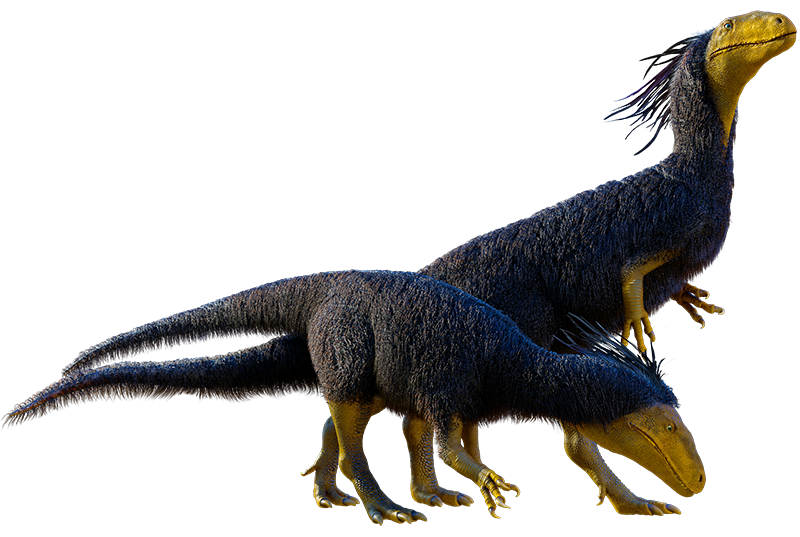
Smaller theropods, small feathered dinosaurs, were on the rise before the impact and survived after. Even the Leader pointed it out, saying later that the impact wiped out all “non-avian dinosaurs.” With mammals around as evolutionary competition, those surviving theropods evolved into the more than 10,000 species of birds known today. Without mammals competing for resources and ecological niches? Oh, they’d run the joint.
Before birds were birds, they were these guys. Small, feathered theropods were already experimenting with intelligence, social behavior, and survival strategies long before the asteroid hit. Take away the mammals, give them another 66 million years, and Bird-Earth starts looking a lot less ridiculous. (image: Dinosaur Coast)
The extinction left behind a huge number of vacant ecological roles, and evolution hates empty real estate. Run down the list — the impactor took out:
large herbivores
small insectivores
mid-sized predators
scavengers
seed eaters
tree dwellers
ocean hunters
In our timeline, mammals exploded into those niches. But if the Hulk somehow removes the mammalian lineage that eventually gives rise to primates, rodents, carnivores, whales, bats, and everything else, those niches don’t remain empty. They get filled by dinosaurs. Theropods.
Earth is Birdworld.
Research suggests that, by the end of the Cretaceous, some theropods were demonstrating at least modest intelligence, complex social behavior, and possibly even cooperative hunting. That requires information transfer, communication, and brains capable of handling both.
So yeah, after the impact’s aftermath, birds were ready to fly.
They were already:
warm-blooded
intelligent
highly mobile
diverse
surviving the extinction successfully
Give them 66 million years, and the descendants of those ancient theropods would almost certainly diversify into forms we can barely imagine.
Think less “sparrows” and more:
crow-equivalents filling primate niches
giant flightless omnivores filling bear niches
predatory terrestrial birds filling wolf niches
highly manipulative beaks (maybe hand analogs) and feet evolving for tool use
After all that time to evolve, a corvid-like lineage becomes a very plausible candidate for producing human-level intelligence.
Okay—maybe the mammals Hulk killed weren’t our direct ancestors, but killing them caused a temporal storm anyway. Other contenders for winning the evolutionary lottery would include intelligent descendants of rodents, raccoon-like mammals, snakes and lizards, crocodilians, marsupials, or something we simply can’t imagine.
Evolution wasn’t and isn’t “pointed” towards humans as the end result. Large brains have evolved independently multiple times, so if you remove the branch that eventually sprouts humans, there are other contenders waiting for their shot.
But birds are probably the safest bet.
Which Marvel Earth is Bird-Earth again? I mean, if we go all TVA on this, that branch might still exist before it gets pruned back into the Sacred Timeline. I mean, Captain America is a bald eagle. Falcon is still a falcon (duh). Iron Man becomes a highly evolved crow in powered armor—Iron Corvid. Reed Richards is a parrot with frightening reserves of theoretical intelligence. Spider-Man is a starling.
Oh, it goes on and on.
Side Note: If going down these lines of thought makes your brain hungry for more, you’ve got to check out Adrian Tchikovsky’sChildren of Time series (Children of Time, Children of Ruin, and Children of Memory), all of which explore civilizations where species other than primates took the lead.
The Leader and Family Trees
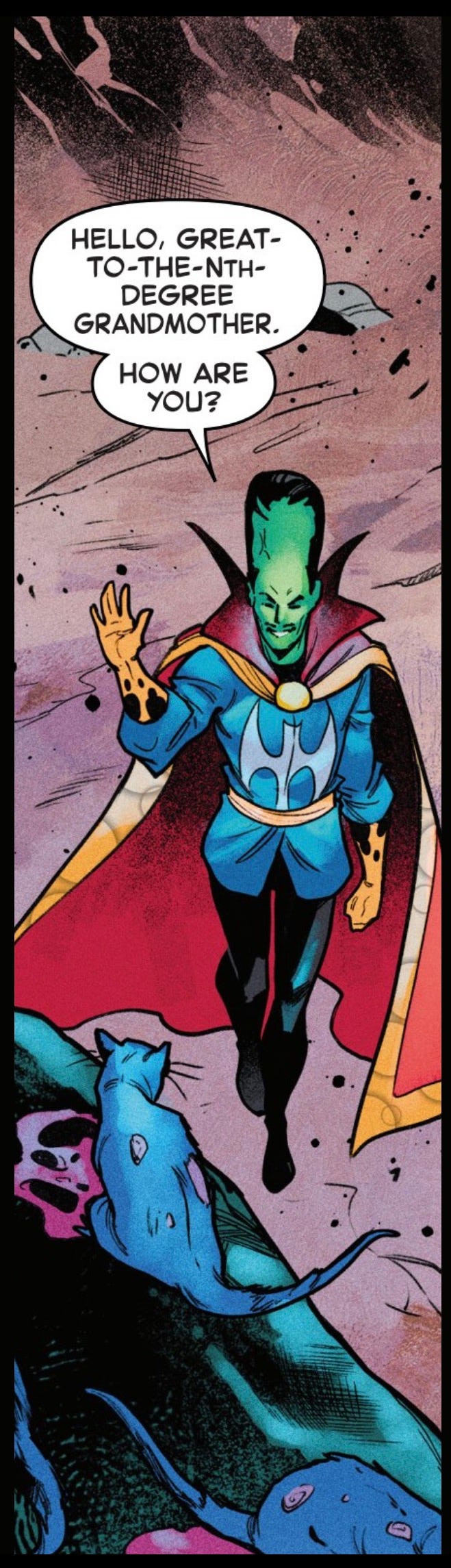
Arriving in the past (again, with uncanny precision), the Leader protects our early post-impact ancestors by tricking the Hulk and sending him into the next trap.
Technically, she's part of an ancestral population rather than a single direct ancestor. But when you're standing about 2.6 million generations from a rat-sized survivor of the apocalypse, close enough probably counts.
Strictly speaking, that’s not how evolution works. Sixty-six million years ago, individual family trees blur into populations. That little survivor isn’t a single grandmother waiting at the root of humanity’s family tree. She’s part of an entire population of survivors from which all later humans eventually emerge.
But for comic-book dialogue, it’s close enough.
And honestly, “Hello, member of my ancestral breeding population” doesn’t have quite the same ring to it.
As for the “nth” part, that can actually be estimated.
Sixty-six million years divided by roughly 25 years per generation means that, between that small mammal and the Leader, there would have been about 2.6 million generations. So, the technically ridiculous version would be:
“Hello, my 2,600,000th-great-grandmother.”
And even that probably understates the number, because early mammals reproduced much faster than humans do. If you account for shorter generation times throughout much of mammalian history, the true figure might be closer to five to ten million generations.
And if we want closer relatives for comparison:
Lucy-era hominins: ~150,000 generations ago Human–chimp common ancestor: ~250,000–350,000 generations ago
So the Leader’s “great-to-the-nth-degree grandmother” is way, way deeper than Lucy. Lucy is ancient to us, but compared to those asteroid survivors, she’s practically family gossip.
Next Time…
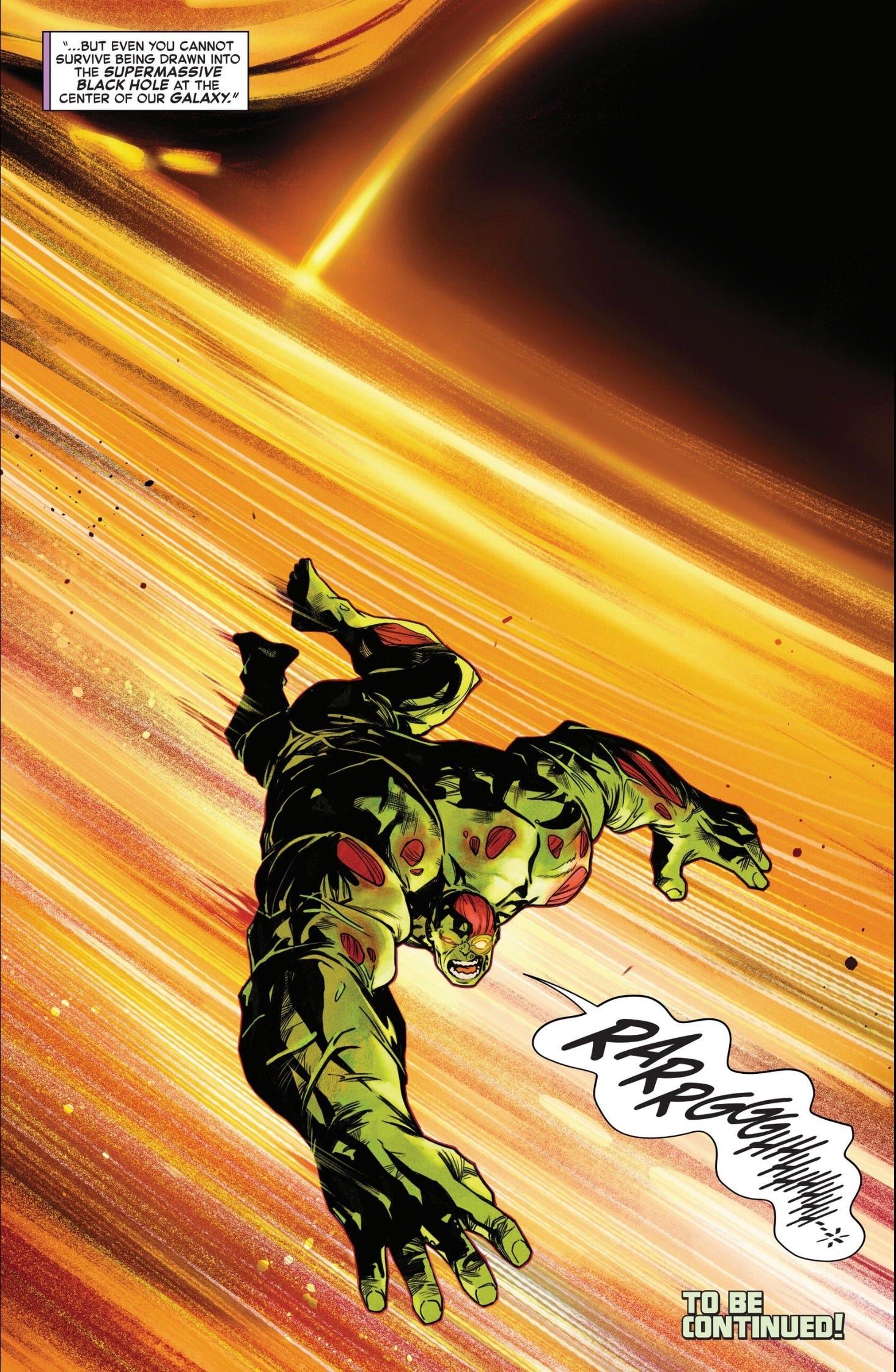
We’ve wrung all the science out of this issue, so where are we heading next? In the final pages, the Leader uses the time platform as a space platform as well (no complaints here) and shoots Hulk to the black hole in the center of the Milky Way, Sagittarius-A*.
We’ll be back soon with a look inside, and trust us…
There will be spaghettification.
Curiosity is what brought me here.
Teaching is what I do with it.
If you’d like to read more about education, classrooms, students, and the craft of teaching, you’ll find those stories in Teacher, Teacher.
Thanks for reading The Science Of...! Subscribe for free to receive new posts and support my work.